Cuba continues to be immersed in one of the worst health crises in recent years, while the Ministry of Public Health (MINSAP) seeks to project an image of control that contrasts sharply with the severity of the data presented this Tuesday on national television.
According to Deputy Minister Carilda Peña García, nine minors remain in critical condition due to arbovirus infection—primarily chikungunya and dengue—against a backdrop of hospital collapse, shortages of supplies, and a rising number of patients across the country.
Nevertheless, Peña García insisted on an optimistic tone, describing the evolution of critical patients as "positive," despite the fact that 71 individuals remain in serious or critical condition, including the nine minors under 18 reported.
According to him, these children are "critically stable" and "should not be faced with a lifelong commitment," a statement that is difficult to uphold in a context where the lack of basic resources has been repeatedly reported by health workers and patient families
The leader reported that on Monday, 2,069 patients with febrile syndrome were treated, about a thousand fewer than the previous day.
However, the decline does not appear to be associated with an epidemiological improvement, but rather with the healthcare system's inability to accommodate all patients and the widespread practice of home admissions, a measure that alleviates pressure on hospitals but leaves thousands of patients without proper medical supervision.
Although Peña assured that Cuba could be entering a "control stage" for arboviral diseases, his own figures reflect a different scenario: 324 new chikungunya cases confirmed as suspected in the last day, with the highest incidence in Cienfuegos, Pinar del Río, Santiago de Cuba, Ciego de Ávila, and Granma.
The country has recorded 42,339 reported cases, of which only 1,462 have been confirmed by PCR, highlighting the limitations of the system for accurate diagnosis.
A country sinking amidst epidemics, dilapidated hospitals, and questioned official figures
Peña's appearance took place just one day after the current regime updated the official death toll from arboviruses to 44, most of which are linked to chikungunya.
Among them, eight involved minors, a recognition that arrives after weeks of delays in reports and previous denials in response to allegations of serious cases in various provinces.
The figure, however, is widely questioned by the population and medical staff in a country where informational transparency is nearly nonexistent.
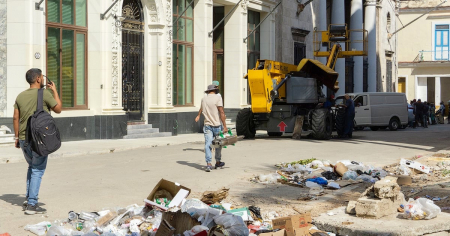
Both family members and healthcare professionals have warned about unregistered deaths, patients not receiving timely care, and outbreaks spreading unchecked in neighborhoods where no vector control campaigns have taken place for months.
Despite this, the deputy minister again indirectly blamed the citizens, urging them to strengthen the "self-check" at home and to report irregularities in the fumigation processes.
But he avoided mentioning the shortage of insecticides, fuel, or technical personnel, issues highlighted by volunteers in various provinces.
A collapsed healthcare system
The epidemic is unfolding at a time when Cuban hospitals are facing a profound structural crisis, with wards lacking potable water, shortages of painkillers and antibiotics, a deficit of beds, laboratories without reagents, and staffing shortages due to the massive migration of doctors and nurses.
Polyclinics apply strict criteria for conducting tests; many centers can only provide clinical diagnoses, and thousands of families treat their children’s fevers with home remedies due to the lack of medications.
The situation has worsened not only due to the explosive rise in infections but also because of months of institutional negligence, incomplete prevention campaigns, and a total lack of effective strategies to address the outbreaks.
Weeks of concealment and a late recognition
Since October, the MINSAP has been incrementally acknowledging deaths from dengue and chikungunya, following weeks of institutional silence.
First there were three deaths, then 33, and now 44. With each update, the disparity between official reports and citizen complaints continues to grow.
Meanwhile, the epidemic continues to claim lives, especially impacting children and pregnant women, and revealing the precariousness of a healthcare system that for decades has been touted as an achievement of the Cuban model and that today can barely sustain itself.
Peña's statement, far from bringing reassurance, confirms a growing health crisis unfolding in a country where the population increasingly feels abandoned and unprotected.
Filed under: