
Related videos:
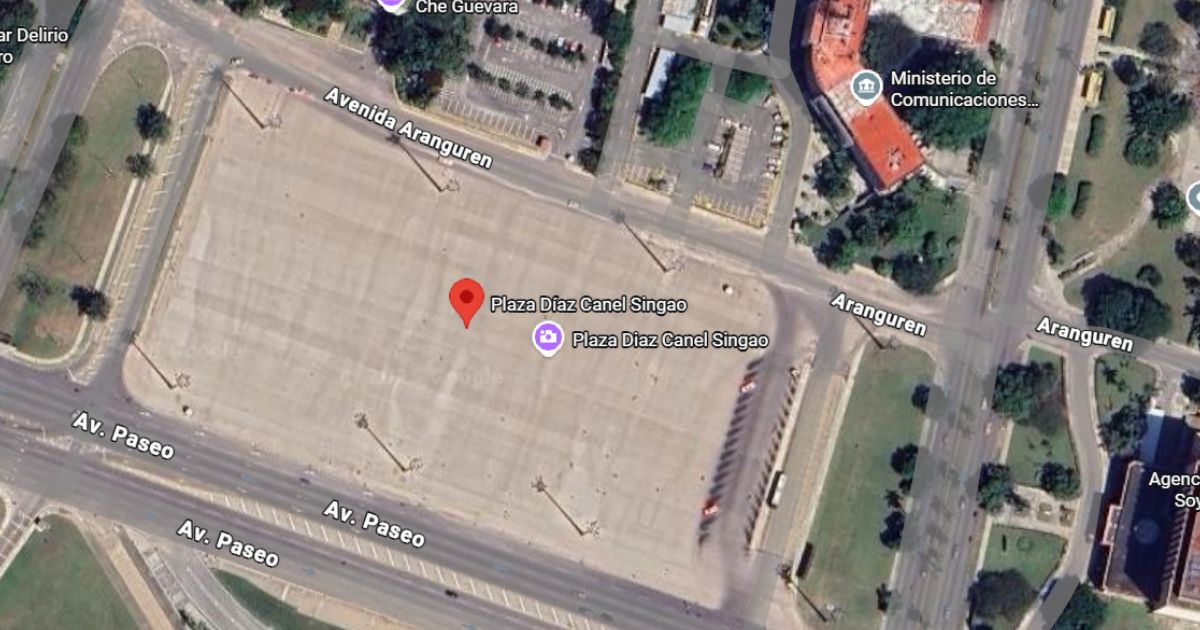
The Plaza de la Revolución in Havana, one of the most symbolic sites of political power in Cuba, was temporarily renamed on Google Maps this Wednesday as “Plaza Díaz-Canel Singao.”
The change, visible for several hours on the platform, could be interpreted as a form of digital protest against the Cuban regime and its main visible figure.
Naming a space that the government views as a symbol of the Revolution in such a manner represents a gesture of defiance and mockery towards the political system led by Miguel Díaz-Canel.
Google allows users to suggest changes to the names of places, but the modifications go through a review process.
Sometimes, these adjustments appear publicly for a brief period before being verified and corrected by the moderators or after being reported by other users.
The offensive name will likely be removed, and the square will regain its official designation.
According to company regulations, any content deemed inappropriate, political, or offensive is removed and may result in the suspension of the user who made the change.
This is not the first time something similar has happened in Cuba. In recent years, various public spaces and state buildings have been temporarily renamed on Google Maps with expressions of rejection or mockery towards the regime's leadership.
In 2021, several Cuban activists launched the viral challenge to change the name of the Plaza de la Revolución in Havana to Plaza de la Libertad, which was achieved after a flood of requests from Cubans both inside and outside the island.
Although these modifications are temporary, they highlight the use of the internet as an alternative space for protest in a society where public criticism of power remains limited.
Even a digital map can become a symbolic stage of resistance against state control.
Filed under: