
Related videos:
Amid endless blackouts, food and medicine shortages, a persistent health crisis, and growing public weariness, the Cuban regime has launched a new photography contest dedicated to portraying the supposed effects of the "American blockade" and to paying tribute to Ana Belén Montes, the Puerto Rican former spy sentenced in the United States for collaborating with Havana's intelligence.
The Fourth Photography Contest "Loving and Defending My Homeland", organized by the April Publishing House (CEA), the Committees for the Defense of the Revolution (CDR), and the Mission of Puerto Rico in Cuba (MPRC), offers as the grand prize a Samsung Galaxy A16 5G phone, along with a bicycle and photography equipment for the second and third places.
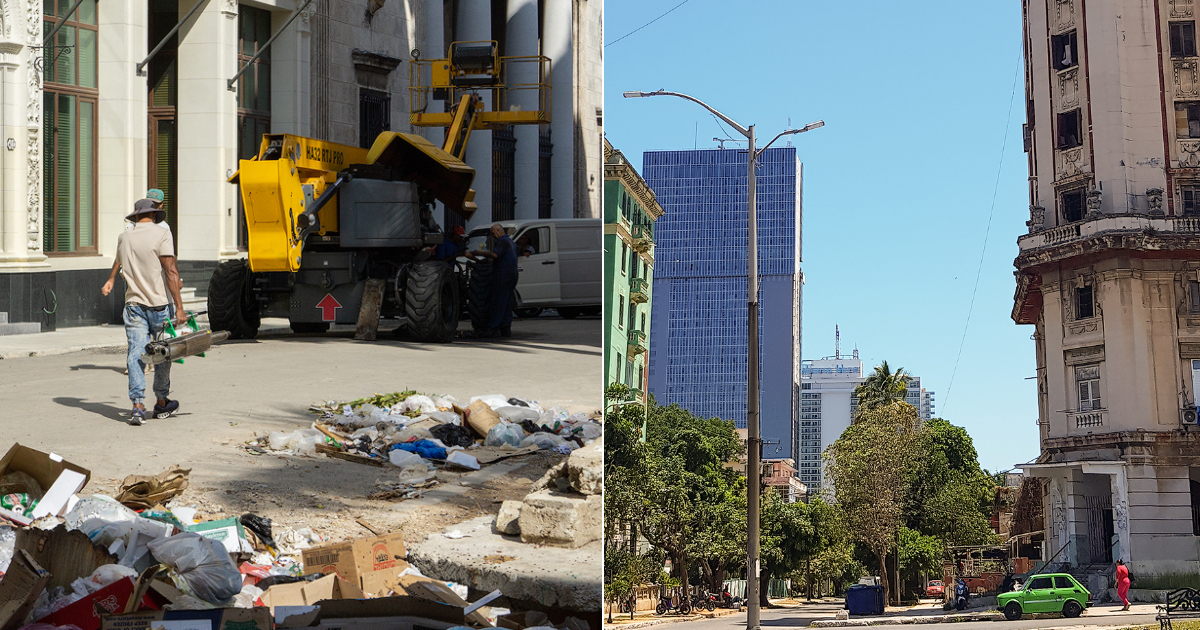
According to the official media outlet Cubadebate, participants must submit images that “show how the U.S. blockade hinders life in Cuba” or that express “gratitude and love” towards Montes. In this second category, contestants are required to include their name in the photo alongside a red heart, a requirement that has sparked criticism and ridicule on social media.
The call for entries was shared on Facebook by Izet Morales, who spread the competition guidelines and promotional images. The submission deadline is January 30, 2026, and the awards ceremony is scheduled for February in Havana.
Propaganda in times of blackouts
The contest is announced at a time of unprecedented energy crisis, where power outages exceeding 20 hours a day have become the norm, and the population demands real explanations. Meanwhile, the regime insists on its usual narrative, blaming the United States' "financial blockade" for all the national woes.
Just a few days ago, the Electric Union (UNE) reiterated this argument on social media, claiming that “without the end of the blockade, there will be no permanent energy stability.” The message sparked a wave of public rejection that CiberCuba documented in its article “The blockade no longer convinces anyone”, where dozens of Cubans responded with indignation and sarcasm: “The strongest blockade is the internal one,” “If the blockade existed when there was light, why doesn’t it now?” or “The problem isn’t the blockade, it’s the shamelessness.”
In another note, “Eternal blackout: Cuban regime confirms that the energy crisis will persist as long as the blockade exists”, this outlet explained how the government is once again resorting to its most worn propaganda excuse to justify the lack of maintenance, the misallocation of resources, and the collapse of the national electrical system.
A country in the dark, a recycled speech
The call for "Loving and Defending My Homeland" adds to a long list of propaganda initiatives promoted by regime institutions. In November, Cubadebate faced criticism after launching a poetry contest in honor of Fidel Castro, amidst power outages, water shortages, and rampant inflation. "With the country as it is and launching contests for Fidel," wrote hundreds of users at the time, reflecting the growing public fatigue towards official propaganda.
Now, with the country immersed in shadow, the new photography contest is seen more as an attempt to keep the rhetoric of political victimhood alive than as a genuine cultural promotion. “We don’t need photos of the blockade, but light and food,” commented a user when sharing the call for entries.
Between the camera and reality
While the regime multiplies the contests and slogans about the "blockade," Cubans survive amid darkness, hunger, and despair. The contrast between the official discourse and daily reality is becoming increasingly evident: the propaganda insists on blaming Washington, while the people point to Havana.
More than an art exhibition, the contest seems to be yet another attempt to reaffirm the narrative of Castroism at a time when Cubans, from the streets and social media, no longer want slogans or empty explanations, but real answers and solutions.
The best photograph of the "blockade" is likely not in the cameras of the participants, but in every darkened Cuban home: a vivid portrait of the failure of a system that continues to demand faith while extinguishing hope.
Filed under: