
Related videos:
The Electric Union (UNE) confirmed that the national electrical system is experiencing one of its worst moments in years, with impacts exceeding 1,000 MW and several thermoelectric plants out of service.
However, far from taking responsibility for the energy collapse that paralyzes the country, the regime resorted again to its most worn-out propaganda excuse: the "U.S. blockade".
According to the official statement, the financial limitations imposed by external sanctions are the "direct cause" of the fuel shortage, delays in maintenance, and the inability to modernize the national energy grid.
"Without an end to the financial blockade, there will be no permanent energy stability", declared the state-owned company on its social media, shifting the blame for its failures to U.S. policies.
The narrative repeats the familiar script: without foreign currency, there is no fuel; without fuel, there is no electricity. What the government omits is that, for decades, the electrical system has been a victim of communist bureaucracy, poor planning, and institutional neglect, not the embargo.
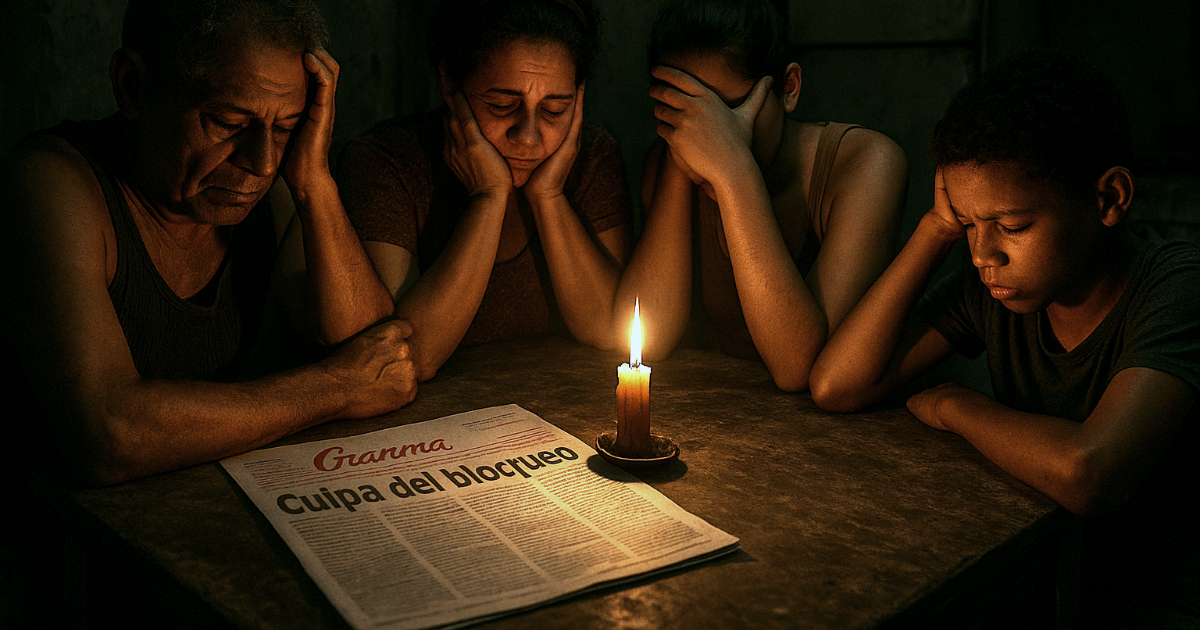
The Cuban people, exhausted by blackouts lasting more than 20 hours a day in many provinces, view reality through a different lens. The "external financial restrictions" are merely a smokescreen to cover up internal apathy and the systematic diversion of resources meant for electricity generation.
Thermal power plants do not collapse due to a lack of dollars, but rather due to decades of poor maintenance and technological obsolescence.
Cuba maintains normal trade relations with dozens of countries that have the technological capability to restore the electrical infrastructure—among them allied powers like Russia and China—yet the regime chooses to allocate available resources to the construction of hotels and tourism projects, while the people remain in the dark.
While the regime plays the victim, Cubans live in darkness, heat, and despair.
The promises of new solar parks or storage batteries are recycled every year, but the country continues to rely on aging thermal power plants and barely functioning generators. The so-called "creative resistance" translates into improvised inventions, exposed wires, and private generators that can only be afforded by those who receive remittances.
The official narrative aims to present each blackout as a heroic act of resistance against imperialism. However, the reality is much harsher: the energy system is collapsing because Castroism prioritized repression and propaganda over development. Instead of transparency and technical management, it offers slogans and external blame.
After more than six decades of "blockade," Cuba has not managed to build a stable, efficient, or sustainable electrical system. The cause lies not in Washington, but in Havana. Each blackout that plunges the island into darkness is not a consequence of the embargo, but rather the structural failure of a regime that has turned dimness into its natural state.
The true light that Cuba needs will not come from a power plant, but from the end of the system that keeps it in the dark.
Filed under: