
Related videos:
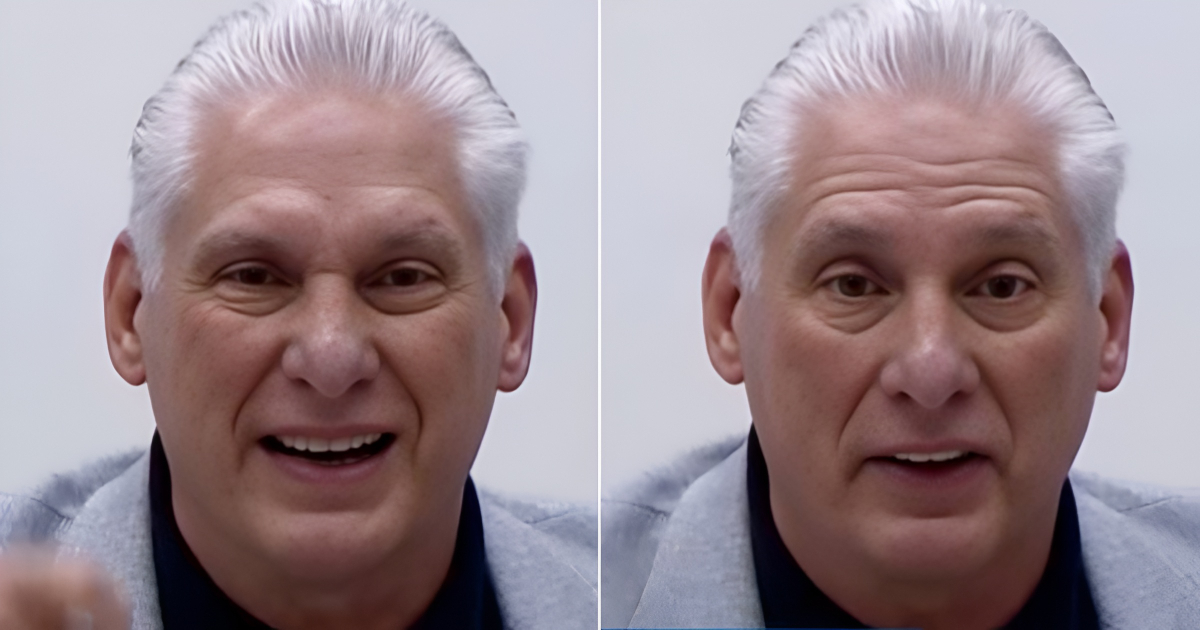
In his speech at the XI Plenary of the Communist Party, Miguel Díaz-Canel accused exiles and critics of the regime of “.”
The phrase, crafted for the applause of indoctrinated minds, reveals something deeper than the exhausted anti-imperialist denunciation of a dictatorship lasting over six decades: the fear of totalitarian power towards the dreams of others.
Because the true dream of Cubans —both inside and outside the island— has nothing to do with foreign flags or colonial nostalgia.
The Cuban of today does not dream of being just another star, but rather of no longer being a shadow. He dreams of being able to decide his own fate, to express his opinions without fear, for his salary to have value, and for his vote to matter. He dreams of a house without blackouts, of a meal without waiting in line, and of a future where the airport is not the only escape route.
The dream of the Cubans
The Cuban dream is not a capitalist chimera, but an elemental yearning: freedom, prosperity, and respect.
The freedom to express oneself without fearing a police summons; the prosperity of earning a living without being treated as a “habitual suspect” for doing so; and the respect of a state that does not infantilize individuals with slogans, that does not violate their basic human rights, but rather holds itself accountable and protects them within a framework of pluralistic, just, and democratic coexistence.
The Cuban who gets up at four in the morning to stand in line doesn't think about annexation or conspiracies; he thinks about how to provide for his family.
The young man who leaves for Nicaragua or the Darién is not fleeing the concept of socialism, but rather its implementation by a despotic regime that has been in power for 66 years, turning its survival into ideology. And the exile who sends remittances does not dream of a "dependent" Cuba, but rather of a Cuba where his relatives do not depend on him for food.
That's why the regime's caricature of the exile—depicting them as a horde of traitors obsessed with Miami—does not hold up to serious analysis.
The Cuban exile supports the island more than any political ally, and their dream of freedom is now more Cuban than the empty dogma of the Party.
The regime's nightmare
The dream of free Cubans is, at the same time, the nightmare of those who govern Cuba. Because if one day Cubans were able to choose, the Party and the heirs of the "continuity" dictatorship would lose at the polls, their privileges, and their impunity.
If there were a free press, it would be known in detail how the leaders live and how the country's wealth is distributed. If there were independent justice, many of those who today speak of "revolutionary morality" would have to answer for corruption, repression, and abuses.
That is why the regime needs to maintain fear: fear of freedom, fear of criticism, fear of difference. In that logic, dreaming becomes dangerous, and dreamers become suspects.
Díaz-Canel's speech translates that fear into political language: he labels as "enemies" those who envision a Cuba without oversight, and "mercenaries" those who imagine it with civil and political rights and freedoms.
It is not a misunderstanding arising from a nonexistent dialogue; it is the reflection of the survival of the dominant class.
The revolutionary power, after more than six decades, has created its own aristocracy: a military, economic, and familial caste that lives disconnected from the real country, shielded by the rhetoric of sacrifice while enjoying privileges unattainable for the ordinary citizen.
That elite does not fear the blockade; it fears scrutiny. It does not fear the "empire"; it fears transparency. And its worst nightmare is a Cuba where people stop believing it openly and look it in the eye.
The end of the story
For years, the regime sold the dream of social justice; today, it only sells resignation. Its rhetoric no longer mobilizes or convinces: it merely manages collective indignation and fatigue.
That is why Díaz-Canel speaks of others' dreams with anger: because he knows that Cubans no longer dream of the myths of the so-called "revolution," but rather of its end.
Cubans dream of a country where the government does not tell them what to dream. And when that dream awakens, the nightmare of power will become a reality.
Filed under:
Opinion article: Las declaraciones y opiniones expresadas en este artículo son de exclusiva responsabilidad de su autor y no representan necesariamente el punto de vista de CiberCuba.