
Related videos:
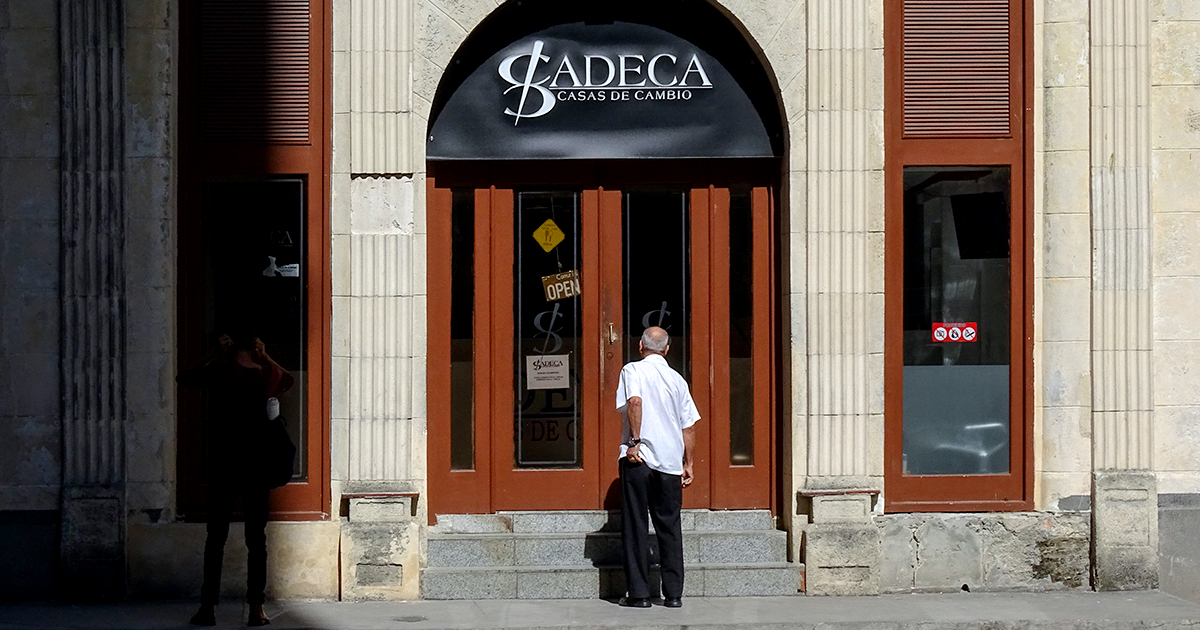
On Thursday, December 18, 2025, the Central Bank of Cuba introduced its new "floating" exchange rate for the buying and selling of currencies at CADECA: 401.80 pesos for purchase and 418.20 for sale.
A figure that, on the surface, attempts to approach the real market, but still falls short of the value indicated by ordinary Cubans.
That same day, the independent portal El Toque reported the informal exchange rate of the dollar at 440 CUP, the euro at 480, and the MLC at 300.
The difference may seem small, but it reveals an uncomfortable truth: Cubans continue to trust the street more than the State. And the regime knows it.
The dilemma: Few dollars and less trust
The Central Bank can publish whatever rate it wants, but if it doesn't have enough dollars to sell, the official market will not function.
Today, the country's reserves are depleted, tourism remains below 2019 levels, and state exports fail to generate fresh foreign currency.
Meanwhile, Cubans who receive remittances or work with foreign currency prefer to exchange their dollars in the informal market, where they receive a better rate and without paperwork.
In this scenario, the State faces a dilemma: it needs to attract dollars to survive, but it cannot compete with the black market.
For this reason, rather than persuading, it will try to impose.
Strategy 1: Fear
It is already being suggested in official media: alerts against "illicit currency operations," police reports, and warnings from the Ministry of the Interior. The message is clear: "Exchanging outside the system is a crime."
The regime believes that fear will work where the economy fails. But the Cubans have seen this script before, and they know that as long as the government does not have dollars, CADECA will be just an empty showcase.
Strategy 2: Control
The second tool will be banking and financial control. Reducing cash usage, limiting transfers, mandating the use of cards, and increasingly restricting access to physical dollars.
In other words: to corner the citizen until they have no option but to go through the bank. But this control fuels another phenomenon: the migration of operations to digital channels (Zelle, Binance, Revolut, informal remittance services), beyond the reach of the State.
Strategy 3: Manipulation
The third move will be to manipulate the official exchange rate. The regime may raise it slightly to simulate a "real float," bringing it closer to the informal value when it suits their interests.
This is how he tries to convince us that "the market is balancing." But in reality, he is only changing the sign, not the actual price of the dollar.
As economist Mauricio de Miranda Parrondo warns, multiple exchange rates only create distortions and privileges: “Maintaining one dollar at 24 pesos for some and another at 400 for the rest is not economic policy: it is nonsense.”
The question
The Cuban government may try to impose its rate through fear, control, and manipulation. But it cannot change an essential truth: people sell where they are paid more, not where the regime orders.
As long as the economy remains stagnant and the peso continues to plummet, Cubans will keep exchanging dollars on the street, not at CADECA.
And no decree can turn an imposed rate into a credible rate.
Filed under: