
Related videos:
A total of 5,551 Cubans validated their university degrees in Spain during the first half of 2025.
With this figure, Cubans led the recognition of university degrees in Spain in the first half of 2025, reported Diario de Cuba using data obtained from the Council of Transparency and Good Governance of Spain.
The figures from the first six months of 2025 are higher than those from all of 2022 (1,401), 2023 (2,154), and 2024 (2,749), providing a sense of the scale of the migration exodus.
Cuba displaces Colombia, Venezuela, and Argentina from the top positions, the information specifies.
Although the figures broken down by profession were not revealed, doctors lead the homologations, followed by nurses, dentists, industrial technical engineers, and telecommunications engineers.
In the first half of 2025, 66 unfavorable resolutions were issued for Cubans, primarily due to deficiencies in specific competencies or credit hours in the curriculum, as established by Spanish law.
Between 2022 and 2024, the number of concessions for technical public works engineers and physiotherapists also stood out among the top five professions, adds the note from Diario de Cuba.
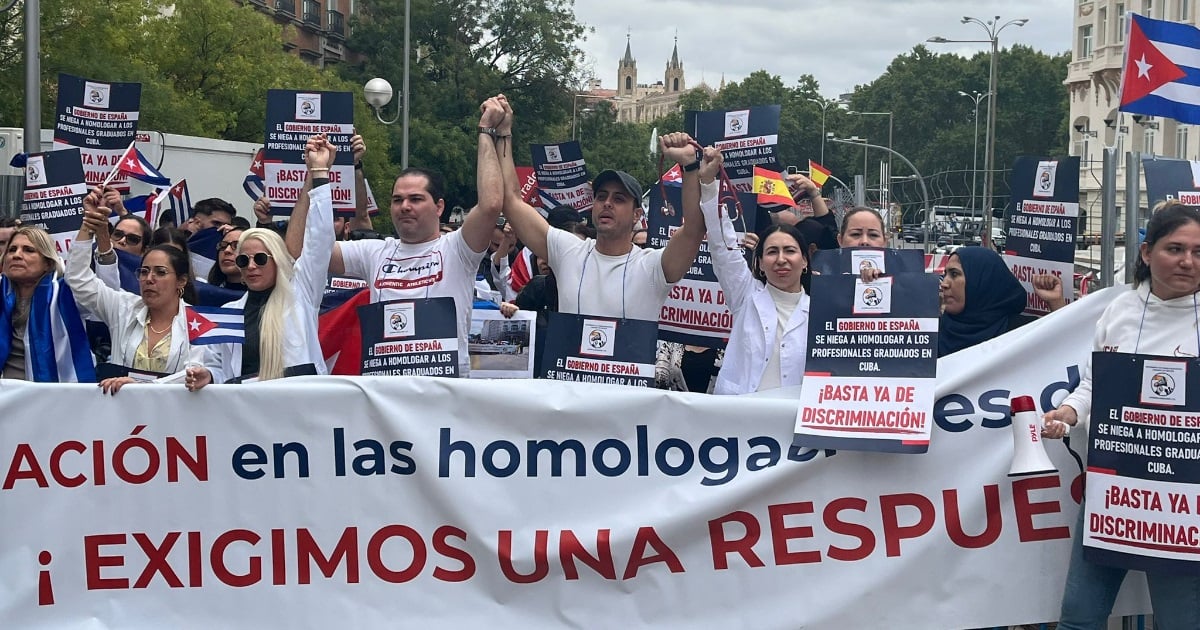
However, the Free Cuban Medical Guild in Spain reported delays of up to four years in the validation of medical credentials, due to "forged consular seals" or the collapse of services at the Ministry of Science, Innovation, and Universities.
The stories of resilience from Cubans who have successfully validated their degrees in Spain are becoming increasingly common on social media.
In November, for example, the Cuban doctor Leyanis C. Urrutia, known on social media as @leyanis__cubanayole, excitedly announced in a video that she has returned to practicing medicine in Spain, after a long process of title validation and personal struggle.
"The wait is over. Today I am returning to work as a doctor in this country," stated the Cuban professional at the beginning of the video shared with her followers.
Although the law establishes a maximum period of six months to resolve cases, in practice, the process can extend for years. In October 2024, the President of the Spanish Government, Pedro Sánchez, announced a migration reform aimed at expediting the recognition of university degrees, including those of foreign professionals who already reside in the country, as detailed at that time.
That same month, the Madrid Medical Association allowed Cuban doctors to register without the need to submit a certificate of non-disqualification, a document that the island's authorities are not issuing, marking a key advancement amid the administrative hurdles.
Filed under: