
Related videos:
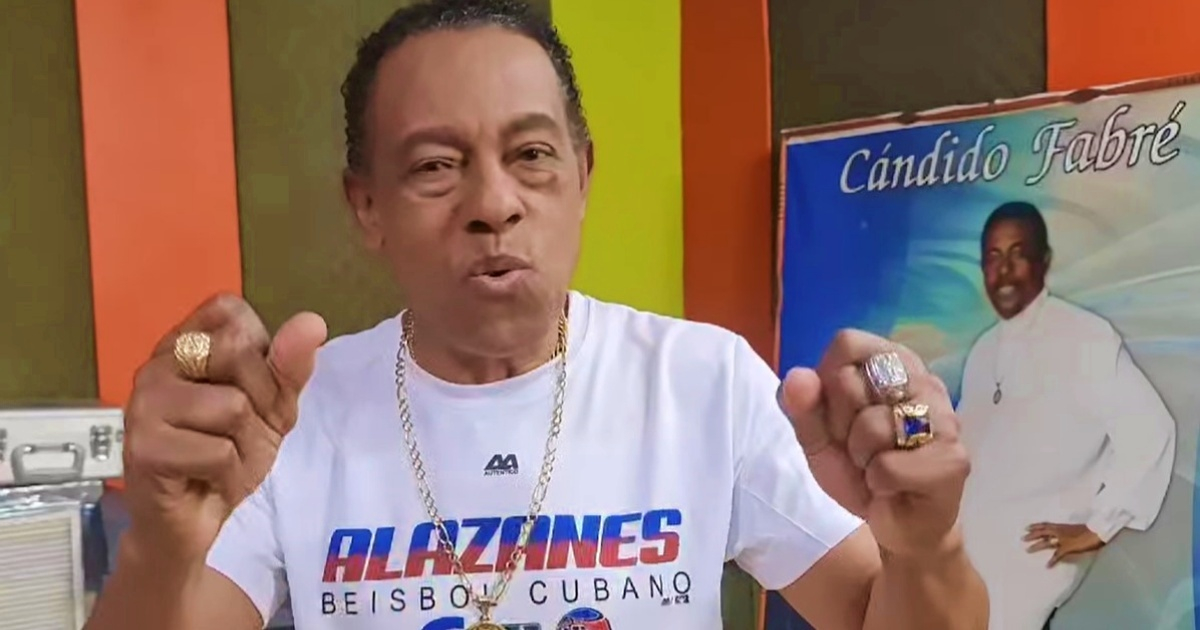
Cándido Fabré returned to his social media profile to demand the release of Juan Ramiro Arzuága—known as "El Moro," a member of his orchestra—who, he insists, is unjustly imprisoned, although he still fails to clarify what the accusations against him are.
On this occasion, the musician supported his request with a direct appeal to the legacy of Fidel Castro and his definition of Revolution.
In his message, Fabré blended personal pain, restrained criticism, and his unwavering ideological loyalty, demanding that the "values" once proclaimed by the elder Castro be upheld.
"The boy is clean, don’t try to smear him."
For months now, Fabré has been denouncing what he considers an unjust detention: his coworker remains imprisoned in the San José facility in Mayabeque, without - in his words - any evidence or charges to justify it.
"It pains me greatly to think that one of my colleagues, Juan Ramiro Arzuaga, whom we call El Moro, is still unjustly imprisoned. May God grant him freedom by the end of the year so that he can embrace the new year alongside his child and family. On the centenary of our Fidel," wrote the musician.
Next, Fabré clarified that he is not only asking for the freedom of his prisoner, but he is asking for "justice for all who deserve it."
"I hope I won't have to raise my voice on every platform for the freedom of Juan Ramiro Arzuaga, the Moro of my band. When will they take into account the concept of 'Revolution' from the Commander in Chief? The cat has four legs, don't look for the fifth," he added in the most distinctive part of his plea, appealing to the Fidelista ideology but without explaining why.
"The boy is clean, don't try to drag him down," he concluded enigmatically.
No charges are known, nor is there any official information regarding the case
Despite the public exposure of the issue, no official information has been released regarding the charges against Juan Ramiro Arzuaga.
Cándido Fabré has stated that his companion is imprisoned “without offense,” and he has reiterated that “in all records, he is clean.”
However, the lack of concrete details has generated both solidarity and questions.
Some of the musician's followers have asked him to explain the reason for his imprisonment, while others support his words without hesitation: "If you defend him, it's because they're doing something wrong."
"When will they take into account the concept of Revolution as articulated by the Commander-in-Chief?"
The central axis of Fabré's new message revolves around a question filled with symbolism: “When will the concept of Revolution by the Commander-in-Chief be taken into account?”
With this, the musician directly references the famous speech given by Fidel Castro on May 1, 2000, where he defined the Revolution as the act of “changing everything that needs to be changed.”
By invoking that definition, Fabré does not break his loyalty to the system, but suggests that the State itself is violating the values it claims to uphold.
“The cat has four legs, don’t look for the fifth,” he warned in another part of the text.
A mix of support, questioning, and appeals to broaden the demand
Her publication has generated an intense response from the public.
Most supported him and called for the release of Moro, but there were also those who urged him to be more transparent: “What exactly did he do?”, “We want to know what you are defending.”
Others encouraged him to raise his voice for broader causes: "Speak also for the prisoners of July 11," "With your platform and your voice, you can call for justice for all those who are suffering repression," commented two internet users.
Even among his most loyal followers, ideological loyalty to Fidel's legacy created discomfort.
Several messages highlighted the contradiction between that loyalty and the current reality of the country.
The phrase "When will they take into account the concept of Revolution from El Comandante en Jefe?" sums up the uncomfortable position in which Fabré finds himself: not as a dissident, but as a believer in a betrayed ideal.
Their claim is more ethical than political, more emotional than legal, but also more uncomfortable because it comes from within.
And although the case of Juan Ramiro Arzuaga remains publicly unresolved, Fabré's lawsuit resonates in a country where more and more voices are demanding explanations, clarity, and justice.
Filed under: