
Related videos:
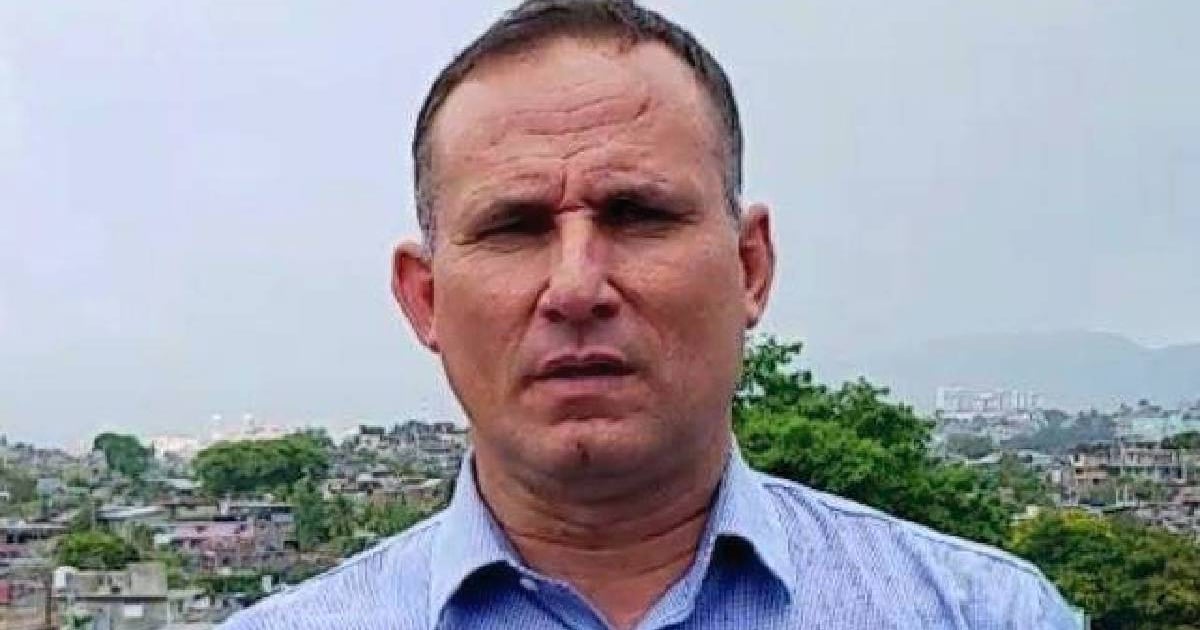
The historic Cuban dissident José Daniel Ferrer announced this Tuesday that he is stepping down as president of the Council for Democratic Transition in Cuba (CTDC), the main united opposition platform both inside and outside the island, after calling for new internal elections.
In statements to the agency EFE, Ferrer confirmed that he will not be part of the new executive of the CTDC, although he will remain a member of the collective.
"We remain brothers, and I support the actions of the council," affirmed the opposition figure, who has been in exile in the United States since last October.
The leader of the Unión Patriótica de Cuba (UNPACU) explained that his decision aims to ensure that their current political and humanitarian activities do not conflict with the work of the CTDC, which focuses on legal proposals and democratic institutionalism.
The CTDC announced in a statement that its new board, elected between December 11 and 15, will officially take office on January 10, 2026.
The opposition figure Manuel Cuesta Morúa will hold the presidency, with four vice presidents in Cuba (Osvaldo Navarro, Juan Alberto de la Nuez, Marthadela Tamayo, and Félix Navarro —the latter being imprisoned—) and two abroad (Elena Larrinaga and Iris Ruiz).
"We will continue to work for the respect of human rights, the restoration of popular sovereignty, and the democratization of Cuba," the organization stated in its announcement.
According to the CTDC, 63% of the electoral roll participated, made up of 46 organizations and independent activists, despite the “difficult conditions” under which the voting took place.
Ferrer, 54 years old, was considered a prisoner of conscience by Amnesty International after several imprisonments due to his opposition activism.
Upon arriving in Miami, he committed to working for the unity of the Cuban opposition both inside and outside the country, a task he acknowledged as "complex" due to the internal divisions within the movement.
Currently, the dissident is promoting a network for coordination among opposition groups and advocates for the establishment of a census of dissidents as a preliminary step towards potential democratic primaries for the opposition.
His goal, he explained, is to move towards a common front that promotes the amnesty of political prisoners and the transition to a rule of law in Cuba.
The Council for Democratic Transition in Cuba (CTDC) was established on June 11, 2021 as a united platform of the Cuban opposition, aimed at promoting a peaceful transition to democracy on the island.
In 2023, the organization obtained international legal recognition through the Hague Apostille, which certifies its authenticity in the field of private international law.
It is made up of a broad group of institutions, organizations, and citizens both from within and in exile, committed to restoring national sovereignty, promoting human rights, and building a new path for Cuba based on freedom and plurality.
Filed under: