
Related videos:
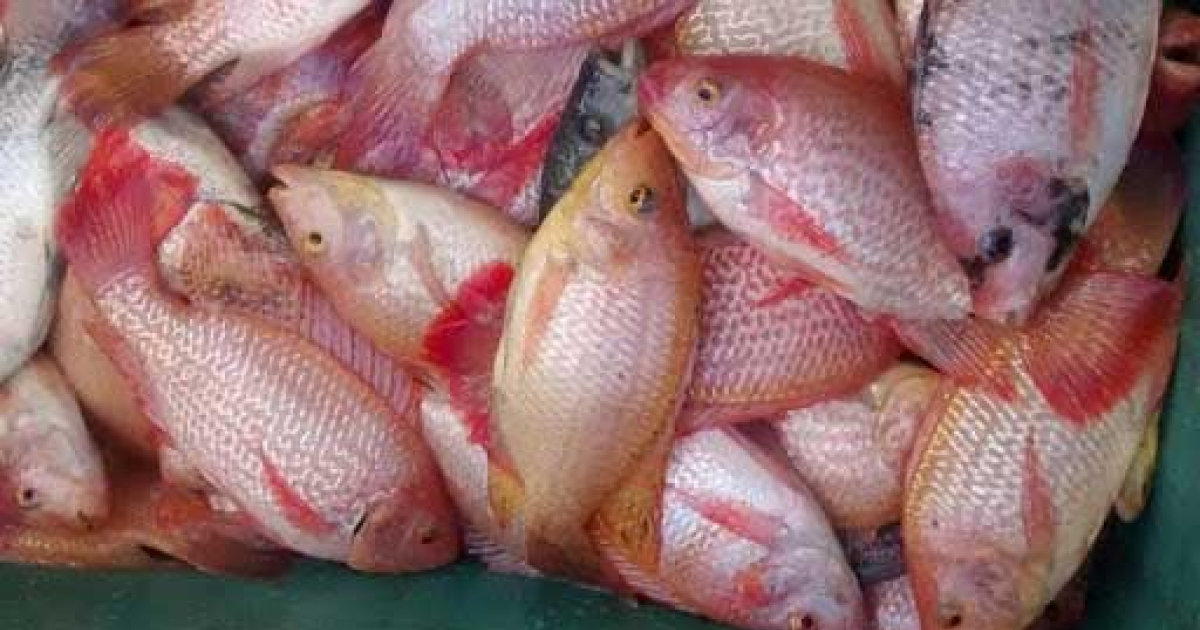
Amid a food crisis that is hitting Cuban families hard, the regime announced the return of the tilapia farming in the province of Granma, a measure they present as part of their strategy to ensure supply, although failing to address the central issue: prices, which are increasingly unaffordable for the population.
According to the newspaper Granma, the official organ of communism on the island, the Base Business Unit (UEB) Cali Sur, in Granma, allocated 20 hectares for tilapia cultivation, following the damage caused by hurricane Melissa in other productive sectors.
According to Manuel Yero, head of the production area, three ponds have already been planted — two of 0.5 hectares and one of one hectare — with 131,000 fry, which currently weigh between 7 and 30 grams.
According to the executive, the goal is for the fish to reach commercial size (450-500 grams) within approximately five months, at which point the production will be entirely allocated for sale at the company's own locations and other local markets.
Although the facility did not suffer serious damage from the hurricane, the company acknowledged that shrimp farming has come to a standstill, so fishing and croquette production brigades were used as temporary alternatives to maintain income.
To ensure the supply of fry, the UEB is managing options in Bartolomé Masó and Havana, as the local center is temporarily inactive.
However, beyond the productive announcements, the daily reality of Cuban families continues to be marked by the extreme rise in food prices, which far exceed the purchasing power of salaries and pensions. Products that the State promotes as “solutions” end up being unattainable for a large portion of the population, even when they appear in the markets.
While the Government continues to "invent" agricultural programs and projects, the underlying problem persists: food is available, but it is unaffordable. In this context, the return of tilapia hardly represents real relief for Cuban households, where food insecurity has become one of the main causes of precariousness and deterioration in quality of life.
Filed under: