
Related videos:
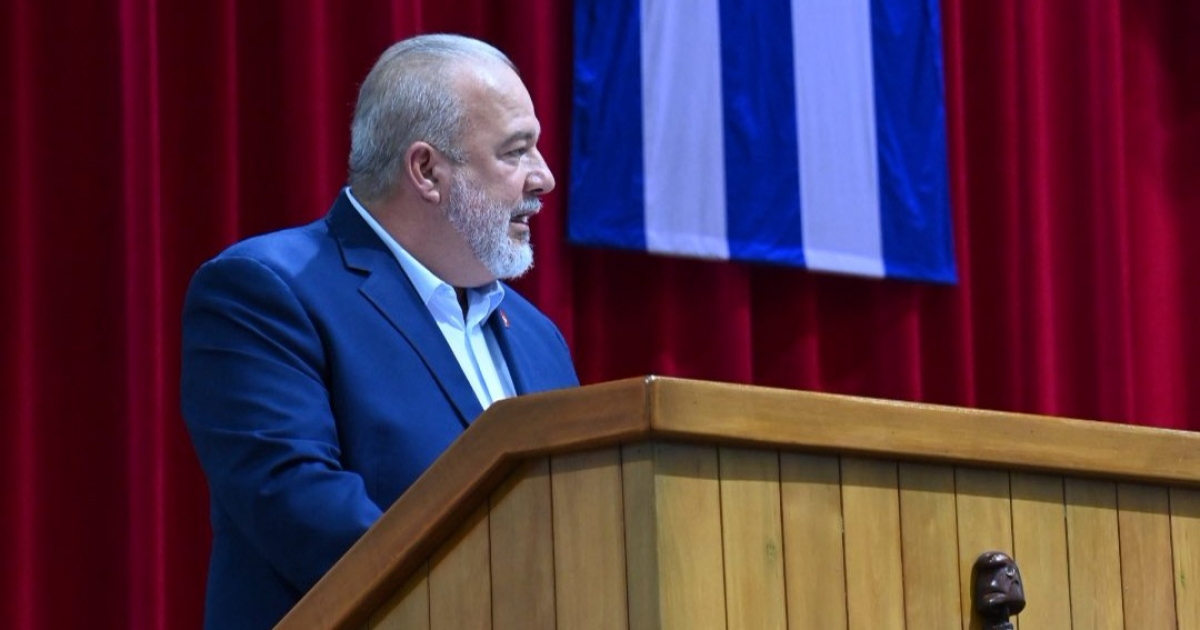
The Cuban Prime Minister, Manuel Marrero Cruz, stated that the government has allocated 1.15 billion dollars to the program aimed at recovering the National Electroenergetic System (SEN), a declaration that sparked a wave of criticism on social media amid the blackouts affecting the entire country.
The information, shared by the Unión Eléctrica (UNE) on Facebook, details that, despite the "complex financial conditions," these funds have allowed for the recovery of 422 megawatts (MW) in distributed generation, exceeding 1,000 MW through this means, in addition to another 228 MW in centralized generation.
The statement also notes that 778 MW have been synchronized through the installation of 41 photovoltaic solar parks, which, according to UNE, manage to produce more than 30% of the country's total generation during peak solar irradiation hours.
However, far from bringing about calm, the announcement triggered an avalanche of critical reactions from citizens who question the actual results of that massive investment, in a context marked by blackouts of up to 20 hours a day in several provinces.
"He may say that one billion dollars were allocated to the system, but as long as the country remains in darkness, it doesn't concern us; the solution is not just to talk and talk, but to solve the problem and provide electrical service," wrote a user from Matanzas in the comments on the post.
Others openly questioned the relationship between the invested money and the recovered generation capacity.
"Too much money for so few MW with no results. Either there are too many zeros or there are not enough MW. It is impossible to spend 1.8 million USD per MW, let alone on repairs. With that money, we could have started the construction from scratch of two new thermal power plants of 300 MW each for 35 years of operation," commented a worker from ETECSA.
Frustration is echoed in the testimonies of mothers, fathers, and professionals who experience the consequences of the energy crisis on a daily basis.
"And where is the improvement if each day is worse, with fewer hours of electricity? Those thermoelectric plants need to be rebuilt. Check where all those millions are: the people remain in the dark and every year is worse than the last," wrote a mother.
From Havana, a user sarcastically commented: "The investment is clearly noticeable, each day is a victory of blackouts over the people."
An engineer, for his part, criticized the official speech: "Stop selling the patches as undeniable victories and earn some respect. Every time someone who spends the day in blackout sees this triumphant news, it's only natural for them to get angry."
Doubts about the effectiveness of spending are also echoed in other provinces. "If we are worse off than in previous years, where is all that investment?" asked a parent.
"And the total of all those MW results in more blackouts than the previous day," pointed out a resident in Camagüey.
Some comments resorted to sarcasm to express the accumulated frustration.
"It is clear that they are working and making a tremendous effort: they have left us without water, electricity, medicine, food… They are carrying out a tremendous job of mass extermination," wrote a user.
Another message, attributed to an engineer, summed up the feelings of many: "You ate all those MW!"
The reactions reflect the deep discredit with which large sectors of the population receive the official announcements regarding the electrical system.
While the Government insists on figures for investment and recovery plans, the daily experience of millions of Cubans continues to be marked by power outages of over 20 hours, a lack of clear information, and an increasing sense of abandonment in the face of a crisis that shows no signs of easing.
Filed under: