
Related videos:
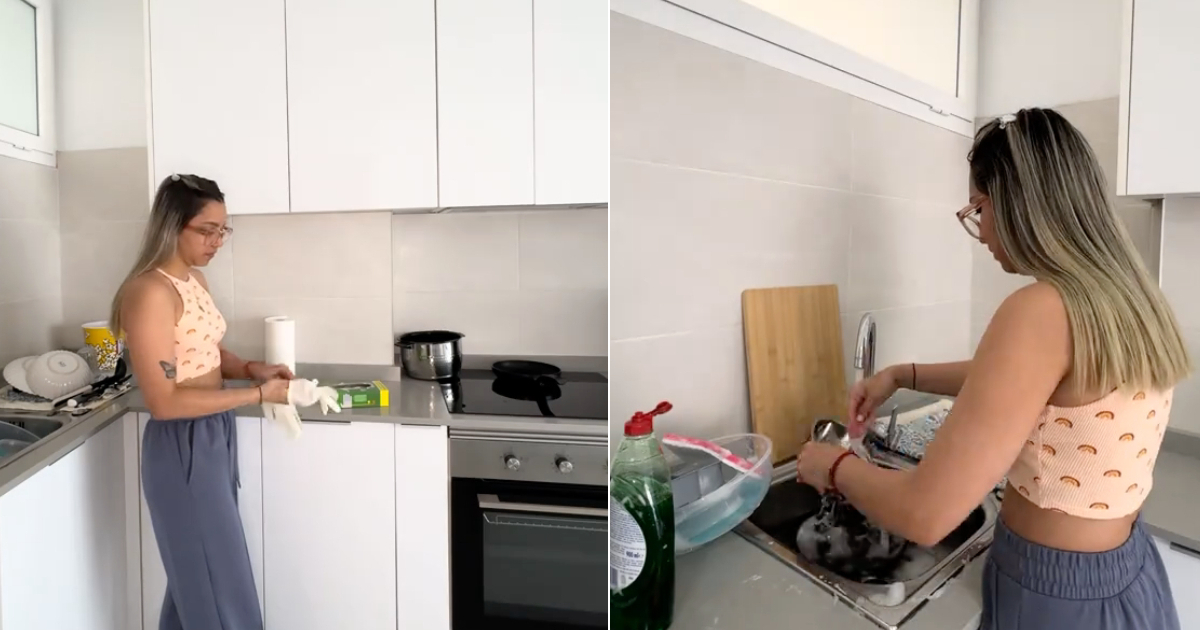
From Las Palmas de Gran Canaria, a Cuban has sparked a wave of reactions on TikTok after sharing a video in which she expresses four things she dislikes about Spain. In her message, the young woman clarifies that she is not speaking from ungratefulness, but from the everyday experience of an immigrant facing real barriers.
"I am Cuban living in Spain, and I want to share four things I don’t like about this country," the creator begins, listing: the "endless bureaucracy," the "procedures that drag on for months," and the "appointments that never materialize." She also mentions "the paperwork that dictates your peace of mind more than your effort or your desire to get ahead."
In their second reflection, they point to the "normalized labor precariousness," the "perpetual temporary contracts," and the "salaries that don’t increase while rent, utilities, and food prices do." They add that it hurts to have to "prove double just to be valued at half" simply for being an immigrant, and they lament hearing phrases like "you all come to take our jobs," when —as they said— most migrants "come to work at anything, to contribute, to lift up whatever is needed."
In another part of the video, she emphasizes that expressing oneself is not disrespectful or ungrateful: “Friend, expressing yourself is not disrespectful, speaking about what hurts is not ingratitude, and staying silent out of fear is not integration.”
Still, he makes it clear that his message is not pessimistic: "Spain is not perfect, but it is also a country with potential, with wonderful people, and with real opportunities if the right conditions are met. As long as I am here building, learning, contributing, and speaking out, because my voice also matters."
The video, posted by @jennypg92 on TikTok, has garnered tens of thousands of views and hundreds of comments, with divided opinions. While many users appreciate her sincerity and empathy, others criticize her for expressing her disagreements with the country in which she resides.
Among the supportive messages, reactions include statements like: "If there are things she doesn't like, she has the right to say so; everyone knows that things are terrible in Cuba, but that doesn't mean Spain doesn't have its problems too," or "with guts, she can express what she dislikes." Other users highlighted her bravery: "That's how to speak; not everything is rosy," "very sincere and respectful; that's not being ungrateful," or "we don't all have to think the same, but she spoke with education." There were also comments defending her against the criticisms: "Anyone can express their opinion here, and nothing happens, but if a Cuban says it, people get offended right away," or "we should listen before judging; she's just sharing her experience."
However, many users expressed disagreement or discomfort with her words. Some wrote: “I don’t like many things about your country, but out of respect for its people, I don’t belittle them,” “If you don’t like it, you know what to do, planes come and go,” or “You come to a country and the first thing you do is complain.” Others were more harsh: “If Spain is so bad, go back to Cuba,” “You talk a lot, but you’re happily getting paid in euros,” or “Emigrants come and want to change everything.” There were also comments with an ironic tone: “It takes guts” and “My goodness, what a mess you’re making, Jenny.”
In response to the more critical comments, the creator published a brief message reiterating her stance: “And I don’t like that when an emigrant talks about these things, they are automatically told: if you don’t like it, leave.”
It is not the first time that a testimony of this kind has sparked debate on social media. On other occasions, Cubans residing in Spain have faced criticism for sharing their migration experiences or pointing out cultural differences between the two countries. In a previous case, a young woman received comments such as “remember your roots” after reflecting on identity and the process of adaptation outside of Cuba.
In another similar episode, a Cuban who recently arrived in Galicia responded to criticism regarding her surprise at local customs, emphasizing the importance of maintaining one's roots while embracing integration.
There have also been cases of Cuban creators who reported manipulation or hate speech on social media after sharing content about their migration experiences. A Cuban influencer in Spain recently stated that her videos were distorted by a Spanish media outlet, which triggered a wave of attacks against her.
The phrase "if you don't like it, leave," often heard in many of these debates, has been pointed out by other creators as an example of everyday xenophobia. In another viral video, a young Cuban warned that such expressions "do not defend a custom, but rather use a person's origin to invalidate their opinion."
The phenomenon of migratory testimonies on TikTok has become a space where many Cubans share their first impressions of life outside the island, from cultural differences to bureaucratic or work-related challenges. In another one of these cases, a Cuban who recently arrived in the Canary Islands sparked controversy by commenting on local customs, including the siesta and the treatment in restaurants.
Stories like that of @jennypg92 illustrate how Cuban migration in Spain has found in social media a space for release and collective reflection. What was once discussed in private is now shared in front of millions, sparking debates that cross borders. In this digital dialogue, amid praise and criticism, the emotional landscape of a community emerges, one that, despite the distance, continues to build its identity and claim its place in the society that welcomes it.
Like her, many other Cubans, not only in the European country, have become spontaneous chroniclers of their reality, narrating through their mobile phones what was once left unspoken. Their stories reflect the struggle for paperwork, the distance from family, daily prejudices, and the hope of starting anew. Social media, with all its power and contradictions, has transformed into the main stage where Cuban migrants demand something as simple as it is legitimate: the ability to speak without fear and to showcase a reality that often has no space in traditional media—a community that wants to be heard, understood, and represented truthfully.
Filed under: