
Related videos:
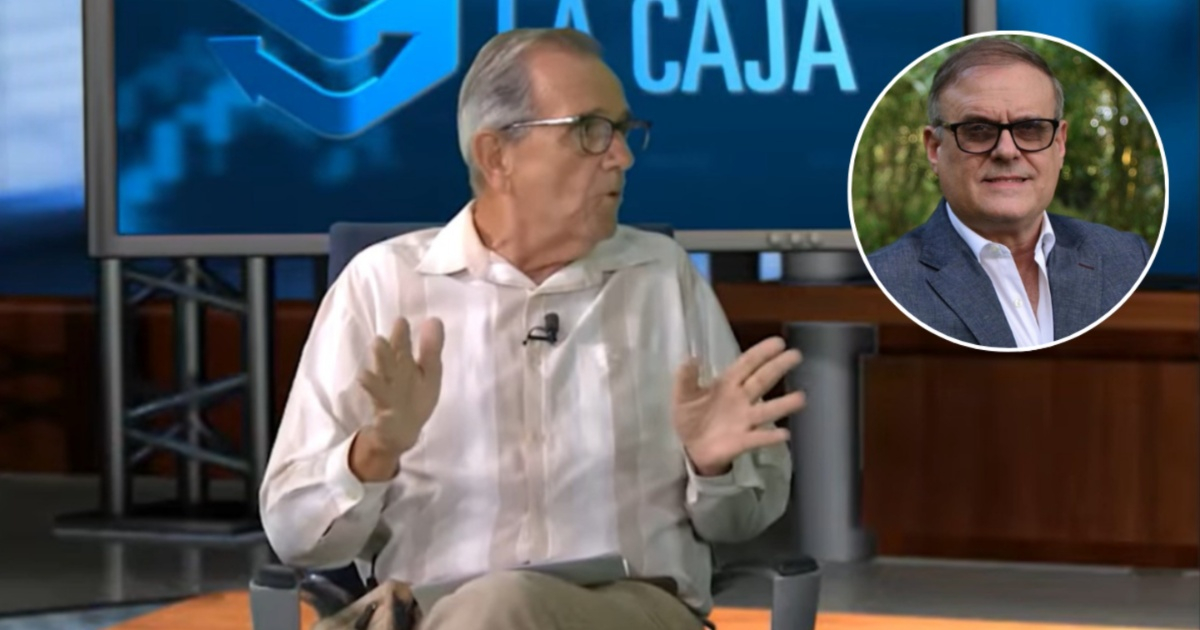
The Cuban economist Mauricio De Miranda Parrondo harshly criticized a recent episode of the television program "Cuadrando la Caja" dedicated to food production.
In a post on Facebook, the expert described the space as a display of “disrespect” by the official media towards the population, amidst a situation in which —he claimed— “people are starving in Cuba.”
De Miranda explained that she avoided commenting on the topic until she had seen the complete program, stating that she did not want to base her opinion solely on viral fragments on social media where Dr. Roberto Caballero, a member of the National Executive Committee of Agricultural and Forestry Technicians, criticized the eating habits of Cubans, pointing out that “we have become accustomed to eating a lot of potatoes” (and that producing them costs more than their selling price) and that “we eat too much rice and are not Asians.”
For the economist, those statements are particularly offensive in the current context of scarcity.
In his publication, De Miranda stated that, while discussing consumption habits, another claim made by the representative of the agroindustry went “unnoticed” on social media, in which he supposedly implied that “there would be no choice” but to sell some products in dollars in the domestic market to raise foreign currency and purchase supplies with the aim of revitalizing the food industry.
The economist interpreted that idea as a new justification for a dollarization of consumption "at a rapid pace," without an equivalent dollarization of income for workers and retirees.
De Miranda stated that he would not engage in a technical analysis of those claims because—according to his writings—other economists and professors have already done so in their own forums, some with figures and more substantial support, and because, in his view, the "absurd nature" of the assertions has already been demonstrated.
Instead, he chose to focus on what he considers the background of the program: a public communication that disregards Cubans and aims to "deceive" in order to hide "ineptitude" and a structural crisis.
In his text, the economist introduced historical examples that he attributes to government decisions in agricultural and food policy.
He mentioned, among other things, episodes associated with Fidel Castro (including an anecdote about how he cooked lobster) and listed policies and productive campaigns that, in his view, harmed agriculture and food in Cuba (livestock farming, "El Cordón de La Habana," the Ten Million Harvest, the closure of sugar mills, and products like "soy picadillo").
With that account, he argued that it is unacceptable to blame the population today for "poor consumption habits" when many people go to bed without eating.
As a related background to the same issue, the collected material indicates that Cuadrando la Caja stated that Cuba "is not in a position to provide a national solution" to the agricultural crisis due to economic constraints, and defended partial solutions "from the bottom up," starting from municipalities and provinces.
In this context, he cites Doctor in Sciences Roberto Caballero and Engineer José Carlos Cordobés, who addressed the dependency of the food industry on agriculture weakened by a lack of inputs, energy, and financing, and the emphasis on territorial autonomy and production linkages, without presenting—according to the summary itself—a clear path for structural transformation.
Stop eating potatoes and rice
Roberto Caballero stated in the government-friendly program Cuadrando la Caja that one of the main obstacles to achieving so-called food sovereignty in Cuba is the eating habits of the population.
Amid the crisis in the agricultural sector, food shortages, and inflation in Cuba, this official warned that the Law on Food Sovereignty and Nutritional Security promotes not only food production but also a change in the diet of Cubans.
“One of the problems affecting agricultural production is that we get accustomed to eating foods that are not native to our country,” said the official.
Caballero cited the potato as an example, a tuber of Andean origin that, according to him, "has never adapted to the climate and soils of Cuba."
He indicated that the State spends more on supplies and seeds than it gains from production. He asserted that decades ago, the product was stored in refrigerators to maintain supply throughout the year, but the State lost "more than half of the product, spoiled, without reaching the consumer."
As an alternative, the specialist recommended promoting native crops such as malanga, sweet potato, yam, and cassava, which adapt better to local conditions and require fewer imported inputs.
However, in Cuba's agro-markets, there are no potatoes or any of those supposed riches that the country could have.
Filed under: