
Related videos:
The National Electric System (SEN) experienced power outages yesterday, with a maximum impact of 1,816 MW, and forecasts a deficit near 1,800 MW during peak hours this Saturday.
According to the Informative Note from Unión Eléctrica (UNE), the electrical service was affected for 24 hours on the previous day, reaching its critical point at 6:10 PM, when the generation capacity deficit peaked at 1,816 MW.
The situation arises amid multiple breakdowns, extended maintenance, and severe limitations due to a lack of fuel and lubricants.
At 6:00 AM on December 27th, the availability of the National Electric System (SEN) was only 1,510 MW, compared to a demand of 1,900 MW, resulting in an immediate shortfall of 402 MW.
For the midday schedule, a deficit increase of up to 950 MW was estimated.
Among the main incidents are breakdowns in units 5 and 8 of the Mariel thermoelectric power plant, and in unit 2 of the Felton thermoelectric power plant (Holguín), as well as maintenance work on unit 2 of the Santa Cruz del Norte thermoelectric power plant and on unit 4 of the Carlos Manuel de Céspedes thermoelectric power plant in Cienfuegos.
An additional 659 MW are out of service due to limitations in thermal generation.
The lack of fuel continues to be one of the most decisive factors. A total of 1,047 MW remain unavailable due to this issue, which includes 790 MW in 89 distributed generation plants, 108 MW at the Moa Fuel Plant, and another 149 MW due to a shortage of lubricants.
The UNE reported that, despite these challenges, the 34 new photovoltaic solar parks generated 2,901 MWh during the day, with a maximum capacity of 561 MW at noon.
However, that contribution proved insufficient to reverse the structural deficit of the system.
For the nighttime peak hours, a maximum demand of 3,280 MW is forecasted against an estimated availability of 1,510 MW, which would result in a deficit of 1,770 MW and a projected impact of around 1,800 MW, assuming current conditions remain unchanged.
In the case of Havana, the provincial Electric Company reported through its profile on Facebook that on Friday, the service was disrupted since 2:42 PM, with a peak of 154 MW at 6:10 PM, and that the situation was restored by 8:56 PM.
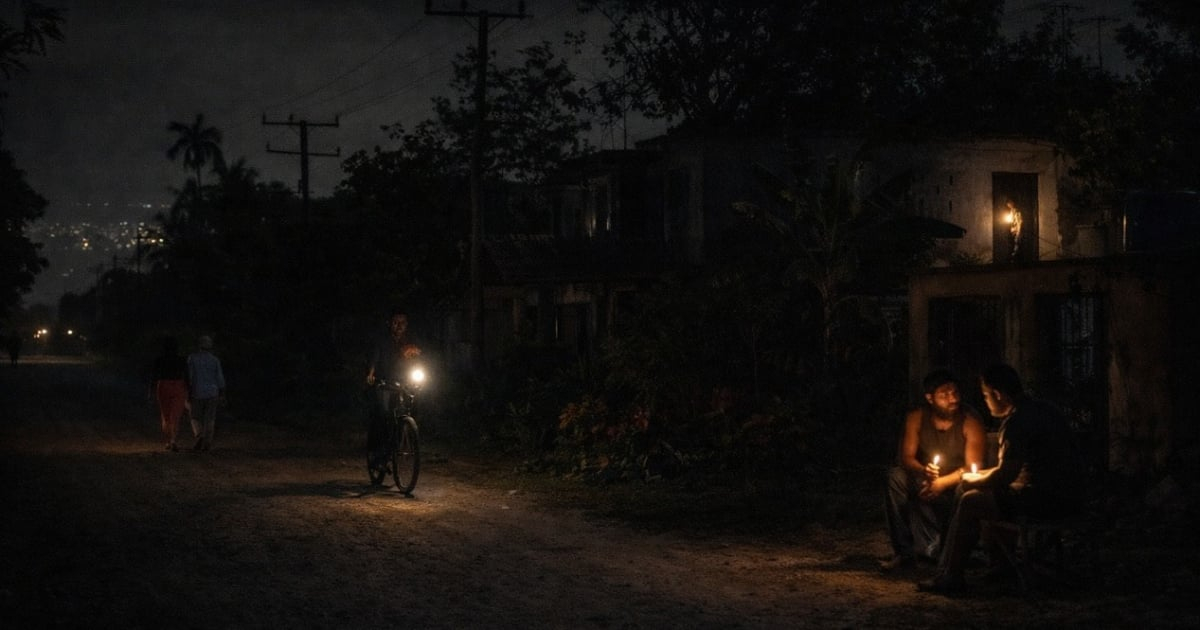
The Cuban electrical system is facing a structural collapse, with prolonged blackouts and a significant deficit in energy generation.
Beyond the specific technical failures, the overall situation reveals a deterioration accumulated over the years, marked by the lack of sustained investments, the aging of the infrastructure and a planning process that has not succeeded in anticipating or mitigating the progressive collapse of the thermoelectric units.
These interruptions affect homes, hospitals, businesses, and production centers, causing a significant impact on the citizens' quality of life.
Additionally, the uncertainty regarding electricity supply hampers the planning of daily activities and generates frustration among the population.
Filed under: