
Related videos:
After the discomfort and mockery generated among Cubans following a government official's suggestion to abandon the consumption of rice and potatoes in Cuba, the government press has come to the rescue and now speaks of “planting resilient crops”.
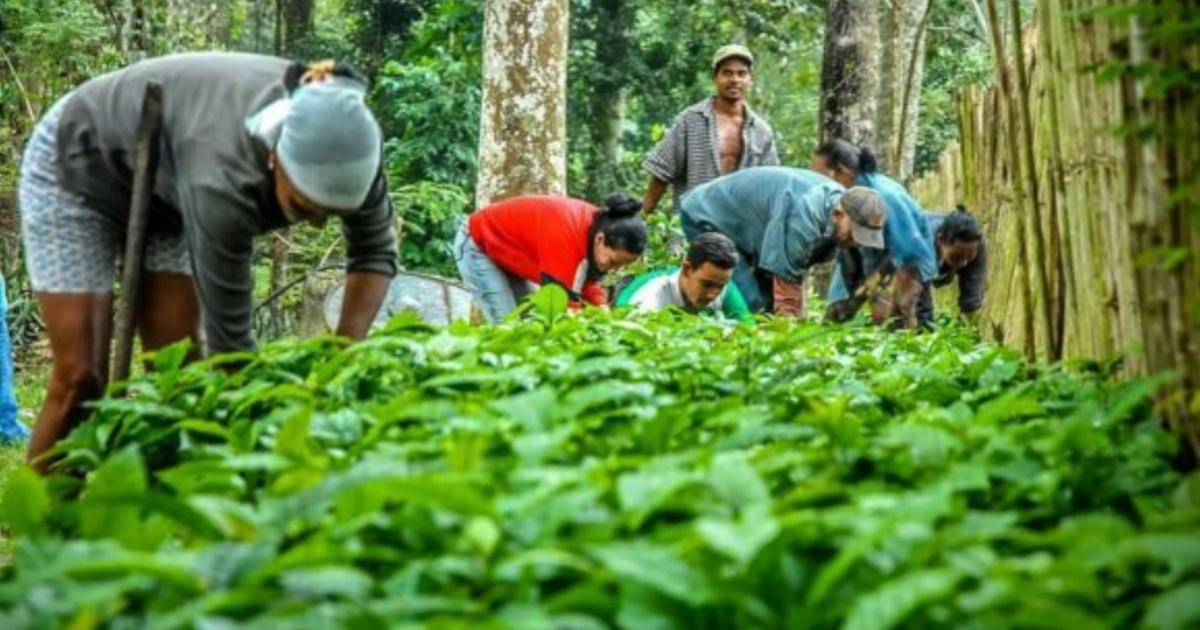
This Sunday, an article published in the official medium Cubadebate celebrates the use of agroecological practices in Holguín "with the goal of substituting artificial fertilizers and contributing to food sovereignty programs and the planting of resilient crops."
The article is all good news: 4,000 hectares benefited from the production of worm humus and compost.
"These initiatives also reduced expenses, as industrial fertilizers have high prices in the international market and their import is restricted due to the intensification of the economic, commercial, and financial blockade imposed by the United States against Cuba," the text states.
On Saturday, the government's offensive to address the damage had begun after Prime Minister Manuel Marrero Cruz posted a message on social media celebrating the "progress" of the Urban, Suburban, and Family Agriculture program, which triggered a wave of mockery and ironic comments.
The tweet, published amid widespread food shortages and soaring prices in the markets, was met with a flood of criticism.
Many users reminded him that the "urban gardens" from the 90s—presented as a solution to hunger during the Special Period—are now abandoned or overgrown with marabou.
This week, a media scandal erupted due to statements made by doctor Roberto Caballero, a member of the National Executive Committee of Agricultural and Forestry Technicians.
Caballero had asserted on the government program Cuadrando la Caja that one of the problems of Cuban agriculture is that citizens "have become accustomed to eating foods that are not native to the country," referring to rice and potatoes.
"We are not Asians. Eating rice is not a Cuban habit,” he said, in a comment that sparked widespread outrage and thousands of mocking reactions on social media.
Many believe that the official discourse aims to deflect the state's responsibility and present what is actually a structural collapse of the agricultural system as a "cultural problem."
Meanwhile, the markets remain empty. A pound of rice exceeds 200 pesos in the informal market, and potatoes—when they are available—are sold at prices that are unaffordable for most.
Filed under: