
Related videos:
Cuba will face one of the largest recent imbalances between electrical demand and actual supply capacity this Sunday, December 28, during the peak consumption time of the day.
The Electric Union warned that during the peak demand period of the system, the gap between what the country needs and what it will be able to deliver will exceed 1,900 megawatts (MW) by a wide margin, a figure that confirms the severity of the energy crisis affecting millions of households.
The previous day set a troubling precedent.
Throughout Saturday, power interruptions persisted all day, with the highest recorded shortfall reaching 1,956 MW at 6:30 PM.
According to the official report, since the early hours of this Sunday, the demand significantly exceeded the actual generation capacity: at 6:00 am, the availability was 1,370 MW and the demand was 1,920 MW, with 567 MW affected by a deficit.
By noon, the gap will increase considerably, reaching 1,030 MW.
During the peak nighttime hours, the total energy demand will rise to 3,370 MW, but the system will only be able to supply 1,468 MW, even with partial contributions from generation sources.
This creates a shortfall of 1,902 MW, which could lead to widespread blackouts due to a deficit of 1,930 MW, one of the highest figures in recent weeks.
The fragility of the system is explained by multiple technical failures and operational outages that keep large volumes of energy out of service.
Five generating units remain inactive at the Mariel, Felton, Diez de Octubre, and Renté thermoelectric plants, while two others are undergoing maintenance in Santa Cruz and Cienfuegos.
To this scenario is added the loss of 1,026 MW due to a lack of fuel, affecting 88 distributed generation plants (780 MW), the Moa Fuel Plant (108 MW), as well as 138 MW unavailable due to a lack of lubricant.
Furthermore, the limitations in thermal generation result in 589 MW out of service.
The capital is not exempt from this situation either.
In Havana, the Electric Company confirmed outages lasting nearly six hours on Saturday, with a maximum impact of 274 MW at 6:30 pm. The connection was restored shortly before 10:00 pm.
Although no outages were reported the following morning, the company admits that any increase in demand from the SEN could plunge the city back into darkness.
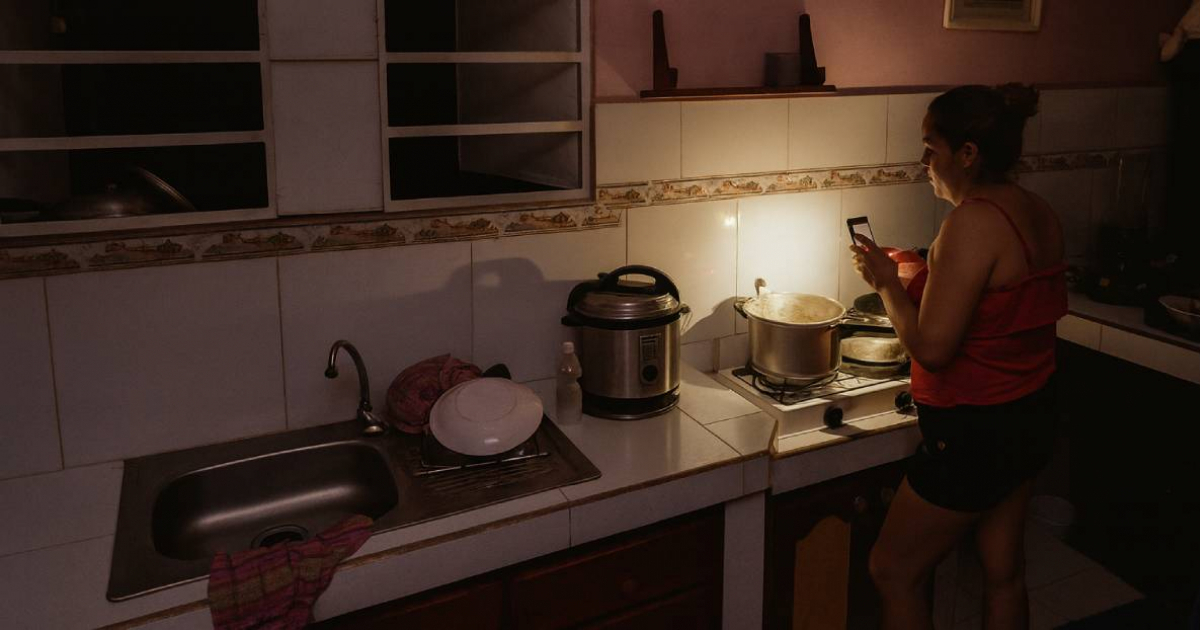
The energy crisis strikes once again during one of the most critical times of the year, when families attempt to gather, cook, and share moments together under the most basic conditions of normalcy.
The lack of an effective and sustained strategy to ensure a stable supply leaves the population caught between prolonged blackouts, daily improvisation, and an increasingly profound social weariness.
During the Christmas season, the precariousness of the system once again imposes limitations that affect not only daily life but also the ability to experience this time of year with a minimum of peace.
Far from being a one-time phenomenon, the situation reflects the accumulated deterioration of an energy model that has not received the necessary investments, maintenance, or structural solutions for years.
While official speeches insist on promises of recovery, the reality for the population is a repetition of blackouts, constant pressure on households, and emotional weariness that intensifies during times that should traditionally be associated with celebration and rest.
Filed under: