
Related videos:
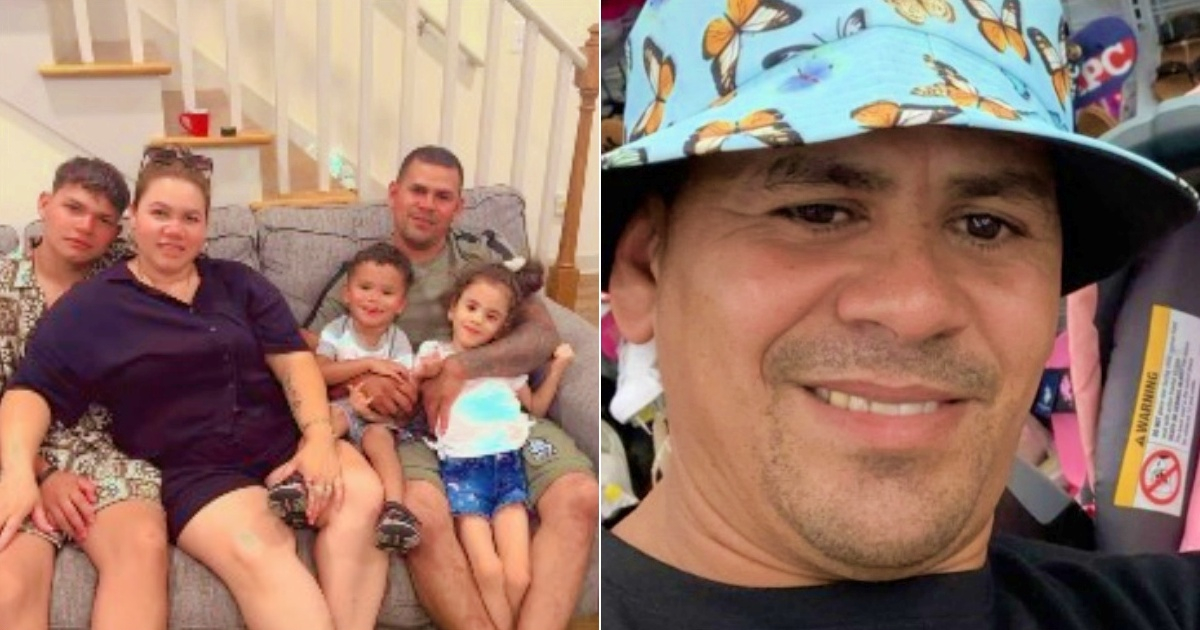
A Cuban mother is on the verge of being evicted while taking care of her three minor children on her own—one of whom is seriously ill—following the arrest of her husband by Immigration and Customs Enforcement (ICE) agents.
The family, residing in Georgia, has been left adrift emotionally and financially since Yoendris Leyva Lambert was arrested on December 2 during a routine immigration appointment.
“My life here in the United States is over. We are completely dependent on him,” Ana Maris Leyva, the wife of the detainee, said tearfully in statements to the local press.
A broken family on the brink of collapse
Ana Maris assures that her husband, who had applied for political asylum in the United States, does not pose a threat to the community.
According to court documents cited by the local network, Leyva Lambert only had minor traffic violations and was not facing any serious criminal charges.
However, his asylum request had been previously rejected, and he is now in immigration custody in El Paso, Texas, after refusing to sign a final deportation order.
From the detention center, Yoendris explained to his family that the only alternative being presented to him is a possible deportation to Mexico, a country he does not know and where he does not feel safe.
“They want to deport me to Mexico, but I am not from Mexico, I don't know anyone there and I am not going to feel safe,” she stated with concern.
The Cuban arrived in the United States in 2017, launching himself into the sea in a makeshift boat. His arrival coincided with the end of the "wet foot, dry foot" policy, a measure implemented by then-President Barack Obama, which negatively impacted the progression of his migration process.
According to his wife, during the journey he lost key documents to prove that he was a victim of political persecution in Cuba, a country that now refuses to accept him.
"Due to the illegal exits from the country, her husband was constantly monitored and harassed by the Cuban regime," explained Ana Maris.
Today, that story of surveillance and threats has been buried under a deportation order I-220B, while the family faces a heartbreaking reality.
A desperate mother with three children, one of whom is sick
Since her husband was arrested, Ana Maris has taken on the sole responsibility of caring for their three children, including Angelina, who is only five years old and suffers from severe cerebral palsy.
“She doesn’t speak, she doesn’t listen, she doesn’t sit, she doesn’t hold her head up,” the mother recounted with evident anguish.
That condition prevents him from seeking employment, leaving the family entirely without income.
With the rent due and no means to pay it, Ana Maris lives surrounded by boxes, preparing for the inevitable: the eviction.
“I’m packing all my things; everything is in boxes. If they deport me, I won’t have a place to rent, I won’t have anything,” she stated.
Although he is a permanent resident in the United States and has submitted a family petition since 2022 to regularize his husband's immigration status, that application remains unresolved. Meanwhile, the family situation deteriorates every day.
A public plea
In the midst of desperation, Ana Maris has turned to the community to prevent her children –including her sick daughter– from ending up on the street.
Through a campaign on GoFundMe, help has been requested to cover the rent and basic living expenses of their home.
“Please help me, I beg you”, he wrote in the campaign description.
"I am alone with three children, one of whom has cerebral palsy. I implore any help, please. I sincerely beg you to assist me. I am in a moment of desperation for my children, as my husband is our provider, and now he is not here. Please help me, I beg you from the bottom of my heart. God bless you all for your assistance," the text adds.
Cases like that of Yoendris Leyva highlight the gaps in the U.S. immigration system, particularly for those caught between transitioning policies and judicial decisions that do not take into account human realities such as the care of children with severe disabilities.
The Cuban government's refusal to accept deportations further complicates the fate of these families, leaving them in a sort of legal limbo without a country or protection.
Filed under: