
Related videos:
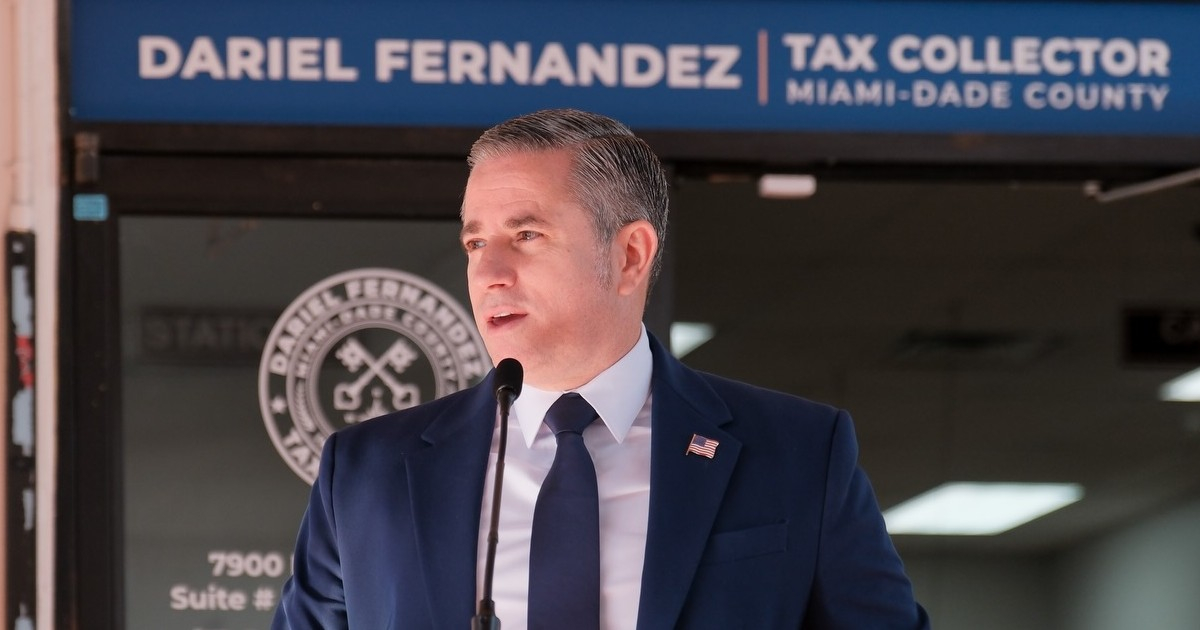
The Miami-Dade County tax collector, Dariel Fernández, publicly defended his office's actions in response to the lawsuit filed by a private company after the revocation of business licenses for businesses linked to transactions with Cuba, and made it clear that he will continue to enforce the law "transparently and without any remorse."
In an interview with journalist Javier Díaz from Univisión, Fernández explained that his priority since taking office has been to transform the perception and functioning of his office, which directly impacts the lives of nearly three million residents of the county.
He emphasized that his administration is strictly governed by compliance with state and federal law.
"The focus is to do what the law states. If you have a business in Miami-Dade County and are going to conduct any type of transaction with Cuba, you must have a license from OFAC or operate under a general license that clearly specifies what type of activity is being carried out," she explained.
Fernández specified that the process followed by his office has been gradual and based on notification. First, letters were sent to the companies requesting documentation; some responded and others did not. Subsequently, a second notification was sent.
Those companies that provided the information and demonstrated compliance with legal parameters faced no consequences and received their local business tax again, allowing them to continue operating.
The collector clarified that his office does not have the authority to directly close businesses, but rather executes an administrative process for the revocation of the Local Business Tax Receipt.
He explained that this local tax is essential for establishing and maintaining a business in Miami-Dade, and that each business must then obtain a municipal occupational license or one from the unincorporated area of the county.
When asked about the possibility of facing more lawsuits from the affected companies, Fernández responded that the U.S. legal system guarantees the right of any person or entity to go to court if they disagree with an administrative decision.
"If they want to resolve it in court, there is no problem. I was elected to enforce the law, and that is what we are doing," he stated.
The official also recalled other actions taken during his administration, such as the elimination of long lines, the eradication of the illegal sale of appointments, and the forgery of documents to obtain driver's licenses and identification, as well as review processes related to parking permits for people with disabilities.
"We are open to continuing to work to always put each of the residents of Miami-Dade County first," he concluded.
The lawsuit against the county arises after an administrative offensive was initiated to revoke licenses from companies allegedly linked to illegal economic operations with Cuba.
Fernández has reiterated that these actions are based on Florida law, particularly Statute §205.0532, which empowers local authorities to act when there are legitimate concerns about businesses operating with entities controlled by the Cuban regime without the necessary federal authorization.
Under this legal framework, the collector's office can revoke the Local Business Tax Receipt until businesses demonstrate full compliance with applicable regulations.
Although a company decided to take the case to court, Fernández assured that the county's position will not change and that it will continue to act in accordance with the established administrative and legal procedures.
Days earlier, the county had revoked the licenses of 20 businesses that could not prove federal authorization to conduct transactions with Cuba.
As part of the investigation, 75 companies were notified to submit permits from the Office of Foreign Assets Control (OFAC) and/or the Bureau of Industry and Security (BIS). Of these, 48 responded satisfactorily and were cleared of any illegal ties, while the remaining ones received a second warning.
After the deadline passed, the local business tax was revoked, rendering them unable to operate legally.
Among the affected companies are travel agencies, shipping services, logistics, and multi-service providers, several of which have more than one location in the county. The revocation took effect immediately and includes additional penalties for those who continue to operate without a valid license.
Fernández has reiterated that Miami-Dade will not be used as a platform to finance or support the Cuban regime, a stance he has defended since September, when he issued a public warning to companies that intended to do business with Havana.
The official, Cuban-American emigrant, has insisted that his commitment is to prevent profiting from the suffering of the people on the Island and to align local policy with the demands of the Cuban exile community, which calls for firm actions against those who provide resources to the regime.
Filed under: