
Related videos:
As news of the attacks on Venezuela awakened the world and the capture of Nicolás Maduro spread like wildfire, U.S. President Donald Trump added a controversial element to the conflict: music.
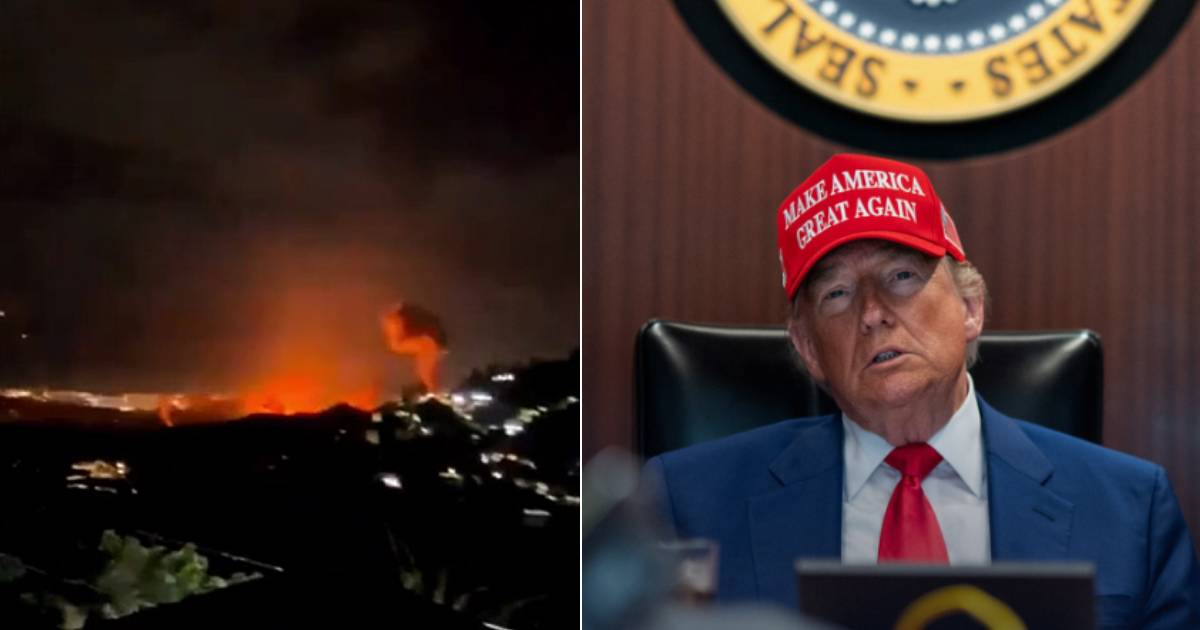
Trump shared a video on his social network Truth Social showing explosions recorded in Caracas and other areas of the country, accompanied by Fortunate Son, the iconic song by Creedence Clearwater Revival that resonated with a generation for its strong anti-war message and critique of political power during the Vietnam War.
The song, written and performed by John Fogerty and released in 1969, became an anthem against conscription and the privileges of the elites who sent others to die on the front lines.
Decades later, its use as a musical backdrop for images of war is once again generating controversy, now in the context of an attack that the Venezuelan government directly attributes to the United States.
The images shared by Trump coincide with reports from CNN, Reuters and other international media, whose teams witnessed several explosions early Saturday morning in different locations across Caracas.
Witnesses reported loud explosions, the flight of aircraft, columns of smoke, and power outages in areas near key military facilities such as Fuerte Tiuna and the La Carlota airbase.
From power, Nicolás Maduro's regime denounced a "serious military aggression" and declared a national state of emergency, while regional leaders such as Colombian President Gustavo Petro warned of a missile attack and called for the immediate intervention of the Organization of American States (OAS) and the United Nations (UN).
In the midst of chaos, civilians' accounts reveal the harshest face of war: people hiding in windowless rooms, families awakened by the sound of explosions, and entire neighborhoods paralyzed by fear.
"The windows shook, I hid," recounted a resident living near a military zone. Others described the sounds as bursts of machine gun fire in the early morning hours.
Filed under: