
Related videos:
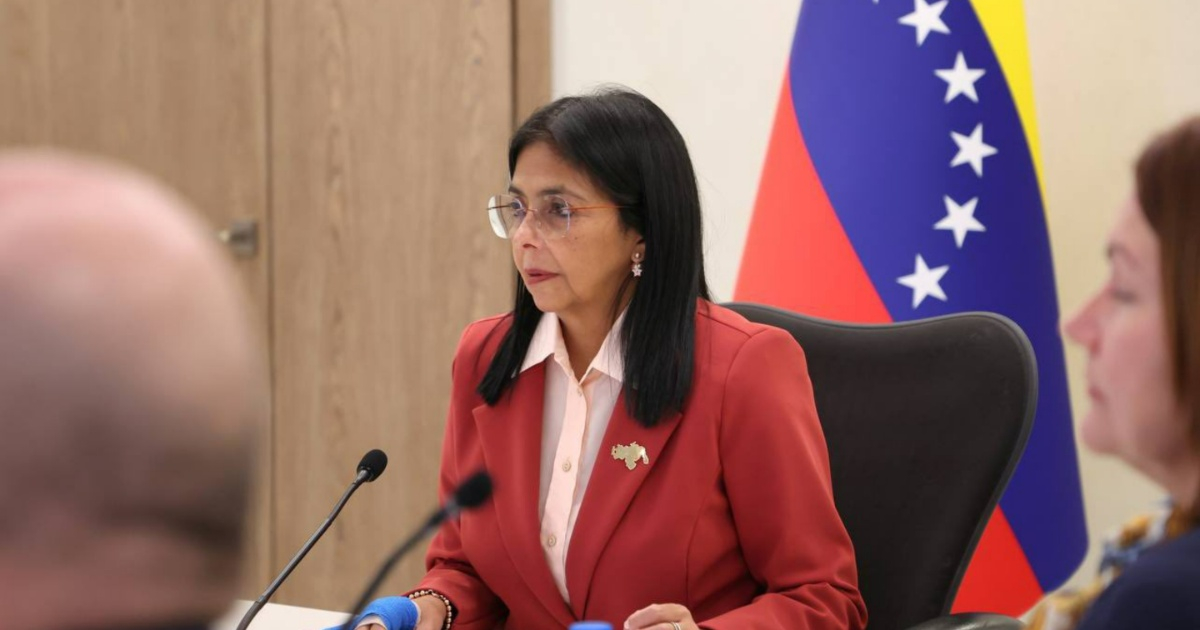
The armed forces of the Venezuelan regime supported the appointment of Delcy Rodríguez as interim president of Venezuela.
In a statement released this Sunday, they also assured that they will continue "to utilize all their available capabilities for the defense of the country."
The statement, read on national television by the regime's Minister of Defense Vladimir Padrino López, endorsed the "Decree of State of External Disturbance throughout the national territory."
Additionally, it confirmed that the institution will continue with "military defense, the maintenance of internal order, and peace."
"We activated the Full Operational Readiness across the entire national geographic space and in perfect military-police popular unity, in order to integrate the elements of National Power in the mission to confront imperial aggression," the text states.
Padrino López accused the U.S. of cold-bloodedly murdering a large part of the security team of the ousted president Nicolás Maduro.
The general stated he firmly rejects the "cowardly kidnapping" by Maduro and Cilia Flores, "after cold-bloodedly murdering a significant part of his security team, soldiers, and innocent citizens," according to the statement.
The Supreme Court of Justice (TSJ) of Venezuela, controlled by chavismo, ordered early on Saturday morning that the vice president Delcy Rodríguez assume the Presidency of the country.
In an unprecedented decision, the highest court invoked Article 335 of the Venezuelan Constitution, which allows for the guarantee of state continuity in exceptional situations.
The magistrate Tania D’Amelio, the spokesperson for the ruling, explained that the court declares the existence of a “forced absence of the president” and, consequently, instructs Rodríguez to exercise “all the powers, duties, and authorities inherent to the position” until constitutional order is restored.
"The aim," D'Amelio explained, "is to ensure the functioning of institutions, the comprehensive defense of the nation, and the preservation of public order in an exceptional and atypical context."
The TSJ recognized that the current situation constitutes an act of force majeure, not literally foreseen in the Constitution, which led the court to an expanded interpretation of articles 234 and 239 to legitimize the temporary transfer of power.
The decision was made after intense internal debates on how to respond to the foreign military intervention and the detention of the head of state.
From his residence in Mar-a-Lago, U.S. President Donald Trump declared that his country “will control Venezuela until there is a fair transition,” and announced that the new Venezuelan government will be monitored to ensure “an orderly transition to democracy.”
The decision of the TSJ seeks to prevent a power vacuum and maintain administrative continuity in light of the instability created by the U.S. operation.
Delcy Rodríguez, one of the most influential figures of chavismo, thus assumes the head of state during an unprecedented institutional crisis, with the country under military tension, isolated protests, and a still uncertain political future.
Filed under: