
Related videos:
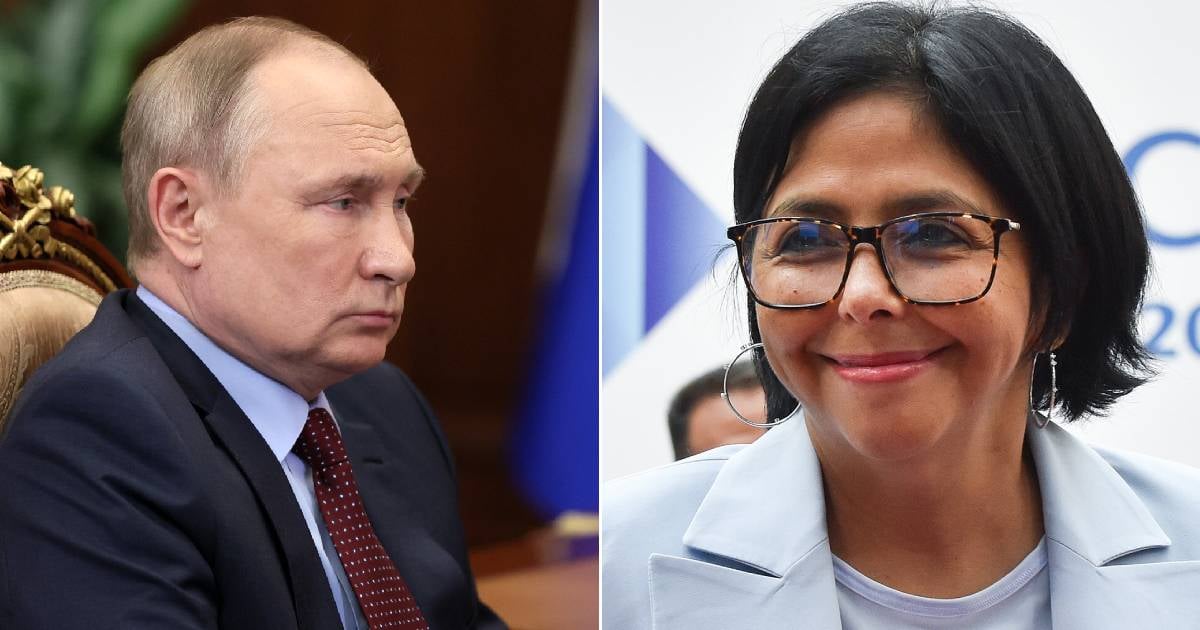
The government of Russia expressed its support this Tuesday for Delcy Rodríguez and officially recognized her swearing-in as acting president of Venezuela, following the capture of Nicolás Maduro in a military operation by the United States on January 3rd.
In a statement issued by the Russian Foreign Ministry, Moscow asserted that Rodríguez's assumption of office "demonstrates the determination of the Bolivarian Government to ensure unity and preserve the structure of power."
He also emphasized that the measure aims to "mitigate the risks of a constitutional crisis and create the conditions for the peaceful and stable development of Venezuela."
The text, published on the official accounts of Russian diplomacy, added that the decision of the Venezuelan National Assembly and the Supreme Court of Justice is a “manifestation of sovereignty” against what it described as “neocolonial threats and armed aggression from abroad.”
"We reaffirm Russia's unwavering solidarity with the people and government of Venezuela. We wish success to the acting president Delcy Rodríguez in addressing the challenges faced by the Bolivarian Republic," stated the statement.
The Kremlin also reiterated its willingness to "continue providing the necessary support to friendly Venezuela" and advocated for a "de-escalation of the current situation through constructive dialogue and respect for International Law."
The Russian recognition comes just hours after U.S. officials warned that Rodríguez could "face the same fate as Maduro" if he defies U.S. interests.
The contrast of positions reflects the new geopolitical dynamics regarding Venezuela's immediate future following the apparent decline of chavismo.
Analysts believe that the Kremlin's support aims to maintain its strategic influence in Latin America and protect the economic and military interests that Russia has in Venezuelan territory, including energy projects and defense agreements.
Meanwhile, Washington has not publicly defined its position on Rodríguez's provisional leadership, although President Donald Trump stated that his priority is to "ensure stability" in the region and prevent external actors — such as Russia or Cuba — from expanding their political and military control in the South American country.
For its part, Havana has reiterated its "unwavering solidarity" with chavism and supported the institutional continuity proclaimed by Rodríguez, despite growing criticism within Cuba over the death of 32 Cuban soldiers during the operation that captured Maduro.
Filed under: