
Related videos:
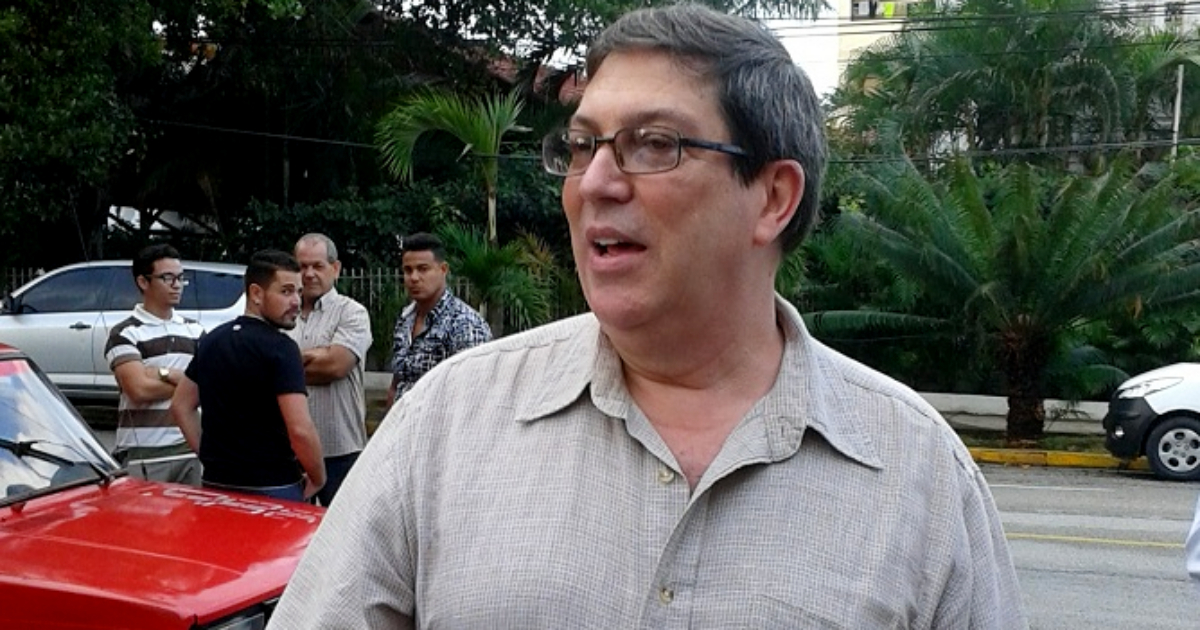
The words of Cuban Foreign Minister Bruno Rodríguez Parrilla, who stated that the "valiant Cuban people will defend their nation against any imperialist aggression" and that they are "ready to give their lives for this land," sparked a wave of reactions on social media.
In the forums of CiberCuba Noticias, where the publication of his words went viral within hours, thousands of Cubans questioned the legitimacy of the regime and its foreign minister to speak on behalf of the country.
The martial tone of the message—disseminated following U.S. President Donald Trump's statements regarding a possible action against the Havana regime—sparked a debate that crossed ideological lines and exceeded 30,000 interactions.
Most comments agreed on a common diagnosis: the Cuban people are tired, but not of imperialism, rather of their own government.
“Who told you that the Cuban people are faithful to their history of struggle? The ordinary Cuban does not think about dying for the homeland, but rather in finding food and electricity”, wrote a reader.
Another user was more blunt: “Don't speak for me, Bruno. The people will not defend misery, blackouts, or repression. Defend yourselves, as you live well-fed and with air conditioning”.
The contrast between the epic language of the chancellor and the everyday reality of Cubans became the focal point of the debate. "If he loves the homeland so much, he should start by putting on the uniform and being on the front line," several comments quipped, echoing a general sentiment: the leaders would not be the ones to give their lives, but rather those who would demand it from others.
Some messages appealed to humor as a release valve. “At the first explosion, Bruno runs faster than a tourist with WiFi”, wrote a user. Others turned to political satire: “The same old speech: homeland or death. But the homeland is in ruins and we experience death every day.”
Among the most thoughtful voices, several Cubans in exile pointed out the complete divorce between the political elite and the population. "They speak for a people who did not choose them and who have neither light, nor water, nor hope. If the government truly loved its nation, it would not have it mired in hunger," wrote an emigrant from Miami.
The debate also reflected a deep moral exhaustion. Many pointed out that the rhetoric of resistance—effective during the years of confrontation with Washington—sounds empty today to an exhausted population. “After 67 years of asking for sacrifice, the people are not willing to die for slogans. They are willing to live, and that alone is an act of rebellion”, read another comment with hundreds of “likes.”
There was, however, a minority of supporters of the chancellor. "Imperialism will not bend us" , wrote a regime follower, while another echoed classic slogans: "Homeland or Death, We Will Overcome!" But even those messages were quickly overshadowed by responses with a civic and sarcastic tone. "We will overcome... but first fix the blackouts" , a reader quipped.
The widespread sentiment can be summed up in the phrase that was most frequently repeated among users: “The people are tired, but tired of you”.
Beyond the meme and the mockery, the deluge of reactions illustrates an unprecedented political fracture: a power that speaks in the plural (“we, the people”) against a citizenry that increasingly identifies less with that discourse.
While the regime resorts to the language of war and resistance, Cubans respond from the daily struggle, irony, and fatigue. The gap between the official narrative and real life has never seemed so visible—or so publicly shared—as in this wave of comments.
What for the chancellor was a declaration of defiance against Washington, for many Cubans sounded like the empty echo of a time that no longer exists.
In the words of a young commentator: “The people you claim to represent only want one thing: to stop surviving and start living. And that, Bruno, is not imperialism. It's dignity.”
Filed under: