
Related videos:
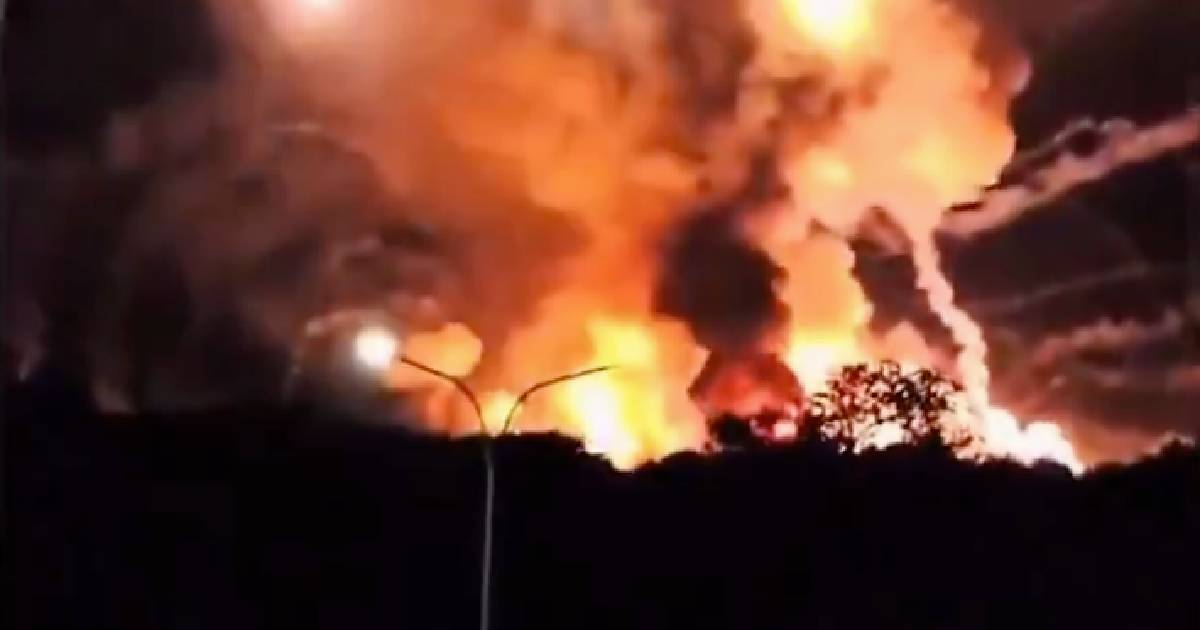
Residents of Fuerte Tiuna, one of the areas most affected by the bombings that occurred in the early morning of January 3 in Caracas, recounted their experience during the U.S. military operation that culminated in the capture of Venezuelan dictator Nicolás Maduro.
The detonations that shook the capital resulted in at least 32 Cuban soldiers dead and 23 Venezuelans.
According to testimonies gathered by El Diario and the agency EFE, the attacks were concentrated in areas near the Miraflores Palace, the Vice Presidency, and the La Carlota airbase, where Chavista defense units were gathered.
"It was very dark, there were many gunshots, and the explosions were very close. Many windows in the apartment buildings fell," recounted a resident of the military buildings in Fuerte Tiuna.
"Everything seemed like a movie: people were screaming, children were crying and running down the stairs. There were known injured and dead, good and beloved people," he added.
In the center of Caracas, a 57-year-old woman, a resident of a building near Miraflores, stated that the explosions woke her up abruptly.
"The bed shook. I heard explosions, and the windows vibrated. I told my son not to go near the window because we were being bombed," he reported.
"I felt a lot of fear and cried at the thought that I had to say goodbye to my family because I didn't know what was going to happen," he/she noted.
She then recounted that she and her son took refuge in the kitchen, lying on the floor, until the loud noises ceased. After that, they ran to her daughter's house, which was farther from the area.
"The streets were empty, neighbors were coming down the stairs shouting that we needed to evacuate. Many left on motorcycles, while the elderly remained sitting on the floor of the building," she recalled.
In the Catia La Mar area, west of Caracas, another 56-year-old woman identified as Georgina compared the experience to the bombings in Gaza.
"I already know what the people of Gaza feel. My granddaughter told me, 'Grandma, I don't know where to run.' It was terrible," she told EFE.
The woman reported that, around 1:50 in the morning, she heard a buzzing sound followed by a loud explosion that made her think of an earthquake. “I saw fire and smoke in an area where there is a naval school. Then another bomb fell on a nearby building. One person died and another was injured,” she recounted.
Another resident, Jesús Linares, 48 years old and a firefighter by profession, recounted that he was thrown to the ground by the shockwave.
"I took refuge in a closet and didn't come out until I heard my neighbors' screams. Then I helped an 82-year-old woman who was injured in the forehead and leg. Everything was filled with debris and scattered objects," he recounted.
According to official reports, the attacks have extended to the states of Miranda, La Guaira, and Aragua. Although the interim government of Delcy Rodríguez has not published exact figures, local media confirm civilian and military casualties.
The operation, ordered by President Donald Trump, focused on destroying the main command and defense centers of the Chavista regime prior to Maduro's capture.
Hours after the attacks, hundreds of supporters of chavismo marched through downtown Caracas demanding the release of Maduro and his wife, Cilia Flores, who appeared this week before a federal court in New York on charges of narcoterrorism and international conspiracy for drug trafficking.
For many Venezuelans, the dawn of January 3rd will be remembered as one of the most violent in the country's recent history.
"We woke up to bombs, screams, and smoke. We thought it was the end of the world," summarizes a witness.
"That night, Caracas was a battlefield," he emphasized.
Despite this, thousands of Venezuelans both inside and outside the country celebrated Maduro's removal and expressed their exhaustion with the Chavista regime.
Filed under: