The President of the United States, Donald Trump, stated this Wednesday that his administration is taking steps to prohibit large institutional investors from purchasing single-family homes, aiming to reduce housing prices.
Trump made the announcement in a post on Truth Social, where he noted that he will ask Congress to "codify" the measure, that is, to turn it into law.
Additionally, the president plans to address additional proposals on housing and affordability in a speech at the World Economic Forum in Davos.
In his message, Trump framed the initiative as a defense of residential use against corporate interests: “People live in homes, not in businesses,” he stated.
"For a long time, buying and owning a home was seen as the pinnacle of the American dream. It was the reward for hard work and doing the right thing, but now, due to the record inflation caused by Joe Biden and the Democrats in Congress, that American dream is increasingly out of reach for too many people, especially younger Americans," he justified.
With "large institutional investors," Trump is referring to companies, investment funds, and financial corporations that purchase large quantities of homes—primarily single-family houses—not to live in them, but to rent them out or speculate on their value.
The specific mechanisms of the prohibition are not detailed, how "large institutional investors" would be defined, nor when it would come into effect, beyond the intention to promote its legislative codification and to present new proposals related to the issue.
In March 2025, the Donald Trump Administration announced new restrictions on access to mortgage loans backed by the Federal Housing Administration (FHA), limiting them exclusively to U.S. citizens and legal permanent residents.
The measure, presented as a strategy to protect public funds and "close gaps" in the system, excluded thousands of immigrants with temporary status, including beneficiaries of programs like DACA, asylum seekers, and individuals filing taxes with an ITIN number.
These provisions marked a shift towards a more exclusionary housing policy, ending the flexibilities approved during Joe Biden's administration.
The change occurred amid a growing real estate crisis that was particularly hard-hitting in South Florida.
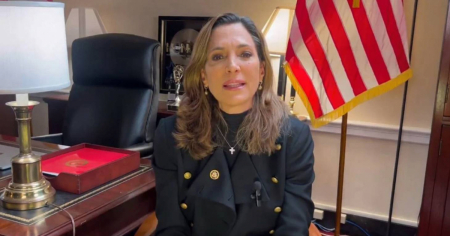
In September 2025, the Cuban-American congresswoman María Elvira Salazar warned that buying a home in Miami had become "increasingly out of reach" for working families, amid record prices and a shortage of supply.
His call for "bold solutions" coincided with local efforts to alleviate the issue through affordable housing programs, although the high demand and restrictive requirements highlighted the limitations of those initiatives.
For many immigrants and young professionals, the American dream of owning a home seemed increasingly unattainable, becoming a distant goal within a market pressured by speculation and political decisions.
Filed under: