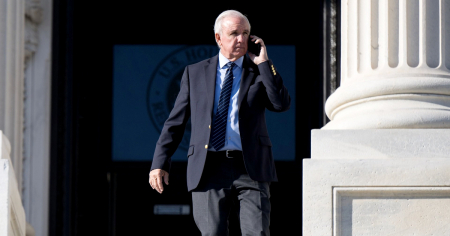
The U.S. Congresswoman María Elvira Salazar recalled a moment from her interview with Nicolás Maduro in 2019, when the Venezuelan leader denied the presence of Cuban military in his security detail. The legislator highlighted this excerpt just a few days after the Cuban regime acknowledged the presence of 32 military personnel from the island in Venezuela during Maduro's capture, an event that reinforces historical claims regarding the involvement of Cuban personnel in the security structure of the Chavista leader.
In a message posted on his Instagram account, Salazar wrote: “In 2019, Maduro looked me in the eye and denied that Cuban military forces were operating in Venezuela or part of his security ring. Today, the Cuban regime has confirmed the truth. It was a lie then, and it’s undeniable now.”
Maduro's denial in 2019
During the interview, Salazar informed the chavista leader that the U.S. State Department estimated the presence of thousands of Cuban military personnel in Venezuela, even integrated into his personal security apparatus. Maduro emphatically rejected that claim.
“That fable that there are thousands of Cuban soldiers in Venezuela is a lie,” he replied. “We have cooperation agreements with Cuba, but it is the Venezuelan military that defends Venezuela. What we have here are 40,000 Cuban doctors, baseball players, dancers, actors… there are no soldiers.”
When the journalist pressed him on whether there were Cubans in his inner security ring, Maduro reiterated, "My security ring is made up of Venezuelans."
Confirmation of Cuban military presence in Venezuela
Seven years after that interview, the government of Cuba officially acknowledged that it had troops deployed in Venezuela. According to a statement published by the state-run newspaper Granma, 32 Cuban soldiers died in Venezuelan territory during the American military operation that ended with the capture of Nicolás Maduro in Caracas.
The Cuban regime published the identities of the deceased, all of whom were members of the Revolutionary Armed Forces (FAR) and the Ministry of the Interior (MININT), and acknowledged that they "were carrying out missions at the request of their counterpart agencies in Venezuela." This marked the first public acknowledgment of Cuban military presence in the South American country, following years of denial.
Among the deceased was identified Colonel Humberto Alfonso Roca Sánchez, 67 years old, who, according to information released by sources close to Venezuelan security services, was part of Nicolás Maduro's personal protection detail. Roca had also been a member of Fidel Castro's first security ring and belonged to the Personal Security Directorate of the Ministry of the Interior of Cuba.
Historical contradiction
The official acknowledgment represents a drastic shift from the narrative that Havana maintained for over a decade. On multiple occasions, Cuban officials—including Miguel Díaz-Canel and Bruno Rodríguez—had asserted that Cuba did not have troops or participate in military operations in Venezuela, limiting bilateral cooperation to medical and social fields.
That position became evident on January 4, 2026, when the very Granma acknowledged the death of 32 Cuban combatants in Venezuelan territory, definitively burying the official version that for years denied any armed presence of the island in the South American country.
The revelations about the fallen soldiers and their role in Maduro's personal security confirm the direct involvement of Cuban forces in the defense of the Chavista regime, a reality that today contradicts the words that Nicolás Maduro himself told María Elvira Salazar: “My security ring is made up of Venezuelans.”
Filed under: