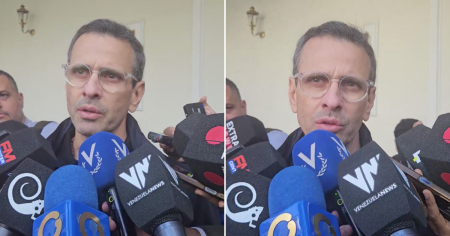
Diosdado Cabello, one of the heavyweights of chavismo, surprised everyone on Wednesday by publicly admitting that he is going through a moment of strong emotional impact, marked by fear and uncertainty, while also softening his rhetoric towards the United States and opening the door to resuming energy ties with Washington.
During the broadcast of his program With the Heavy Hand, Cabello appeared unusually restrained and acknowledged feeling "emotionally troubled," "hit," and experiencing "a lot of pain and fear," in statements that contrast with the defiant tone that has historically characterized his messages against the U.S.
In that context, the Chavista leader made a statement that has sparked extensive debate both inside and outside Venezuela: “If the United States is willing to buy our oil, we will sell it to them.” This assertion marks a significant shift in the official narrative, especially amid the deep political crisis the country is facing following the capture of Nicolás Maduro and Cilia Flores by U.S. forces.
The shift in Cabello's tone does not occur in a vacuum. It aligns with the narrative of the acting president, Delcy Rodríguez, who openly defended trade relations with the United States and normalized energy agreements, even while describing the recent military operation as an "aggression" that left a "stain" on bilateral history.
Rodríguez insisted that the economic link with Washington not only persists but is also crucial for the country's survival, revealing that a significant portion of Venezuelan exports is destined for the U.S. market.
From Washington, presidential spokesperson Karoline Leavitt stated that the United States wields “maximum influence” over the Venezuelan interim government and confirmed that Venezuelan crude oil is already being sold for American benefit, as part of a strategy that combines political control, economic pressure, and arguments related to the fight against drug trafficking.
Meanwhile, Caracas announced on Thursday the release of a significant number of political prisoners, including foreign citizens, in what the authorities described as a "unilateral gesture of peace."
Although the government denied that it is a negotiation, the announcement coincides with diplomatic and energy maneuvers aimed at reducing tensions with the United States and consolidating a controlled transition.
Filed under: