
Related videos:
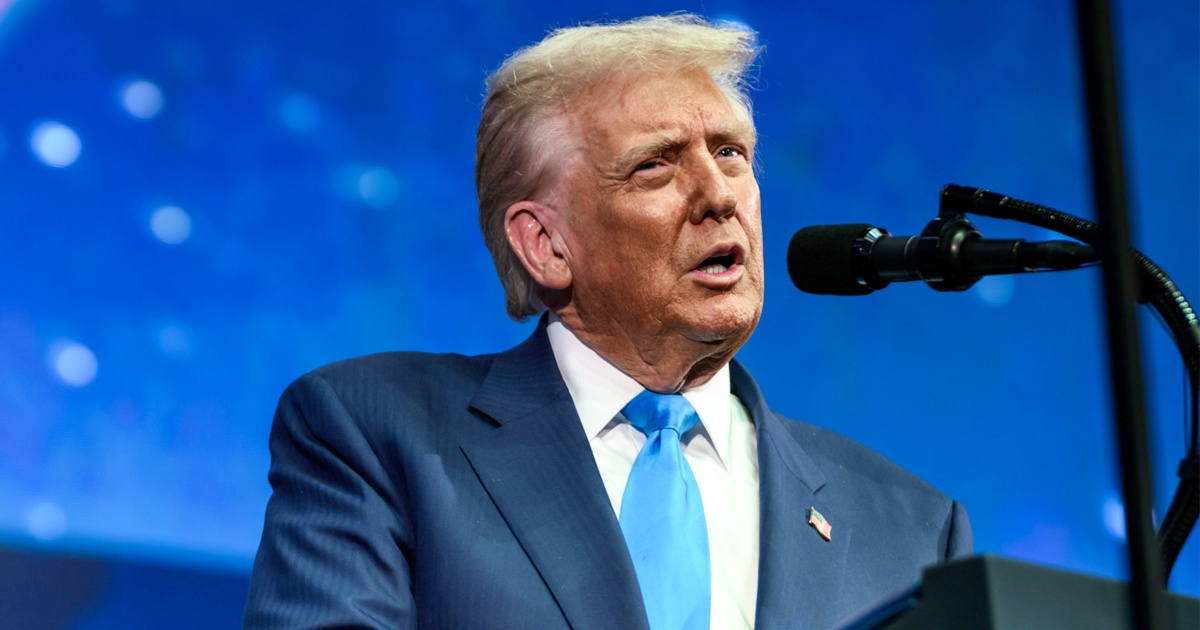
The President of the United States, Donald Trump, announced this Friday that he has canceled a second "wave of military attacks" against Venezuela, in response to what he referred to as "significant gestures" from the new Venezuelan leadership.
Among them, he cited the release of political prisoners and the beginning of an unprecedented energy cooperation between the two countries.
The announcement was made through his social network Truth Social, where the president emphasized that significant gestures are being made by the Venezuelan regime, currently led by Delcy Rodríguez, who took over after Nicolás Maduro was captured during a U.S. operation in Caracas.
“Venezuela is releasing a large number of political prisoners as a sign of its 'search for peace.' This is a very important and intelligent gesture,” Trump wrote in his message, describing the move as a significant step toward easing tensions in bilateral relations.
Unprecedented oil cooperation
In the same message, Trump emphasized that the United States and Venezuela have begun to collaborate closely in the energy sector, focusing on oil infrastructure.
"The United States and Venezuela are collaborating effectively, especially in the reconstruction, in a much greater, better, and more modern way, of their oil and gas infrastructure.", he wrote.
The magnitude of the projected investment is significant.
"The major oil companies will invest at least 100 billion dollars", the president announced, who also revealed a meeting at the White House with executives from the leading companies in the sector.
The energy summit will bring together fourteen global companies, according to sources close to the White House, interested in learning about the terms of this new strategic relationship with Venezuela.
This diplomatic shift contrasts with the stance taken by previous U.S. administrations, which imposed sanctions and blockades on the Venezuelan regime for human rights violations and antidemocratic practices.
Cancellation of the military operation… but with caution
Trump explained that, due to diplomatic and energy advances, the planned second phase of attacks has been suspended.
“I have canceled the second wave of attacks, which was previously planned, as it seems unnecessary,” he stated, although he warned that this does not constitute a complete withdrawal of military pressure.
“All ships will remain in their positions for safety reasons,” he emphasized, clarifying that the deployment of naval forces in the Caribbean will continue as a deterrent against any eventuality.
This balance between diplomatic relaxation and military presence indicates that Washington is still cautiously assessing the internal situation in Venezuela, despite the regime's apparent shift in direction.
The closure of torture centers and the future after Maduro
In another part of his statements, Trump mentioned that chavismo "had a torture chamber in the middle of Caracas that is now being shut down," referring to the Helicoide, a notoriously infamous detention and torture center documented by international organizations. "It has tortured. But it has tortured people," he emphasized.
This statement comes after the capture of Nicolás Maduro, which took place five days earlier during a military operation that marked a turning point in the Venezuelan crisis.
His arrest, announced by Trump himself last week, has been supported by opposition sectors and parts of the international community, although human rights organizations insist that the democratic transition must be accompanied by justice, but also by reconciliation.
"A very important and clever gesture."
The gesture was confirmed by Venezuelan authorities. The president of the National Assembly, Jorge Rodríguez, stated that "the Bolivarian government, alongside the institutions of the State, has decided to release a significant number of Venezuelan and foreign individuals," which he characterized as an act in favor of national peace.
Starting Thursday, reports emerged of releases from custody, including, according to international media, the release of at least five Spanish citizens.
The organization Foro Penal has stated that the number of people imprisoned or persecuted for political reasons in Venezuela is 863, and its director, Alfredo Romero, called for a general amnesty, emphasizing that it should not imply impunity for crimes against humanity.
Reactions from the opposition and civil society
From Venezuela, the Democratic Unit Platform, the main opposition coalition, described the release of prisoners as a step forward, but demanded more immediate actions. In a statement, they called for:
"The release of ALL political prisoners, the cessation of repression, and the disarmament of irregular groups that threaten civic coexistence are urgent actions that require immediate execution."
For their part, activists like Alfredo Romero emphasized the need for an amnesty without impunity.
"A general amnesty for the freedom of political prisoners would be an important gesture at this time to unify the Venezuelan population, obviously without guaranteeing impunity for crimes against humanity," wrote the director of Foro Penal on his account on X.
An unexpected turn in Trump's foreign policy
This shift in Trump's policy towards Venezuela—previously characterized by a stance of maximum pressure and sanctions—has been interpreted by analysts as a strategic maneuver in an election year, combining concrete results (the capture of Maduro, energy cooperation, release of prisoners) with a firm rhetoric regarding security.
The possibility of Venezuela becoming a new energy partner for Washington, in an international context marked by oil volatility and geopolitical conflicts in the Middle East and Ukraine, has also been interpreted as a pragmatic calculation.
With the second wave of attacks canceled, but a military presence intact, the situation between Venezuela and the United States enters a new phase of contained uncertainty, marked by a delicate balance between diplomacy, economic interests, and military pressure.
The coming weeks, with the meeting with major oil companies and the evolution of the release process, will be crucial in determining whether this temporary truce becomes a real and sustainable transformation of the relationship between the two countries.
Filed under: