
Related videos:
These days, with everything happening in Venezuela and the open conflict with the United States, a familiar explanation often repeated almost automatically comes back: "All of this is because of the oil."
Yes, the oil is there. It has always been there. Venezuela has one of the largest reserves in the world, and that has never been irrelevant. But the more I hear that phrase, the clearer it becomes to me: using oil as the sole explanation is not analysis; it is simplification.
Because if oil serves to explain the actions of the United States, then it should also serve to explain, with the same honesty, what China, Russia, Iran, and Cuba have done with Venezuelan oil over all these years. And that is where the debate often falls short.
CHINA turned Venezuelan oil into collateral for multimillion-dollar loans. For years, it lent money that was paid back, or guaranteed, with future barrels. This is not a theory: it is a financial model known as oil-backed loans, which tied Venezuelan production to debt and constrained its economic maneuverability. It was business, it was an energy strategy, and it was political influence.
RUSSIA, for its part, acted as an intermediary and logistical support. It facilitated the marketing of crude oil when PDVSA was already weakened, helped move oil in challenging markets, collected debts in barrels, and ensured a strategic presence. It did not save Venezuela: it secured its own interests amid the collapse.
IRAN emerged as a survival partner. It exchanged fuel, technology, and technical assistance for Venezuelan oil and political alignment. It helped keep refineries operational and navigate sanctions, but always under a clear exchange framework: crude oil in exchange for support. It was cooperation, indeed, but based on necessity and mutual interest.
CUBA was also not a passive player. For years, it received Venezuelan oil under preferential terms. But it wasn't just for internal consumption or service exchanges. Part of that crude was used as an economic asset, resold, or integrated into trading schemes with third countries to obtain foreign currency. This model recalls, albeit with different players, the dependence it had on Soviet oil during the Cold War. It was not altruism; it was economic survival, using oil as a business.
And while all this was happening, there is an actor that cannot be excluded from the analysis: the internal power in Venezuela itself.
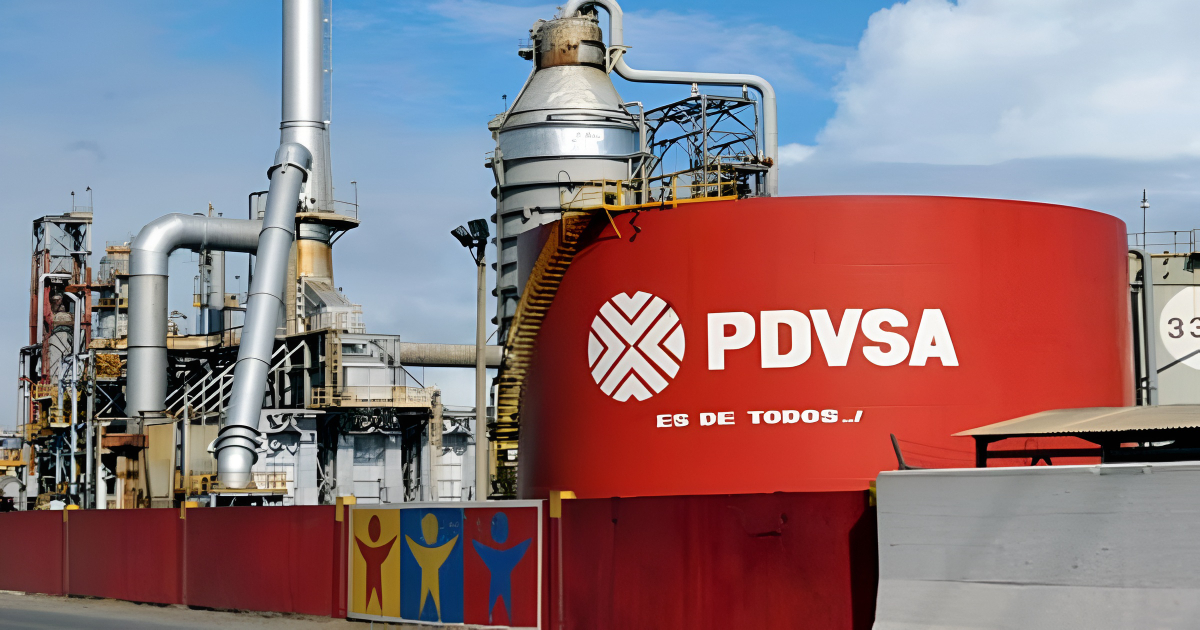
The brutal deterioration of PDVSA was neither a historical fate nor an external conspiracy. It was the result of corruption, politicization, mismanagement, and the use of oil as a tool for control and staying in power, rather than as a driver of development. There was also plunder involved. From within.
That’s why when some people now reduce everything that is happening to "the United States wants oil," I feel that only part of the story is being told. A convenient part. A part that avoids discussing how the regime led by Nicolás Maduro used the oil wealth to maintain itself while the country was crumbling.
And it also avoids acknowledging a key point: the capture of Maduro and the current conflict go beyond oil, even though oil is on the table. There are serious accusations, years of accumulated tensions, and a prior institutional collapse that explain why Venezuela has reached this point of extreme vulnerability. Reducing it all to a single cause clarifies nothing; it obscures the issue.
This is not about defending the United States or justifying interventions. The United States acts out of self-interest, like all powers do. But believing that the other actors were "good," while only one was "bad," is not critical thinking: it is an ideological narrative.
And I conclude with something I believe is necessary to state clearly. Anyone who, after all this, continues to view the Venezuelan problem from only one perspective, denying the role of some and exaggerating that of others, is not aligning themselves with the historical truth or the reality of what has occurred over all these years. They are positioning themselves politically or ideologically.
That is legitimate. But it is not the same as being honest with the facts. I, at least, prefer to feel uncomfortable with the full reality rather than find solace in a slogan. Because only by understanding the whole picture can we avoid repeating the same story.
Filed under:
Opinion article: Las declaraciones y opiniones expresadas en este artículo son de exclusiva responsabilidad de su autor y no representan necesariamente el punto de vista de CiberCuba.