The Minister of Interior and Justice of Venezuela, Diosdado Cabello, made a surprising shift in his usual aggressive discourse against the United States, moving from condemning the delivery of oil to that country to expressing support for selling it.
“If you are willing to buy our oil, you can buy it, we will sell it to you,” he stated on Wednesday during the broadcast of his program Con el Mazo Dando.
His statement is interpreted as a tacit acceptance of the control of Venezuelan oil by the administration of Donald Trump and marks a significant shift in his defiant rhetoric against the U.S., amid a serious political crisis in the country and bilateral tensions following the capture of Nicolás Maduro and Cilia Flores by elite troops of the U.S. Army in Caracas on January 3rd.
International media have highlighted the contrast between the current statement of the Chavista leader and his words at the end of last year, when he warned that "not a drop of oil can go to the United States if they attack Venezuela."
This Wednesday, in a special broadcast of his program aired on state television, Cabello asserted that "Venezuela has always sold oil to the United States."
“At one point, I remember that the minimum amount produced per day was 700,000 barrels, at least; they would pay and take their oil, and that’s how it should be,” he stated unequivocally.
Cabello referred, in this context, to the official statement released the same Wednesday by Petróleos de Venezuela, S.A. (PDVSA), in which the state-owned company confirmed the negotiations with the U.S. government for the sale of crude oil volumes, in what it described as “commercial relations between both countries.”
PDVSA specified that the process is taking place "under schemes similar to those in place with international companies, such as Chevron," and added that it is a strictly commercial transaction, based on criteria of "legality, transparency, and benefit for both parties."
Setting aside his usual arrogance, Cabello simplified the matter by summarizing it in a straightforward manner: “We sell oil to Chevron, Chevron takes it away and pays us.” Then, in the following lines, he launched into a grandiloquent speech, attempting to infuse it with an optimistic tone, calling for unity in support of the homeland and uplifting the people in times of great difficulty for the country.
"The threats are not just against chavismo; the threats are against the Homeland. The attacks are not just against chavismo; the attacks are against the Homeland," he asserted, before concluding with the assurance that they will bring Maduro and Cilia back to the country.
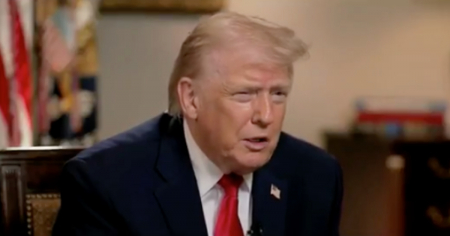
On Tuesday, President Donald Trump announced that Venezuela will deliver between 30 and 50 million barrels of crude oil to the U.S. for sale in the North American and international markets.
Secretary of State Marco Rubio explained that Washington is implementing a three-phase plan—stabilization, recovery, and transition—aimed at preventing the internal collapse of Venezuela and reorganizing its oil industry under American supervision.
The day before, Energy Secretary Chris Wright stated that his country would control the sale of oil from Venezuela for an "indefinite" period and would deposit the profits from those transactions into accounts controlled by Washington.
Trump has calculated that within a span of 18 months, U.S. oil companies will revive Venezuela's oil sector. The South American country has the largest crude oil reserves in the world—17% of the total—yet currently contributes only 1% of the production.
Filed under: