The president of the United States, Donald Trump, asserted this Friday that “the departure of Maduro makes an incredible future possible for both nations, Venezuela and the United States,” and stated that his administration seeks to integrate the economies of “two major energy powers” in the Western Hemisphere more closely.
In statements made from the White House, Trump asserted that the open scenario following Nicolás Maduro's departure would, among other effects, lead to “even lower” energy prices for the U.S. and the possibility that major American companies could help “quickly rebuild” the Venezuelan oil industry—described as “wasted”—and increase production to benefit “the United States, the people of Venezuela, and the whole world.”
Trump linked those expectations to the energy agreement that his administration claims to be promoting with Venezuela.
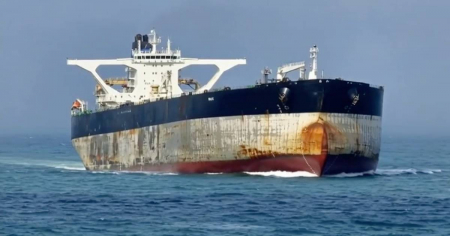
In the same context, the president mentioned that “the number is 30 million barrels” of oil delivered by Venezuela to the U.S.
He also stated that this shipment "is on its way" to U.S. territory, thanking Venezuela for what he described as a gesture of cooperation.
On its part, the Government of Venezuela issued an official statement in which it accused the United States of carrying out a military aggression against its territory and population, but they announced actions to normalize diplomatic relations.
The statement comes in a context of tensions that intensified following the events of January 3, when a series of explosions struck the capital, Caracas, resulting in the capture of Nicolás Maduro.
In the official text released this Friday, the Venezuelan government described the U.S. actions as "a very serious military aggression" that violates the principles of International Law and the United Nations Charter, and called for condemnation and solidarity from the international community in response to what it considers a violation of national sovereignty.
However, despite these accusations, the Bolivarian government —led by interim president Delcy Rodríguez— announced that exploratory contacts with representatives from the U.S. have begun to assess the possible normalization of diplomatic relations.
This would include the resumption of consular missions in both Caracas and Washington, for which visits from representatives to those capitals have already been announced.
Filed under: