
Related videos:
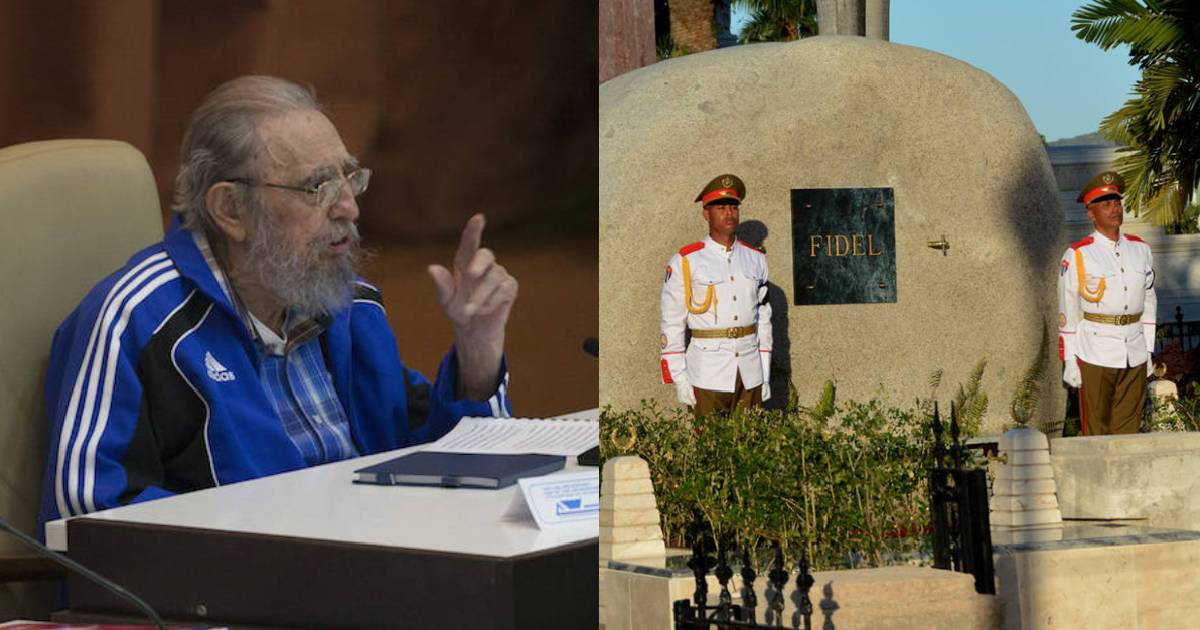
At 67 years since the entry of the dictator Fidel Castro (1926-2016) into Havana, the American magazine Americas Quarterly wondered if 2026 will mark the end of the political era that Cuba projected over Latin America for more than half a century.
On January 8, 1959, Castro entered the Cuban capital leading the so-called Caravan of Freedom, proclaiming the triumph of the revolution and the beginning of a new political order.
The media outlet reminded that this moment inaugurated a cycle of power that transcended the borders of Cuba and decisively influenced countries like Venezuela and Nicaragua, as well as several generations of leftist leaders in the region.
Although Castro died in 2016, the article argues that it is only now that the political era he embodied may be coming to an end.
Even before the recent capture of Nicolás Maduro and his transfer to the United States, the economic and political model inspired by Cuba was showing clear signs of exhaustion, characterized by authoritarianism, extreme statization, and a strong rejection of capitalism.
The Venezuelan collapse occupies a central place in the analysis. The loss of 75% of GDP and the emigration of over eight million people in the last decade have directly exposed to the rest of the continent the effects of the Castro-Chávez model.
According to the text, the everyday experience of impoverished Venezuelan professional migrants in other countries in the region has had a greater political impact than decades of external denunciations.
The discredit is also reflected in public opinion. According to cited data from Latinobarómetro, Maduro stands out as the most unpopular leader in Latin America, far surpassing any other leader.
In Cuba, for its part, power outages, food shortages, and the emigration of up to one-fifth of the population since 2020 have deepened the crisis of the system inherited from Miguel Díaz-Canel.
The article emphasized that, although leftist governments persist in the region, none appear willing to replicate the Cuban-Venezuelan model.
Leaders such as Luis Inacio “Lula” da Silva, Claudia Sheinbaum, and Gabriel Boric have chosen formulas that combine social policies with open economies and, in some cases, an explicit critique of the abuses committed in Venezuela.
Nonetheless, Americas Quarterly warns that the end of this phase is not inevitable. Latin American history has demonstrated these systems' ability to adapt and survive, and it is possible that new versions of failed economic ideas may resurface under different leadership.
Nevertheless, the text concludes that the cycle that began in 1959 may be nearing its end, eroded by its own outcomes and by an increasingly visible regional rejection.
The paradox is hard to overlook, as the Cuban government has proclaimed 2026 as the Year of the Centennial of Commander-in-Chief Fidel Castro, while the political legacy they aim to symbolically enshrine is currently experiencing its greatest discredit and fragility, both inside and outside the island.
The institutional tribute coincides not with a reaffirmation of the historical project, but with its deeper questioning, marked by the country's structural crisis, the loss of strategic allies, and a growing regional distancing from the model that Castro promoted for more than half a century.
A recent survey published by the CiberCuba editorial team revealed that a majority of 62% of participants believe that the Cuban regime could fall in 2026, amid the regional climate following U.S. military actions to capture Maduro.
Filed under: