
Related videos:
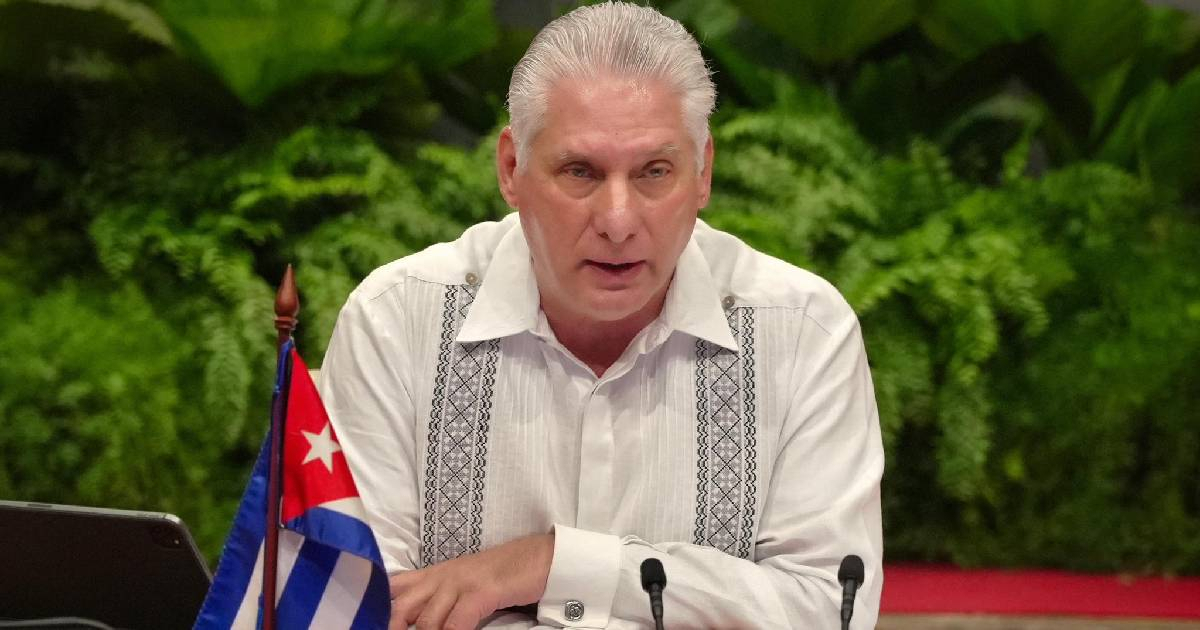
Miguel Díaz-Canel, the man who inherited power from Raúl Castro in Cuba, governs a nation in ruins, mired in an economic crisis, repressed protests, and an unprecedented exodus.
Following the U.S. military incursion into Venezuela and the capture of Nicolás Maduro, the world has shifted its focus to the Caribbean, particularly to Cuba, as it could become the next target of the White House.
In social media, the idea is echoed that "Cuba no longer has Fidel Castro". Comments are increasing regarding the lack of leadership of the island in Latin America and the limited international presence of the leader Miguel Díaz-Canel, a political figure whose biography is unknown, even to many Cubans.
It is important to remember that Díaz-Canel did not come to power through popular election or by his own merit, but as a result of a succession controlled by Raúl Castro, who prioritized placing a "trustworthy person" in the position to ensure "the continuity" of the communist regime.
What has been Miguel Díaz-Canel's political trajectory?
Miguel Mario Díaz-Canel Bermúdez was born on April 20, 1960, in Santa Clara, Villa Clara province. He is the son of a teacher, Aída Bermúdez, and a worker at a brewery.
He studied at the Central University "Marta Abreu" of Las Villas, where he graduated with a degree in Electronic Engineering in 1982. That same year, he joined the Revolutionary Armed Forces (FAR), serving in the military until 1985.
He later worked as a professor at his university and began to stand out as a leader of the Union of Young Communists (UJC).
Between 1987 and 1989, he fulfilled a internationalist mission in Nicaragua, where he led the representation of the UJC among the Cuban troops. In 1993, he attained the position of Second National Secretary of the UJC, marking his entry into the central apparatus of the Communist Party of Cuba (PCC).
Between 1994 and 2003, he was the first secretary of the PCC in Villa Clara, a period during which he fostered the image of a disciplined cadre loyal to Castroism. He was then transferred to Holguín (2003-2009) in the same position, at the direct proposal of Raúl Castro.
In 2009, he took on the role of Minister of Higher Education, and in 2012 he became Vice President of the Council of Ministers, responsible for the areas of education, science, and culture. In 2013, he was appointed First Vice President of the Council of State and Ministers, succeeding the historic José Ramón Machado Ventura.
On April 19, 2018, Díaz-Canel became president of the Councils of State and Ministers, and in October 2019, he was proclaimed President of the Republic of Cuba, a position established following the new Constitution.
In 2021, he formally succeeded Raúl Castro as first secretary of the Communist Party of Cuba, the most powerful position in the country's political system.
That same year he obtained a Doctorate in Technical Sciences with the thesis "Government Management System Based on Science and Innovation for Sustainable Development in Cuba", presented as the foundation of his government model, although it had no real impact on the economy or everyday life in the country.
How has your term in office been so far?
The government of Cuba under Miguel Díaz-Canel has been marked by repression, censorship, a deep health crisis, and serious issues of corruption and economic management that have skyrocketed extreme poverty.
Inflation, blackouts, and shortages of basic products are causing widespread discontent, which reached its peak during the protests of July 11, 2021 (11J), when thousands of Cubans took to the streets chanting "freedom" and "homeland and life."
The response from the leader was decisive when he chose to pit Cubans against Cubans. Since then, he has been remembered for a phrase that cemented his authoritarian image before the world: "The order to engage is given."
Human rights organizations have documented hundreds of detentions, arbitrary trials, and acts of repression in Cuba during Díaz-Canel's administration. It is estimated that there are over a thousand political prisoners, but the regime denies this.
In April 2023, Díaz-Canel was reelected with 97.66% of the votes from the National Assembly, in a process without opposition or international observers. It was a symbolic ratification within a closed system controlled by the military apparatus and the conglomerate GAESA, led by the Castroist establishment.
What has been the international projection of Miguel Díaz-Canel?
In the external arena, Díaz-Canel has strengthened the traditional alliances of Castroism with Russia, China, and Iran, while blaming the U.S. embargo for the internal crisis.
In 2023, he chaired the G-77 + China. During his term, he also traveled to the Asian giant and to Moscow to meet with the presidents of both countries, seeking energy and financial support.
Díaz-Canel has publicly supported the Russian government in the war in Ukraine and condemned Israel for its offensive in Gaza, labeling it a "terrorist state." However, his foreign policy has not managed to attract investments or economic relief for the island, which remains immersed in diplomatic isolation and dependence on Moscow and Beijing.
Outside of Cuba, Miguel Díaz-Canel is perceived as an opaque leader lacking international influence. His speeches fail to make a media impact, and his official trips receive little coverage, reflecting his minimal political weight on the global stage.
What is Miguel Díaz-Canel's family background like?
In his private life, Díaz-Canel has maintained a low profile. He was first married to Marta Villanueva, with whom he had two children: Miguel Díaz-Canel Villanueva (known as Miguelito D'Cuba) and his sister Jenny Díaz-Canel, who are part of a music band.
After his divorce, in 2009 he married Lis Cuesta Peraza, an official from the Ministry of Culture and a prominent figure at official events and on social media.
They do not have children together, but the leader maintains a close relationship with Manuel Anido Cuesta, the son of Lis Cuesta from a previous relationship. This young man is a lawyer and had a highly publicized romance with the Cuban actress Ana de Armas. He resides in Madrid and has accompanied the leader on some international trips.
Unlike the Castros, Díaz-Canel has tried to present himself as a modern and approachable leader, but his family circumstances also highlight the contrast between power and the reality of the country he governs.
Miguel Díaz-Canel is today a leader without real leadership, upheld by the military apparatus and institutional repression. His figure symbolizes the continuity of Castroism without charisma or legitimacy. For many sectors both inside and outside the island, he is the visible face of an exhausted regime, which survives more by inertia and control than by political conviction.
Filed under: