
Related videos:
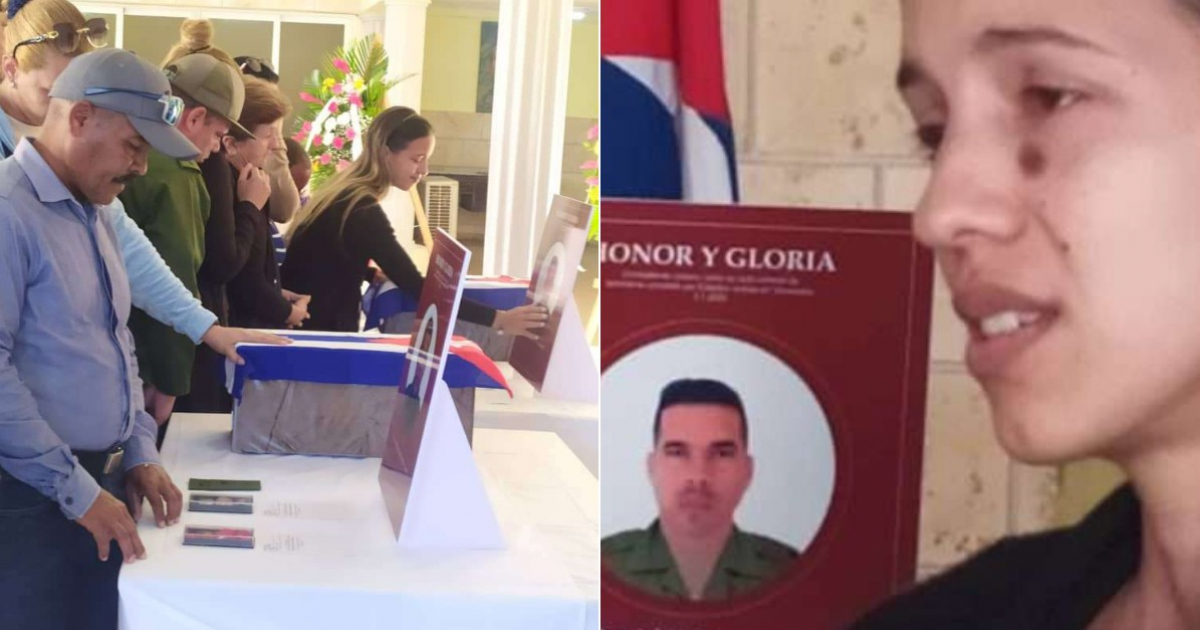
The wife of Adrián Pérez Beades, one of the Cuban military personnel who died in Venezuela during the operation to capture the dictator Nicolás Maduro, recounted the circumstances of his death.
According to the testimony given to the newspaper El Artemiseño, he didn't even realize the attack by the American forces, as he literally passed from sleep to death.
In the early morning of January 3, while he was sleeping, a bomb fell on the house where he was with 11 other personnel. The explosion hurled him, already dead, about 300 meters from the site.
Pérez Beades, 34 years old, was a captain in the FAR and had been in the Andean country for over a year.
His story does not entirely fit into the narrative of the ruler Miguel Díaz-Canel, who, during the tribute at the Anti-imperialist Tribune, stated that the 32 Cubans "offered their lives" in a battle "to the last bullet", portraying the deceased as examples of courage and sacrifice.
The reality, as revealed upon his arrival in Cuba by officer Pedro Yadín Domínguez, who was injured in the attack, is that many of the Cubans who died were resting and that "they had almost no weapons".
Despite the real pain of families and communities, the Cuban regime has sought to transform the tragedy into an act of heroism.
Beyond the state rhetoric, these military personnel were not defending their homeland or fulfilling a humanitarian mission; they went to Caracas to support Maduro's regime in direct security tasks, a fact that Havana denied for years and is now confirmed by the reality of the situation.
The operation revealed the direct involvement of Cuban officials in protecting the Chavista leadership, uncovering the true extent of their involvement in defending a foreign dictatorship, far from the heroic narrative that the official discourse seeks to promote.
The posthumous tribute, heavy with patriotic rhetoric, contrasts sharply with the tangible tragedy of families who lost their sons and husbands in a mission that the Cuban state chose to undertake in order to uphold a foreign power imposed by force.
Filed under: