
Related videos:
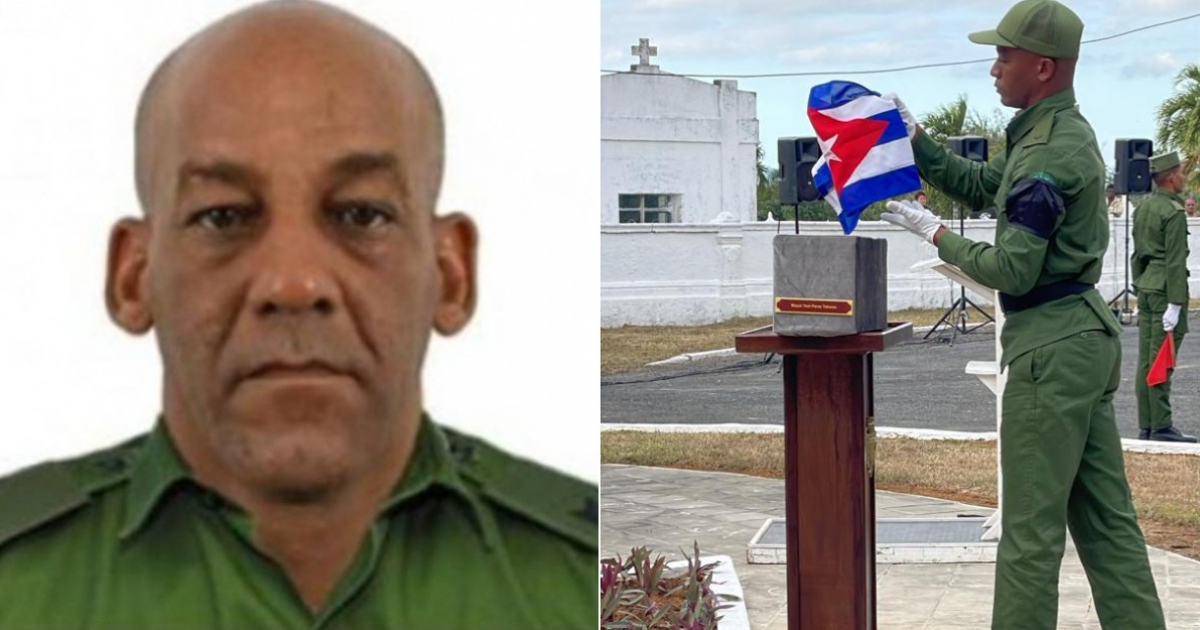
The death of the Cuban military officer Yoel Pérez Tabares in Caracas highlights the contradiction between the official narrative and the reality of his actions: while the government portrays him as a hero, in Cuba he was a repressor involved in the persecution of independent journalists and citizens critical of the regime.
Hours before the remains of the 32 Cuban soldiers arrived on the Island, their families shared with Juventud Rebelde memories of their lives and personalities.
For his father, Yoel Pérez Delgado, the only consolation is that he fell "defending, fulfilling as he had to."
His son, 48 years old and holding the rank of captain in MININT, had been in Venezuela for less than two months.
The family knew that his role carried a great responsibility: the elder had to wait for his son to call or write to him, never taking the initiative.
Pérez Delgado admits that he still has many questions about what happened.
They have only told him that "they resisted"; he, as a father, praises his son's preparedness: "I knew that if something ever happened, they wouldn't cross where he was, they'd have to go over him."
For her part, the deceased's wife recalled his work at the provincial education office of MININT and stated that he chose his career because he enjoyed it, not out of obligation.
"It was good at its tasks, I didn't have access to what it was doing, but the results were reflected in the awards it received," he said.
However, beyond family admiration, the record of Pérez Tabares in Cuba reveals an active role in political repression.
A victim of State Security reported that in October 2020, he was summoned, interrogated, and threatened by the now-deceased captain, who accused him of putting up a poster "against the revolution."
The man revealed that he was under surveillance by State Security for six months and was re-detained on July 11, 2021, during the anti-government protests.
He asserted that those repressive actions were directed by Yoel Pérez Tabares, who summoned him, interrogated him, threatened him with imprisonment, and maintained constant surveillance over him and his family environment.
Agents of the regime even went to his workplace to discredit him, which nearly cost him his job.
"They were days of distress for my family," recounted journalist Mario J. Pentón.
The posthumous tribute, laden with patriotic rhetoric, seeks to transform the deaths of these soldiers into an heroic feat; however, the truth is that the mission had neither patriotic nor humanitarian goals, but rather aimed to ensure the survival of an allied authoritarian government.
The 32 officers, including Pérez Tabares, were deployed to protect Nicolás Maduro's regime, not to defend Cuba.
The U.S. operation that ended their lives confirmed what Havana had denied for years: Cuban officials were directly involved in the security of the Chavista leadership.
The personal tragedy of the families contrasts with the regime's propaganda narrative, which seeks to turn deaths into heroic acts to bolster its confrontational discourse with the United States.
While families mourn the loss of sons, fathers, and husbands, the events highlight the instrumentalization of the Cuban Army to uphold a foreign dictatorship, amid an internal context of scarcity, blackouts, and increasing social discontent.
Filed under: