
Related videos:
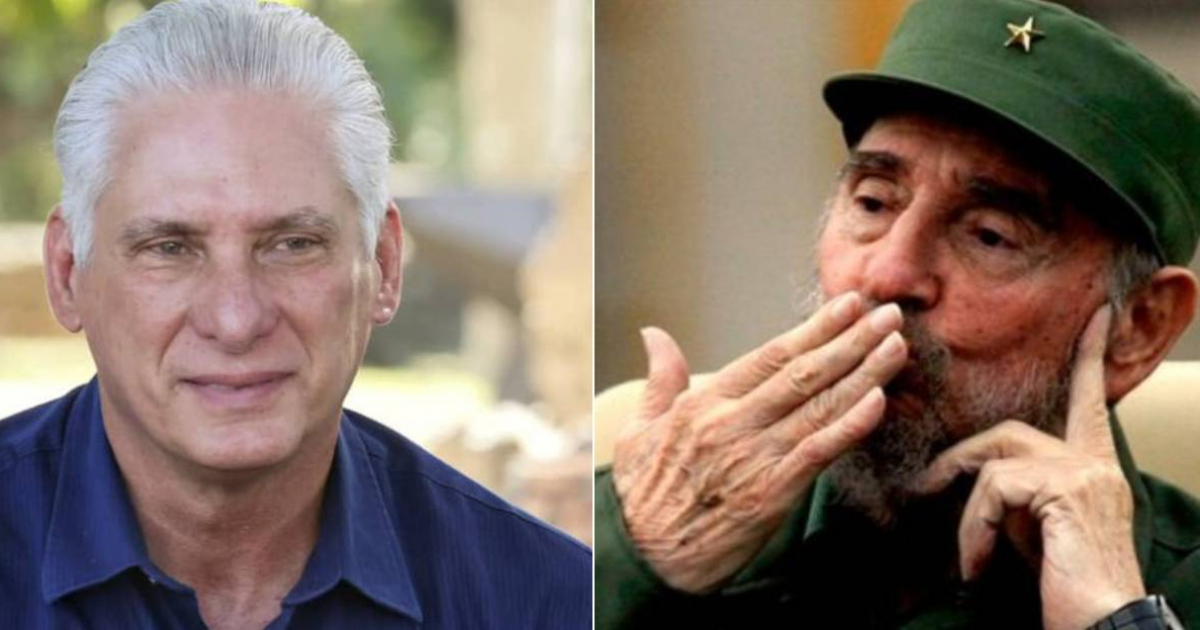
Miguel Díaz-Canel once again took to the podium to recycle myths, worn-out slogans, and fables. This time, the Cuban leader chose to confront the United States... with a story about fish.
In the midst of a tribute to the 32 Cuban soldiers who died in Venezuela, the leader recalled an old anecdote attributed to Fidel Castro about a fish that allegedly attacked him underwater, which he faced with courage according to the story.
The scene, which leans more towards caricature than epic, was presented by Díaz-Canel as a strategic lesson for "facing the empire": not to flee, but to charge at it as the Commander did with the fish.
The problem is that the story seems more like something out of a school fable than from a serious military doctrine.
In his speech, the ruler mixed hawks, piranhas, sharks, and ghosts from the archipelago into a rhetorical cocktail that seeks to revive an eternal confrontation with the United States, even though real Cuba is more concerned about blackouts, hunger, and repression than about imaginary fish.
Díaz-Canel also took credit for "the youth" going viral with the story on social media, as if that validated the content of the narrative.
But more than youthful enthusiasm, what this anecdote has generated is mockery, memes, and a deep fatigue in the face of a discourse that tries to replace reality with hollow symbols.
The attempt to link the deaths of military personnel in Venezuela to a heroic feat and to Fidel's legacy is not only strained but also grotesque.
While many families grieve, the government resorts to maritime metaphors to uphold an epic narrative that no longer convinces anyone, neither inside nor outside the Island.
The scene seems to confirm that Castroism, lacking new ideas or results, only knows how to repeat old tales, even though no one believes them anymore.
Opposition reaction: Ferrer dismantles the "epic of the picúa"
The opposition leader José Daniel Ferrer did not miss the spectacle. In a video shared on social media, he openly mocked both Fidel Castro and Díaz-Canel, whom he called cowards and makers of myths.
Ferrer recalled that Castro himself always avoided direct combat in moments of real danger, such as the assault on Moncada or Alegría de Pío, where—according to witnesses—he would hide and flee from the gunfire.
For the opponent, it seems ridiculous that he is now portrayed as an aquatic hero confronting ferocious fish.
The leader of UNPACU went further and ridiculed Díaz-Canel for repeating that story as if it were revolutionary doctrine.
He said that the ruler not only recycles old stories but also produces new propaganda "nonsense" every day in an attempt to appear strong when, in reality, he is nervous, weak, and out of control.
In his sarcastic tone, Ferrer stated that the personality cult the regime is trying to revive no longer works. The population is tired of heroic tales while living amid shortages, repression, and despair.
For Ferrer, the anecdote of the picúa is not just a trivial occurrence: it is evidence of a power that no longer knows how to justify itself and resorts to childish symbols to cover up a deep legitimacy crisis.
The Cuban leader once again turned to symbols of the past to support a discourse disconnected from current reality, provoking mockery and criticism.
Filed under: