
Related videos:
The Cuban regime has acknowledged for the first time that some patients with chikungunya will experience persistent joint inflammation, a chronic and debilitating condition that can last for months or even years.
But it has been done with the usual opaqueness: talking about “a percentage” that is undefined, without figures or verifiable data, despite the fact that the magnitude of the outbreak and its consequences are already undeniable.
Medical sources, independent reports, and testimonies from the island —collected by the BBC— confirm that chikungunya is leaving a wave of pain and disability across the country.
"Matanzas looks like a zombie city", a local journalist wrote in November, describing streets filled with hunched-over individuals, suffering from joint pain and difficulty walking.
The virus, transmitted by the mosquito Aedes aegypti, causes high fever, rashes, and intense muscle and joint pain. However, the aftereffects can be worse than the acute phase.
In many cases, patients develop a chronic inflammatory arthropathy similar to rheumatoid arthritis: stiffness, inflammation of the hands, knees, ankles, and shoulders, and loss of mobility.
According to international studies, between 20% and 40% of those suffering from chikungunya may experience prolonged or disabling symptoms.
"I was working and felt a pain in my knee, like a strong weight. When I tried to get up, I couldn't. Walking was very complicated for me," Hansel, a 31-year-old engineer from Havana, told the BBC.
"I woke up with pain all over my body, my knees, my back, my shoulders… it was as if I suddenly became an elderly person." Weeks later, the young man was still experiencing stiffness in his hands and pain in his shoulders: "I struggle to open jars, close my hand, and it’s been more than a month," he reported.
In the province of Pinar del Río, Silvia —a fictitious name— described a similar situation in her family: “My mother and grandmother are very ill. They have a fever, tremors, and such severe joint pain that they cannot get out of bed.”
In Cuba, however, the actual scope remains unknown. In December, the portal of the Presidency of Cuba acknowledged that, only in Matanzas, more than 5,000 patients had been treated, of which 60% required rehabilitation.
That figure represents about 3,000 patients with aftereffects in a single province. However, in January, during a new meeting of experts chaired by the ruler Miguel Díaz-Canel, the data vanished and was replaced by a vague reference to a "percentage" of cases.
The contradiction between both official reports —both issued by the same government office— reflects the deterioration of health transparency and the manipulation of public discourse.
In December, the regime celebrated the mathematical models that "predicted total control of the epidemic by early 2026."
In January, when those forecasts had already failed, the Presidencia dropped all mention of the models and shifted the focus to the drug Jusvinza, presented as a scientific achievement of the country.
This communication maneuver is not accidental: it is part of a political strategy of distraction and narrative control. First, control is promised; then, when reality contradicts the discourse, a "biotechnological solution" is offered to regain the informational initiative for the regime.
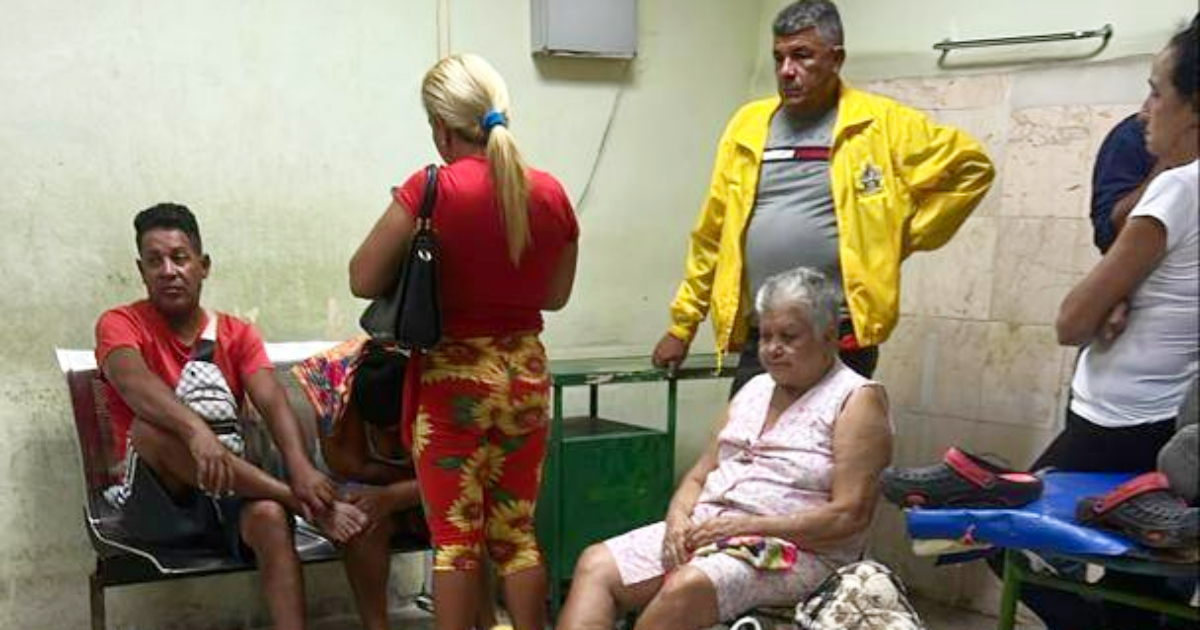
Meanwhile, Cubans are suffering the consequences of the virus without access to medications or rehabilitation. The lack of resources in hospitals has forced many patients to endure the illness at home, self-medicating with whatever they can manage to obtain.
“In hospitals, there are no conditions to accommodate patients. Everything is overwhelmed, including pediatric care,” Silvia told the BBC. “They only provide hydration and paracetamol for pain... people are coping at home as best as they can, practically unable to walk.”
Another witness, a 50-year-old teacher from Havana, summarized the despair: “Almost no one goes to the doctor. There are no medicines or diagnoses. You have to buy them on the informal market or wait for them to be sent from abroad.”
The healthcare system, in structural crisis, is lacking anti-inflammatories, physiotherapists, and basic resources. Many patients—as several reported to the BBC—are recovering at home, self-medicating with pain relievers or natural remedies, because hospitals are out of supplies and do not provide minimum guarantees.
The lack of clinical follow-up means that thousands of post-chikungunya cases are not included in the official statistics, which exacerbates the underreporting and allows the regime to manipulate the extent of the damage.
The authorities, who have boasted for decades about their "medical prowess," remain silent about the real impact of these aftereffects on the country's working and aging population.
In a context of power outages, accumulated waste, and abandonment of vector control, the virus spreads easily, and its consequences are exacerbated by the lack of medication and medical personnel.
The words "persistent" and "percent" have become, in the regime's discourse, synonymous with ambiguity and concealment. They do not describe a healthcare policy, but rather a strategy of political survival: partially acknowledging the inevitable without offering solutions or data.
Meanwhile, on the streets of Cuba, thousands of people continue to walk with difficulty, bent over in pain, in a country where the official silence has become another affliction.
Filed under: