
Related videos:
The Cuban regime has acknowledged, albeit indirectly and belatedly, that some patients infected with the chikungunya virus will develop chronic and persistent inflammation in the joints, a debilitating consequence that can severely affect the quality of life of those who suffer from it.
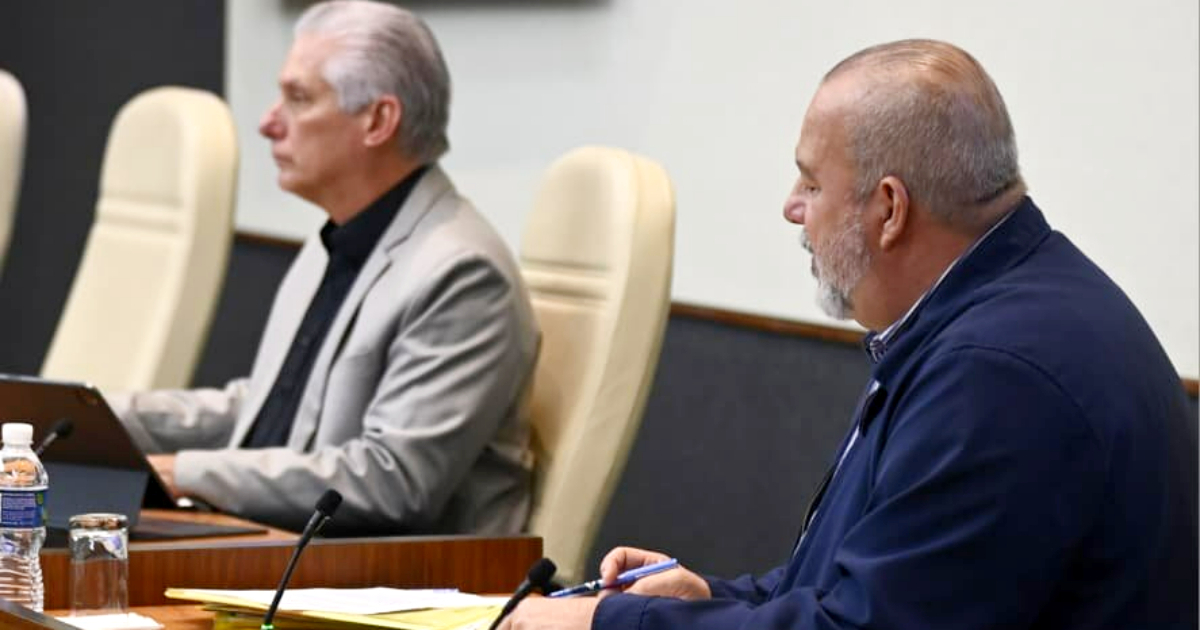
The recognition took place during a meeting of experts and scientists led by Miguel Díaz-Canel and Prime Minister Manuel Marrero Cruz, where preliminary results of studies using the biotechnological drug Jusvinza in patients in post-acute and chronic stages of the disease were presented.
Although the official press portrayed the meeting as a day of “encouraging results,” the statements from the specialists themselves revealed a concerning reality: not all patients will recover after the acute phase, and an unspecified percentage will develop a chronic inflammatory arthropathy, comparable in some aspects to rheumatoid arthritis.
The term "one percent," used ambiguously and without specific figures, highlights the lack of transparency with which the authorities handle the real impact of the outbreak and its aftermath.
The doctor Miguel Hernán Estévez del Toro, director of the Hermanos Ameijeiras Clinical Surgical Hospital and rheumatologist, acknowledged that, after three months of progress, a group of patients will continue to have persistent inflammation with the same inflammatory mediators present in chronic rheumatic diseases.
In practical terms, this means constant pain, joint stiffness, functional limitations, and a sustained deterioration of daily life for thousands of Cubans.
A late admission
The problem, however, is not just medical. The regime now acknowledges the chronic aftereffects of chikungunya when the epidemic has already resulted in thousands of infections and after months of underreporting, lack of medications, scarcity of pain relievers, and collapse of primary care.
Until recently, the official discourse insisted that the virus had a "benign" progression and that most patients recovered without complications.
That strategy of downplaying the severity of the outbreak —common in the regime's health communications— has helped to obscure the extent of the crisis and to dilute political responsibilities.
Today, the very acknowledgment that some patients will be left with lifelong sequelae contradicts the optimistic narrative sustained for months by the Ministry of Public Health (MINSAP) and state media.
The meeting held in the halls of the Palace, presented as an example of "scientific rigor," left essential questions unanswered: How many Cubans have actually been infected?, How many have prolonged symptoms?, and What plan does the healthcare system have to address their needs in the long term?
None of that information was disclosed. Instead, the speech focused on highlighting the "safety" and the alleged advancements of the drug Jusvinza, initially developed to treat rheumatoid arthritis and COVID-19, which is now being "repositioned" for chikungunya.
Science in propaganda
Jusvinza, produced by the Center for Genetic Engineering and Biotechnology (CIGB), has been presented by authorities as a potential solution to the inflammatory phase of chikungunya.
Researchers claim that the medication has a good safety profile and can modulate the immune response. However, the scientists themselves acknowledge that the results are preliminary, and there will be no firm conclusions until March 2026.
Nevertheless, official propaganda showcases it as a "nation's achievement," attempting to project an image of biotechnological efficiency amidst a healthcare system that is experiencing one of its worst crises in decades.
That instrumentalization of science for political purposes is not new. During the COVID-19 pandemic, the regime used announcements of national vaccines and experimental products as tools for internal propaganda, while hospitals were overwhelmed and basic medicines were in shortage.
Now, the same pattern is repeating: a medication in the testing phase is praised while the extent of the real damage is concealed, and any self-criticism regarding the structural causes that allowed the virus's spread is avoided.
Lack of prevention, resources, and transparency
The official recognition comes when it is no longer possible to hide the effects of the outbreak. The causes are well known: failure of vector control, deterioration of basic sanitation, accumulation of garbage, shortage of insecticides, and lack of medical supplies.
For months, communities reported the proliferation of mosquitoes, the lack of fumigation, and the absence of effective preventive measures. The institutional response was slow and reactive, limited to propaganda campaigns with no visible results.
Additionally, the Cuban healthcare system currently lacks rehabilitation capacity for patients with chronic sequelae. Access to anti-inflammatories, analgesics, or physical therapy is limited, and hospitals do not have the personnel or equipment necessary to sustain prolonged treatments.
Under those conditions, an illness that can be managed on an outpatient basis in other countries becomes a debilitating burden with no real medical response.
A calculated opacity
The use of the term “one percent” encapsulates the institutional ambiguity and secrecy that characterize the health management of the regime.
It is not a lack of scientific knowledge —the relationship between chikungunya and postviral arthritis is well documented— but rather a political decision not to disclose figures.
In a system without public statistics or accountability, that vagueness serves a purpose: to acknowledge without admitting, and to inform without committing.
The international medical community estimates that between 20% and 40% of patients infected with chikungunya experience persistent joint symptoms.
If those proportions were applied to the Cuban context, there could be thousands of people experiencing long-term pain, stiffness, or functional disability.
But the government avoids any official estimates, perhaps to avoid admitting that preventive ineffectiveness and a lack of resources exacerbated a situation that could have been contained.
The illness after the virus
Beyond the numbers, the human impact is evident.
Patients with chronic joint inflammation face continuous pain, loss of mobility, and job difficulties, in a country where the majority rely on physical labor and income is insufficient to afford private treatments.
The "chronic phase" of chikungunya is not only a medical challenge but also a social and economic problem that the State has chosen to ignore.
The official message, which mixes medical warnings with political triumphalism, attempts to close the topic by asserting that "the manifestation of the virus tends to decrease."
But the decrease in infections does not erase the accumulated cost: thousands of Cubans may be left with lasting effects for which the health system does not provide effective answers.
The regime acknowledges the consequences only when it is too late, after months of concealment and propaganda.
Once again, science is used as an instrument of legitimization, while the population suffers the effects of a healthcare management marked by opacity, improvisation, and neglect.
Filed under: