
Related videos:
The researcher and journalist José Manuel González Rubines stated this Friday that attempting economic reforms without dismantling the political system in Cuba is an illusion anchored in 2018, and he argued that the country has long passed the point of no return.
In a post on his Facebook profile, González noted that the idea still persists that the Cuban system could improve through partial economic reforms, a belief he described as outdated and disconnected from the current reality.
In his view, maintaining political power intact while introducing economic changes is doomed to fail for systemic reasons.
The co-director of CubaXCuba - Civic Thought Laboratory emphasized that the main obstacle is not only economic but also institutional.
He reported that the Cuban government does not respect private property or the contracts it signs, which creates a legal insecurity that drives away any serious investment or entrepreneurship.
In a context where the rules change according to the convenience of those in power, he stated, the minimum conditions of trust necessary for discussing real reforms do not exist—something that would only be possible with the rule of law and democracy.
González also questioned the idea of reforming from within a system that he described as "repressive and corrupt" and that "shattered the social contract upon which it was sustained for decades."
He recalled events such as the massive protests of July 11, 2021, the mass exodus, the existence of more than 1,000 political prisoners, and the extreme poverty affecting large sectors of the population.
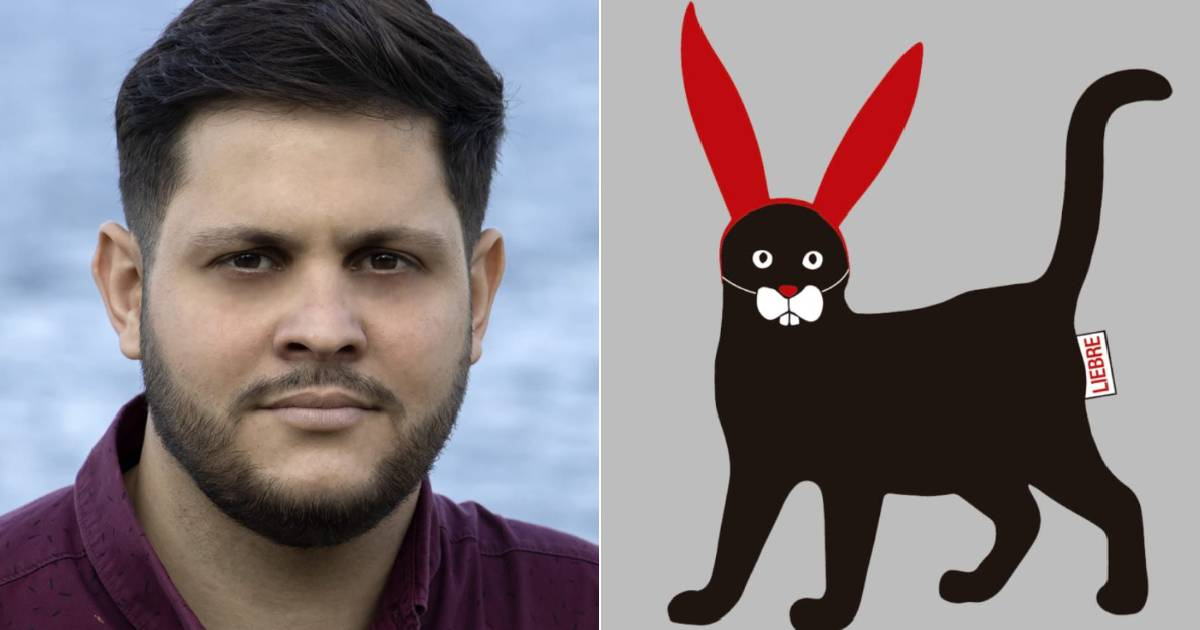
"2026 is not 2018," he warned, stating that those who are swayed today by promises of superficial change are doing so of their own accord or out of futile nostalgia, while also sharing the image of a "cute cat trying to pass as a hare."
The publication garnered support among academics and professionals. Economist Mauricio de Miranda Parrondo stated that the so-called "Chinese-style" or "Vietnamese-style" reforms are no longer a viable option for Cuba.
In the same vein, the professor and historian Alina Bárbara López Hernández stated that the economic reforms have failed precisely due to the absence of prior political transformations that allow for citizen pressure and profound institutional changes.
Other commentators pointed to vested interests within the system itself. Lily Apiau suggested that some still believe—or wish to believe—in the reformability of the regime because they maintain economic ties with the ruling elite and fear scenarios of change.
The actor Jorge Ferdecaz summarized the outcome of decades of partial adjustments: reforms "on the fringes," without addressing the essentials, which have only deepened the misery.
González's reflections resonate with a social climate characterized by exhaustion and despair.
In recent reports, consulted citizens agree that the Cuban crisis has shifted from being circumstantial to structural, and they demand a profound political change as a prerequisite for any economic improvement.
This social malaise contrasts with the recent discourse from the ruling elite, which insists on appealing to an abstract "change of mindset" without announcing any concrete political reforms.
The Prime Minister Manuel Marrero Cruz recently acknowledged that Cuba is experiencing “practically a wartime economy” and warned that 2026 will be an especially tough year, while the ruling Miguel Díaz-Canel has urged the communist militants to “take the lead” and change “their ways of thinking.”
However, these calls, repeated in party events and disseminated through official media, have sparked strong criticism on social media, where many Cubans interpret them as a precursor to new economic adjustments without changing the foundations of power.
In that context, the perception grows that while the Government speaks of mentality, the populace directly questions the political system as the main obstacle to any real solution to the crisis.
Filed under: