
Related videos:
The Central Bank of Cuba (BCC) adjusted its official exchange rate again this Saturday, deepening the devaluation of the Cuban peso and confirming a shift in the pace of adjustments.
As of the current figures for January 24, 2026, the U.S. dollar (USD) rose to 435 Cuban pesos (CUP), an increase of three pesos, while the euro (EUR) climbed to 512.67 CUP, solidifying a more pronounced upward trend than in previous weeks.
The movement is not isolated. Since mid-December, when the Cuban regime activated its new scheme of “exchange segments” and promised a floating rate aligned with supply and demand, the BCC has been gradually adjusting its figures.
However, the behavior observed in recent days reveals something deeper: the monetary authority is reacting to the pressure of the informal market, rather than the other way around as it is supposed to act.
During the initial weeks of the system, the Central Bank kept the official rate nearly frozen, with minimal daily variations of one or two pesos, while the dollar on the street rose from 440 to nearly 500 CUP.
That inaction caused a record gap, exceeding 70 pesos per dollar, the largest since the establishment of the new exchange rate system.
In recent days, the BCC has been trying to regain lost ground. First with a jump of seven pesos in the official dollar, then with more aggressive increases in the euro, and now with a sustained acceleration that places the official dollar at 435 CUP.
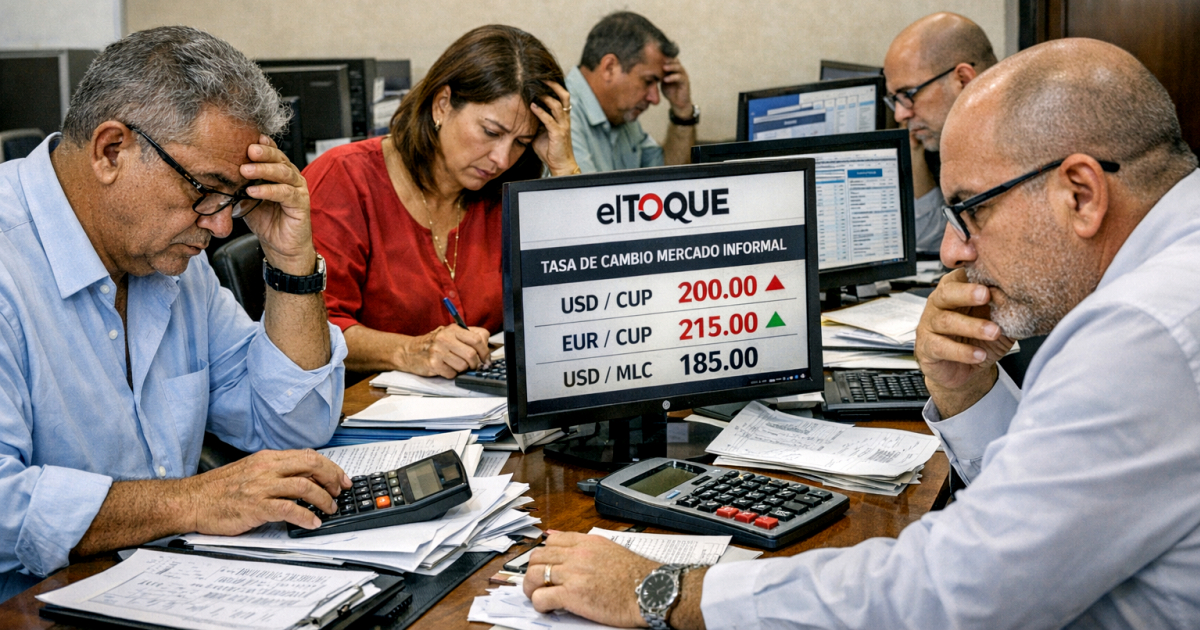
Nonetheless, the gap with the informal market remains significant: the dollar is sold on the street for about 490 CUP, and the euro is around 530, resulting in a difference of 55 pesos for the dollar and nearly 18 for the euro.
Economists consulted by CiberCuba agree that this pattern confirms the practical failure of the "floating rate."
“We are not seeing a real float, but rather a delayed pursuit of the informal market,” explains an independent analyst. “The BCC adjusts only after the market has far surpassed it, and without support in reserves or liquidity.”
The economic and political context exacerbates the situation. The energy crisis, persistent inflation, and increasing international pressure on the Cuban regime reinforce distrust in the peso, pushing citizens and economic actors to seek refuge in strong currencies.
Thus, although the Central Bank is accelerating the official devaluation and implicitly acknowledging that its rate was outdated, the prevailing message is different: the real reference continues to be the informal market, and the government's exchange rate policy is still lagging behind a reality that it no longer controls.
Filed under: