
Related videos:
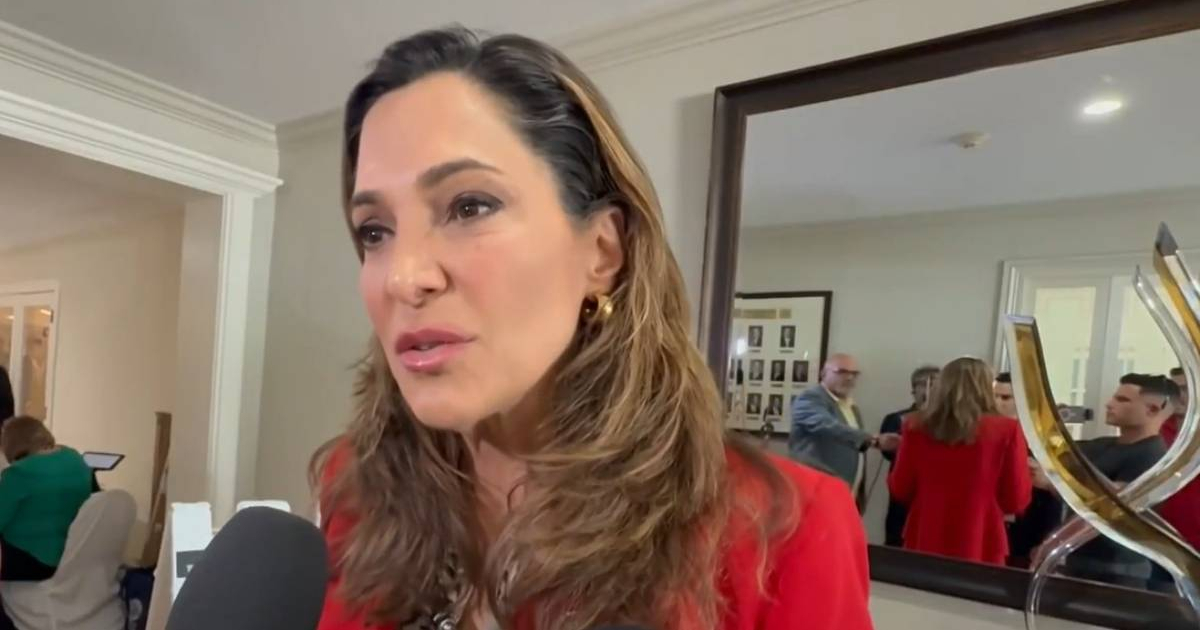
The Cuban-American congresswoman María Elvira Salazar issued a stern warning about China's role in Cuba and what she believes is at stake for the security of the United States and the hemisphere.
In a message posted on X, the Republican politician from Florida stated that Beijing does not act out of solidarity with the Cubans, but rather for strategic and espionage interests.
"China does not defend the Cuban people or their rights. What matters to them is maintaining a spy base in Cuba, just 90 miles from the United States, from where they monitor us and jeopardize the security of our hemisphere," he wrote.
Salazar directly blamed the Havana regime for allowing that Chinese presence.
"That presence only exists because the brutal and criminal Cuban dictatorship allows it," he stated, adding that the political future of the island would be tied to the closure of that supposed facility.
"When the regime falls, we will close that base and eliminate the Chinese threats in the hemisphere."
In her message, the congresswoman also interpreted Beijing's support for Havana as a defensive maneuver: "Beijing knows this, and that's why it rushes to defend the Cuban dictatorship."
And he concluded with a slogan he has repeated on other occasions: "The freedom for the Cuban people is coming soon."
Salazar's statement is set against a backdrop of increasing tension between Washington, Havana, and external actors such as China, amid a deep crisis in Cuba and the strategy of the Donald Trump administration to pressure the regime of Miguel Díaz-Canel.
The legislator, daughter of Cuban exiles, has become one of the most active voices in the U.S. Congress advocating for a tough stance against the Cuban government and its allies, whom she claims support it.
In recent days, Salazar has also focused his discourse on energy issues and the international support that Havana receives.
Last week, she openly supported a potential total cut of the oil supply to the Island.
In his view, "cutting off the vital energy supply of the dictatorship strikes at the core of its repressive machinery," which is why he supports the Trump administration in pursuing more severe oil sanctions.
The congresswoman also spoke directly to Mexico.
In a series of messages on X, he urged President Claudia Sheinbaum to "stop financing the Cuban regime with free oil" and warned that the Mexican government's attitude will be considered in the upcoming renegotiation of the trade agreement between Mexico, the United States, and Canada.
“Let there be no doubt: the ongoing appeasement of the Cuban regime will be taken into account when renegotiating the USMCA,” he wrote.
Reports from Reuters and POLITICO reveal that the Trump administration is considering a naval blockade or total oil sanctions against Cuba, which is undergoing a process of economic collapse and diplomatic isolation.
Days earlier, Salazar praised the White House plan to incite political change in Cuba and stated that freedom "is finally coming".
In X, he wrote that "the Cuban dictatorship is the root of repression and chaos in our hemisphere, and it is finally being held accountable," and he stated that after more than six decades of authoritarian control, "the regime's days are numbered."
According to The Wall Street Journal, U.S. officials confirmed that the Trump administration is actively working to encourage a political transition on the island before the end of the year.
The strategy includes economic, diplomatic, and symbolic pressures, as well as discreet contacts with sectors of the Cuban exile community and figures within the power structure in Cuba who might be willing to negotiate a negotiated exit.
In that context, Salazar's message about China adds a geopolitical dimension to the tension between Washington and Havana.
For the congresswoman, it's not just about the internal situation in Cuba, but rather a key factor in the strategic competition with Beijing in the hemisphere.
His tweet makes it clear that, from his perspective, the fall of the Cuban regime would also deal a direct blow to Chinese influence just 90 miles from the U.S. coastline.
Filed under: