
Related videos:
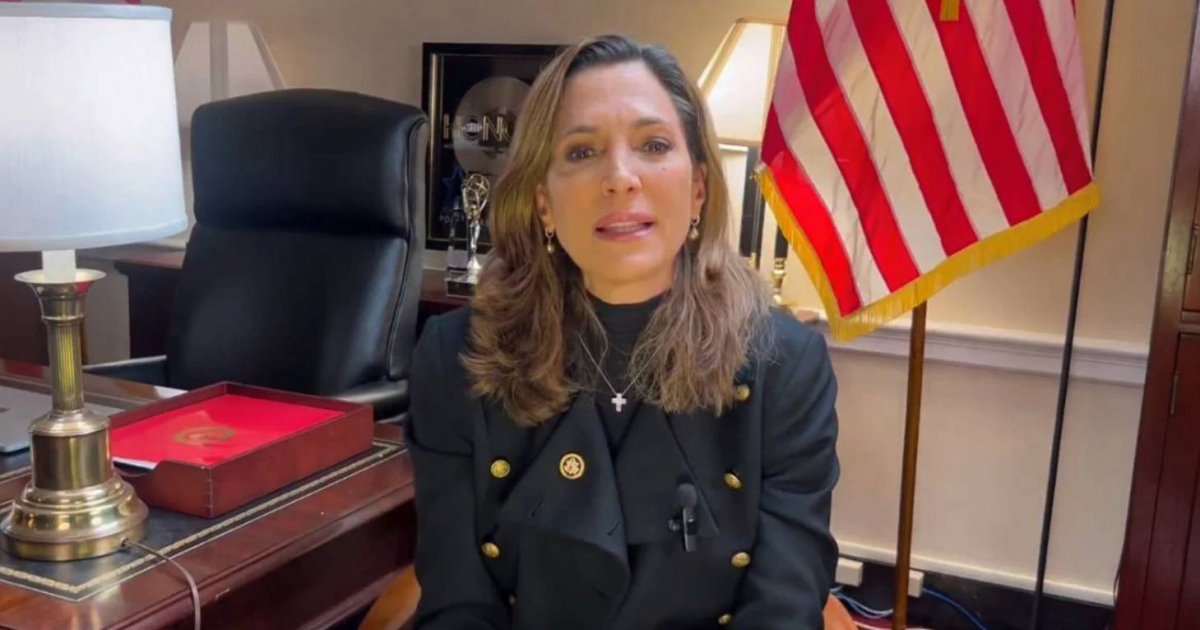
The Republican Congresswoman María Elvira Salazar celebrated the plan by President Donald Trump’s administration to provoke a political change in Cuba, asserting that freedom is “finally arriving” on the island.
“The Cuban dictatorship is the root of repression and chaos in our hemisphere, and it is finally being held accountable,” Salazar wrote on her official X account following the publication of the investigation by The Wall Street Journal regarding the White House's strategy towards Havana.
The Florida lawmaker, daughter of Cuban exiles, stated that for over six decades "this brutal regime has crushed its own people, exported tyranny, and supported other dictators."
In his message, he added: “I will always stand with the Cuban people, never with their oppressors. Complacency has failed. Silence has failed. The freedom of Cuba is coming. The days of the regime are numbered.”
According to the report from the Wall Street Journal, U.S. officials confirmed that the Trump administration is actively working to push for a political transition on the island before the end of the year.
Washington, they explained, sees a “historic window of opportunity” to weaken the regime of Miguel Díaz-Canel amid an unprecedented economic crisis and the diplomatic isolation of Havana.
The White House strategy includes a combination of economic, diplomatic, and symbolic pressures, along with discreet contacts with the Cuban exile community and figures within the government circle on the island who might be open to negotiating a negotiated exit.
According to the newspaper, Cuba's economic deterioration is so severe that the United States believes the regime is "on the verge of collapse."
This is compounded by the loss of Venezuelan oil supplies following Nicolás Maduro's capture, which left Havana without its main source of energy support.
"Cuba seems that it is on the verge of collapse. I don't know how they are going to be able to stay afloat; they have no income," Trump declared recently in an interview from Air Force One.
The Washington plan also aims to replicate part of the model applied in Venezuela, where the military operation that culminated in Maduro's capture had internal support from informants and led to the transition headed by Delcy Rodríguez.
A senior U.S. official quoted by the Journal described the Cuban rulers as "incompetent Marxists who have destroyed their country," and warned them that "they must make a deal before it’s too late."
Among the planned measures are new economic sanctions, immigration restrictions against officials linked to medical missions, and diplomatic pressure on countries receiving these programs, which are considered by the United States as state-sponsored forced labor.
Secretary of State Marco Rubio has insisted that Washington's strategic goal is to ensure that Cuba has "a democratic government free from foreign military influence."
Analysts consulted by the newspaper warned that, despite Washington's optimism, the Cuban situation could be more complex than that of Venezuela.
"The Cuban regime is a much tougher nut to crack," said Ricardo Zúñiga, a former official of the Obama administration, while recalling the loyalty of the repressive apparatus and the lack of organized opposition on the island.
For Trump and his allies in Florida, the fall of the Cuban regime would be a historic achievement and a decisive political legacy.
"This is the moment. If we do not act now, we may not have another opportunity for decades," said a White House official to the Wall Street Journal.
Filed under: