
Related videos:
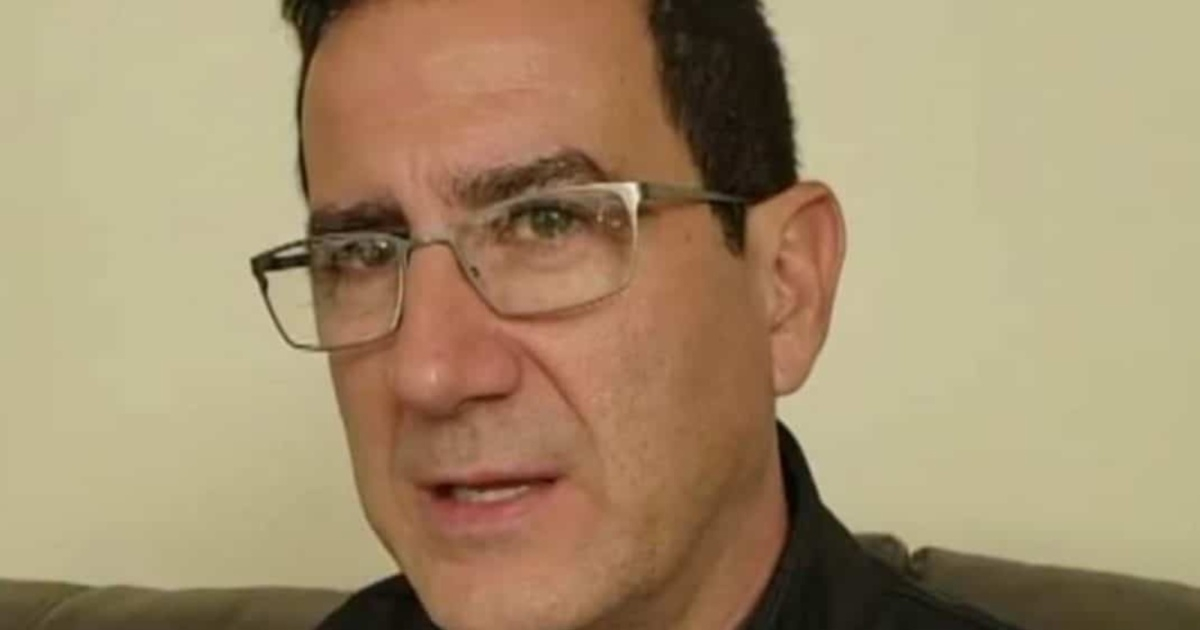
The Cuban priest Alberto Reyes published a reflection this Friday in which he states that “change is a journey that one learns along the way” and warns that, although the process will be “hard” and “difficult,” Cuban society can learn to live in freedom and rebuild values that have been eroded over decades of dependency and indoctrination.
In his text, Reyes counters the idea—common, as he describes—that "Cubans on the island are not ready for change" and clarifies that this can only be proven when that change, which is already occurring, arrives definitively.
Nonetheless, he emphasizes that the country carries accumulated burdens: years without freedom, dependence on a “paternal State” that “gives” and “takes away,” and a social culture characterized by simulation, deception, and double standards.
Reyes argues that change will not happen as an automatic "leap," but rather as a process with setbacks: he anticipates that when the "definitive change" arrives, people will make mistakes, rise up, and learn gradually.
In that regard, he emphasizes that "life must be pushed forward" and that "goodness and newness" can find a place in the human heart, even in difficult circumstances.
The reasons for a difficult transition, according to the priest
In the body of the text, the priest lists factors that— in his opinion— complicate a transition toward freedom and a plural society:
- indoctrination and lack of personal autonomy: describes a citizenry "accustomed to not thinking for ourselves."
- State dependence: it refers to a patron state that decides on everyday life.
- Ideas embedded for decades about the economy and rights: it mentions ingrained beliefs regarding the payment for services (education and health), the free market, and private property.
- Normalization of "resolving": it suggests that one learned to obtain what is necessary "at any cost," relegating ethical considerations because doing it "correctly" may hinder obtaining what is essential.
- Uniformity and intolerance: it argues that uniformity was taught as a “supreme” value, leading to intolerance and even violence against different viewpoints; and it presents dialogue as something that has been viewed for years as a “weakness.”
The priest acknowledges that "perhaps" society is not "completely prepared" for a life of freedom and pluralism, but he contrasts with another central idea: neither is it prepared to continue in decline.
In his writing, he mentions the sustained suffering, the lack of prospects for children, the indigence of the elderly, and the condition of "hostages" in a "island prison" as reasons why persisting in the current state would also be unviable.
To demonstrate that learning and change are possible, Reyes draws on concrete experiences: he points out that thousands of emigrated Cubans have managed to grow and thrive “often without knowledge or resources”; that entrepreneurs within the island have created “new realities”; and that there are those who, “from the midst of difficulties,” teach, educate, and help instill values in new generations.
The text concludes with a thesis reiterated throughout the reflection: change is already "in motion," and although it will not be easy, "we will achieve it."
Filed under: