
Related videos:
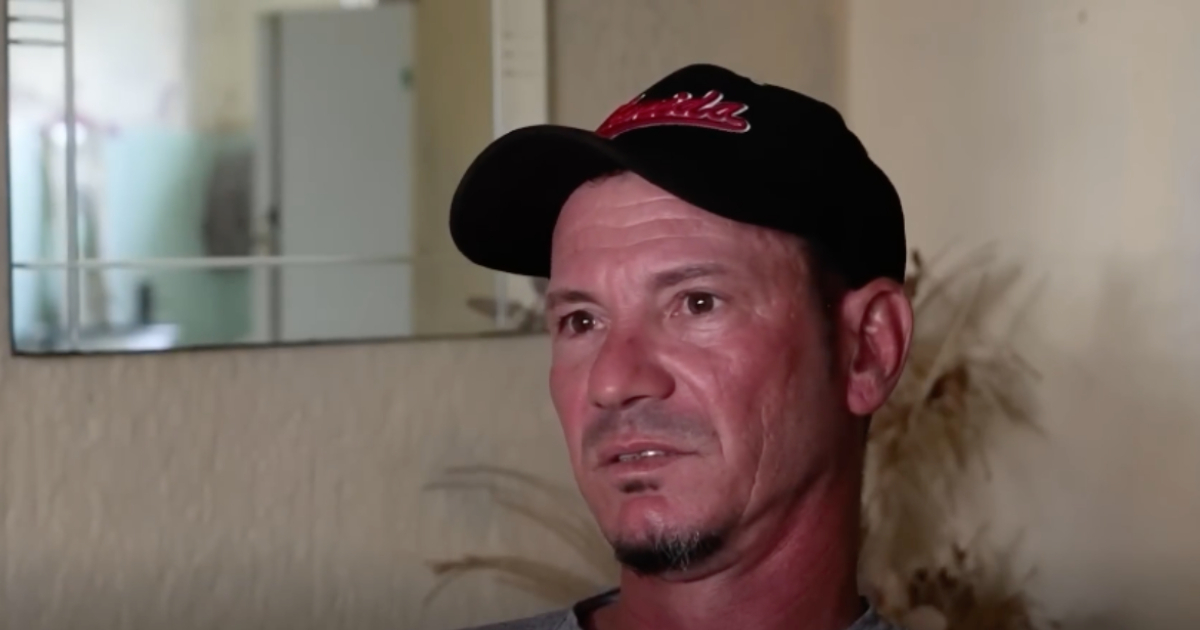
Yuniel Abreu, a 42-year-old Cuban with no criminal record and his residency application pending under the Cuban Adjustment Act, spoke from the island about his situation after being deported from the United States. His testimony, along with that of his wife, has sparked outrage among Cubans in exile.
In an interview with Noticias Telemundo, Abreu mentioned that he still does not understand why he was returned to Cuba after having worked legally in the United States.
"I don't think what they did is fair, to be honest, because they were supposedly going to release those who had committed crimes," she said from Cuba.
Abreu has no criminal record. He arrived in the United States through the southern border in 2020, where he obtained an I-220A parole or conditional stay. He reported that the day before his arrest, he was working at his construction company.
"The day I went to my court, the day before I was working in construction with my own company, and I went to my court, I left the job halfway through, I couldn't finish because they stopped me," he recounted.
From Cuba, Abreu keeps in touch with his family through video calls. His wife, Yeni Fernández, described in the same report the emotional impact that the separation has had.
"The distance is very painful, and to suddenly find yourself like this, bound hand and foot and unable to do anything, is very sad," she said.
According to information available at the time of his deportation, Abreu was sent to the island despite having active appeals before the Board of Immigration Appeals and a pending residency application. His attorney, Lissette Tocado, explained in a report by Univision 23 that “an ongoing appeal before the Board results in an automatic stay of deportation,” which should have prevented his expulsion.
In the United States were his wife and her children, who depended on his work. Fernández noted that Abreu "had his own company, worked legally, and didn't have even a transit ticket. He was just another worker, a person who fled a dictatorship."
Her story has generated messages of solidarity and discomfort on social media, where many Cubans describe it as an “painful injustice”. The case is known in the context of an increase in deportations: more than 1,370 Cubans were returned to the island in 2025 on eleven flights coordinated between Washington and Havana, according to data from the Department of Homeland Security (DHS) and the Ministry of the Interior (MININT).
"I am here, my wife is over there... it's a very sad situation that I wouldn't wish on anyone," Abreu said in his testimony from Cuba.
Filed under: