
Related videos:
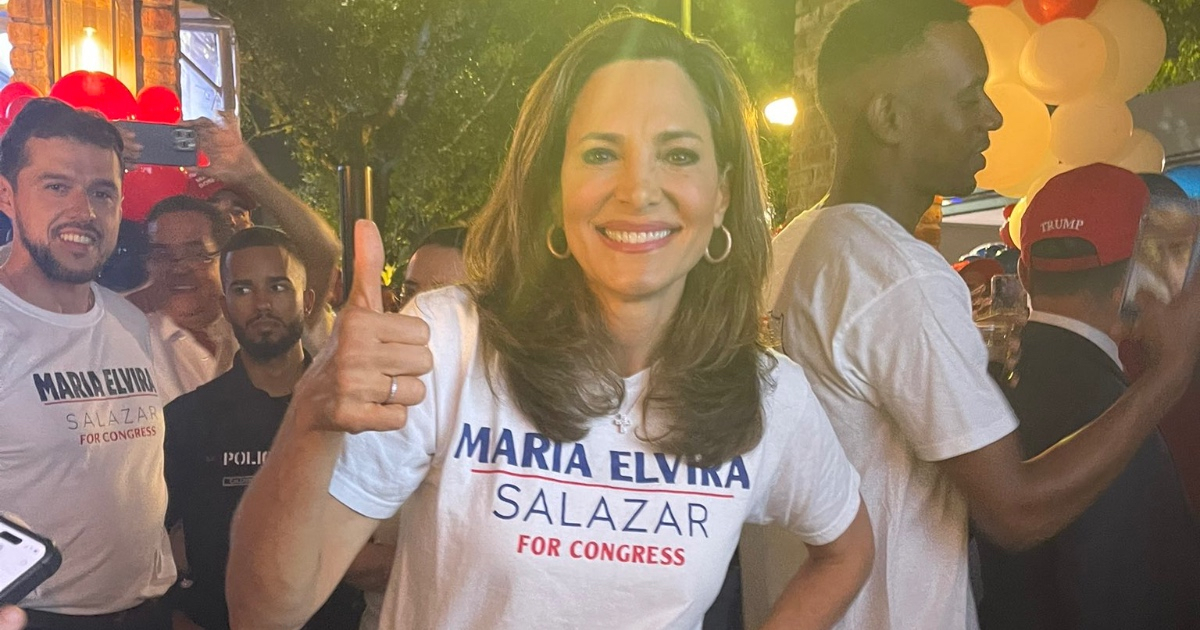
The Cuban-American congresswoman María Elvira Salazar delivered a strong message against the power elite in Havana this Friday.
In a post on X, he stated that "everything said by Miguel Díaz-Canel, Raúl Castro, Bruno Rodríguez, or any accomplice of the Cuban regime deserves neither attention nor legitimacy."
The legislator accused the three of having stolen from the people their freedom, prosperity, and future for decades, and asserted that no leader in the democratic world should listen to those who speak on behalf of a people they have kept hostage.
"Cuba does not need spokespeople for the dictatorship. It needs freedom," he said.
His statement fits into a rise in political discourse in Washington, particularly in South Florida, where Cuban-American representatives are advocating for a maximum pressure policy against the Havana regime.
The congresswoman made it clear that the figures in Cuban power lack the moral and political authority to represent a people living under repression and without rights.
The statement comes just one day after the new executive order signed by President Donald Trump, which declares a national emergency and paves the way for imposing tariffs on countries that continue to send oil to Cuba.
For the congresswoman, this decision marks a turning point in the United States' strategy towards the Díaz-Canel government, which the administration views as a threat to its national security due to its alliances with Russia, China, Iran, and actors classified as terrorists.
Beyond supporting Washington's policy, Salazar emphasized the responsibility of the exile community.
In several messages on X, she urged Cubans outside the island to stop financially supporting a system that, according to her, only survives thanks to the money that comes from abroad.
"Every dollar that enters Cuba extends the life of the dictatorship and the suffering of the Cuban people," he wrote, in a direct reference to remittances, travel, and other financial flows that end up bolstering the power in Havana while the population remains trapped in scarcity.
The congresswoman described the moment as decisive and spoke of an "inevitable historical responsibility" for the exile community.
In his view, international pressure, the internal crisis, and the loss of Venezuelan support have weakened the regime, creating an opportunity that cannot be missed. "This is the year of Cuba's freedom. It's now or never," he stated.
In another message, Salazar was even more direct: she called for an outright cessation of all forms of economic assistance to the Cuban government.
"The hour of freedom for Cuba has arrived," he wrote, recalling that today there is a president and a secretary of state willing to "clean our hemisphere of tyrants, drug traffickers, and dictators."
But, he added, the exile must also take its share of responsibility and stop providing oxygen to the dictatorship, because every dollar, every trip, and every gesture of normalcy -in his opinion- prolong the life of a criminal regime and condemn the people to more decades of misery and repression.
Salazar spoke directly to Cuban Americans who have economic ties with their families on the Island. He urged them to put an end to those gestures that, although born from solidarity, he considers counterproductive in the political arena.
"This is the time to stop everything: no more tourism, no more remittances, no more mechanisms that continue to finance and sustain the dictatorship," he pointed out.
The legislator did not overlook the human cost of that proposal. She acknowledged that stopping the sending of money or visiting family members represents a devastating emotional blow for thousands of people.
"Nobody is indifferent to a mother's hunger or a child's urgency," she admitted.
However, he framed the dilemma as a choice between alleviating suffering in the short term or definitively freeing Cuba. "We can no longer be hostages to a regime that, even from exile, forces us to finance our own oppression," he concluded.
Salazar's call comes in a context of political mobilization among the exile community.
That same Thursday, Congressmen Carlos Giménez and Mario Díaz-Balart announced that they will formally request the Trump administration to suspend all flights to Cuba and eliminate the sending of remittances.
The statements were made at a press conference alongside the Assembly of the Cuban Resistance, exile organizations, and community activists, and justified the measures as part of a strategy to economically suffocate the regime.
Although Salazar did not participate in that event, his stance aligns with that of his colleagues.
The message was received with applause from parts of the exile community that support the collapse of the system, but also with skepticism and criticism from those who fear that the measures will impact families more than the authorities in Havana.
The dilemma between humanitarian aid and political pressure returns to the forefront of the Cuban-American debate, now at a time that many consider decisive for the future of the Island.
Filed under: