
Related videos:
The United States Central Command (CENTCOM) warned Iran following the announcement that the Islamic Revolutionary Guard Corps (IRGC) will conduct a two-day live-fire naval exercise in the Strait of Hormuz, set to begin on Sunday, according to a cited statement.
CENTCOM urged the IRGC to conduct maneuvers “safely and professionally” and to avoid “unnecessary risks” to the freedom of navigation of international maritime traffic in that area, which it described as an international maritime passage and an essential trade corridor for regional economic prosperity.
According to the official text published on CENTCOM's social media, approximately 100 of the most important merchant vessels in the world pass through the strait daily.
According to the statement, Iran announced on Friday, January 29, that the IRGC would carry out a two-day naval exercise with live fire in the Strait of Hormuz, a strategic point through which a significant volume of international maritime trade passes.
CENTCOM highlighted that, although the United States recognizes Iran's right to operate "professionally" in international airspace and waters, any "unsafe and unprofessional" behavior near U.S. forces, regional partners, or commercial vessels increases the risk of collision, escalation, and destabilization.
"We will not tolerate unsafe actions."
In the same statement, CENTCOM affirmed that it will ensure the safety of American personnel, ships, and aircraft operating in the Middle East, and emphasized that it would not tolerate unsafe actions by the IRGC.
As examples of behaviors that would be considered unacceptable, the text mentions:
- Overflights of U.S. military vessels during flight operations.
- Low-altitude overflight or the deployment of U.S. military assets when intentions are unclear.
- Approaching speedboats on a collision course with U.S. military ships.
- Use of weapons directed at U.S. forces.
The statement concludes by stating that the U.S. military "will continue to operate with the utmost professionalism" and "in accordance with international standards," adding that Iran's IRGC "must do the same."
In the first days of January 2026, tensions between the United States and Iran noticeably escalated.
On January 10, it was reported about the deployment of dozens of U.S. military aircraft to the Middle East, a move that strengthened Washington's presence in the region and was interpreted as a precautionary measure in response to potential conflict scenarios.
At the same time, Iran strengthened its air defenses with advanced radars and surface-to-air missiles, which it described as a "national deterrence" exercise.
One day later, the situation escalated in the political arena when Donald Trump offered his support to the Iranian people amid anti-government protests that had already resulted in hundreds of deaths.
From Tehran, the President of the Parliament, Mohammad Baqer Qalibaf, responded with a direct warning to Washington and Israel, stating that any attack would turn their bases and ships into "legitimate targets." This exchange of statements heightened diplomatic and military tension in the region.
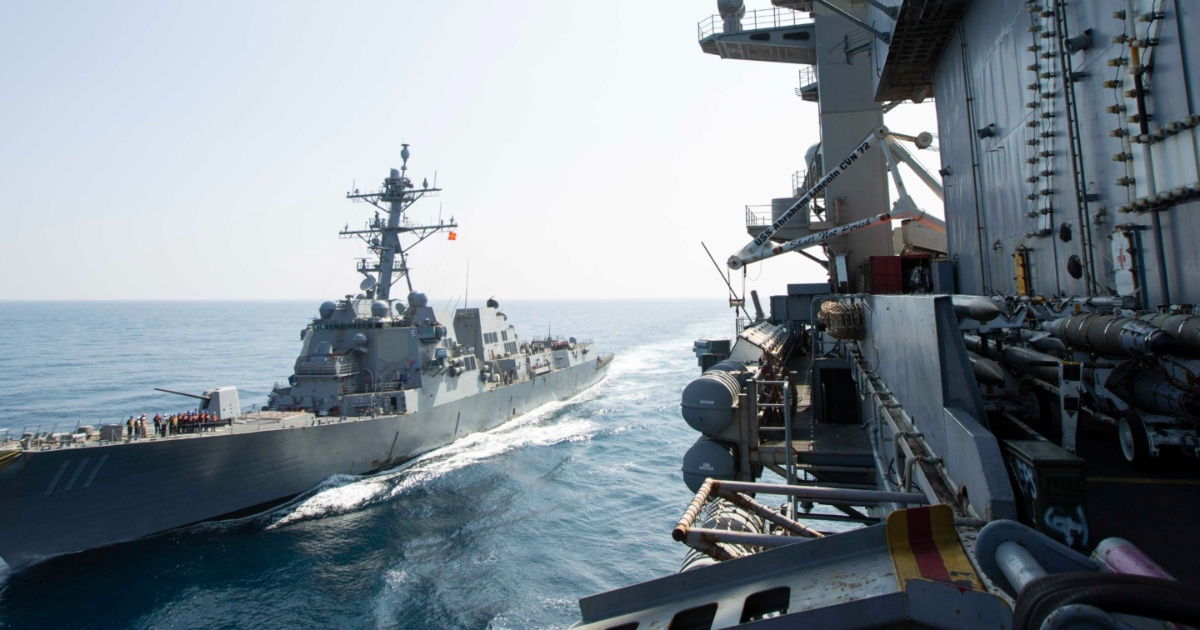
Finally, the arrival of the nuclear aircraft carrier USS Abraham Lincoln in the Middle East confirmed the increased pressure from the United States on Iran.
The deployment was announced by United States Central Command (CENTCOM) and described as an action intended to "promote regional security and stability." However, the Iranian government termed the measure a provocation that would generate "insecurity for all countries in the region."
Filed under: