
Related videos:
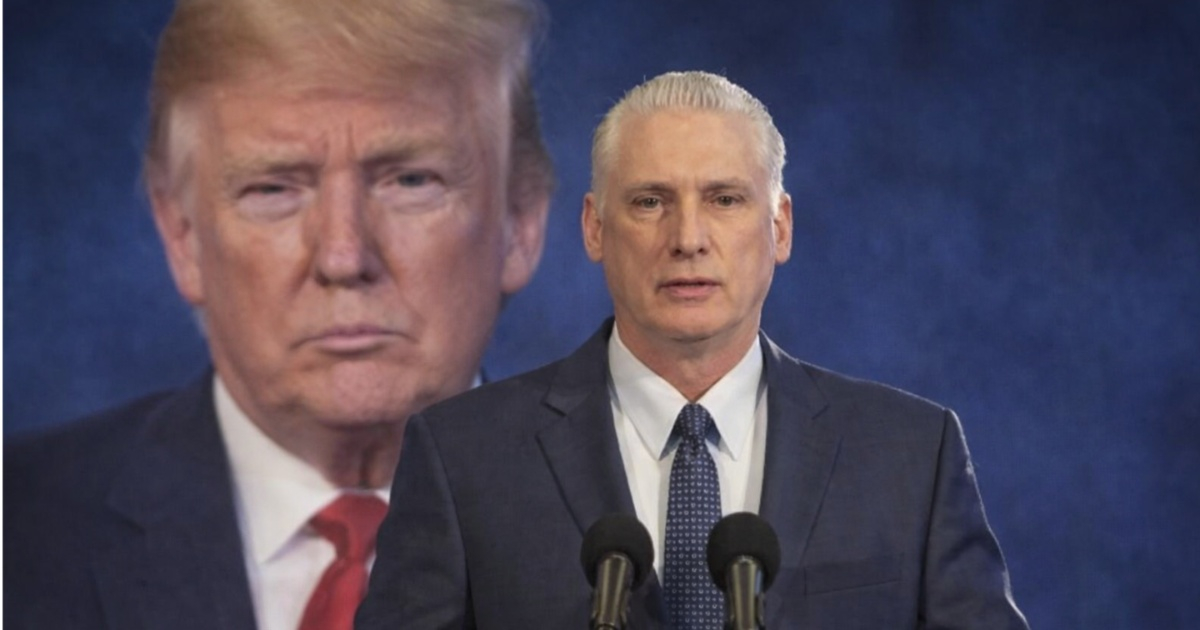
The administration of President Donald Trump assured this Friday that the Cuban regime will be held accountable for what it described as support for "hostile actors," "terrorism," and "regional instability."
In a message published by the State Department and circulated on social media, it was also stated that Trump “is holding accountable where others have failed to do so with their opponents.”
"The Cuban regime will be held accountable for its support of hostile actors, terrorism, and regional instability that endanger the American people," the text states.
The statement accompanied the release of an executive order signed by Trump that declares a national emergency, asserting that the policies and actions of the Government of Cuba pose an "unusual and extraordinary threat" to the national security and foreign policy of the United States.
The measure, issued by the White House, takes effect on January 30, 2026, according to the described text.
In a post on X, the White House stated that Trump signed an order that, in addition to declaring a national emergency, "establishes a process to impose tariffs" on products from countries that sell or "otherwise provide" oil to Cuba.
Arguments put forth by Washington
According to the cited content of the order, the document states that the "Cuban regime" "aligns itself with numerous hostile countries, transnational terrorist groups, and malign actors opposed to the United States," specifically mentioning Russia, China, Iran, Hamas, and Hezbollah.
The text also states that Cuba "hosts dangerous adversaries" and allows the installation of "military and intelligence capabilities" that—according to the order itself—directly threaten the national security of the United States.
Among the included statements, the order asserts that Cuba maintains "the largest Russian intelligence base outside" of that country and continues to build deep cooperation in defense and intelligence with China.
The document also accuses Havana of providing a "safe environment" for organizations such as Hezbollah and Hamas, allowing them to establish economic, cultural, and security ties in the region.
At the same time, it denounces that the Cuban "communist regime" supports terrorism, "destabilizes the region" through migration and violence, and commits human rights violations against opponents, restricting freedom of expression, worship, and press, according to the cited text.
The order establishes a tariff system that allows Washington to impose additional duties on imports from countries that sell or supply oil to Cuba, directly or indirectly.
Additionally, it assigns the Secretary of Commerce the responsibility of determining whether a country engages in those operations, and the Secretary of State, in consultation with other agencies, the decision on whether tariffs are applied and to what extent.
According to the described text, the order instructs the Department of State to monitor and regularly report to Congress on the declared emergency and the actions taken as a result.
This decision aligns with the policy of "putting America first" and continues previous tightening measures.
As a background, in June 2025, Trump signed a national security memorandum and imposed travel restrictions on Cuban citizens due to the country's role as a sponsor of terrorism and its "lack of cooperation" in immigration and judicial matters.
The increasing geopolitical tension in the Caribbean and the rapid collapse of internal conditions in Cuba have raised alarms, and several embassies and international companies are reportedly discreetly updating evacuation protocols in light of the possibility of a major emergency scenario on the island.
Filed under: