
Related videos:
The former Secretary of State Mike Pompeo stated on Friday that U.S. investors will not engage with Venezuela until democracy is restored, challenging the official optimism regarding the economic reopening and the influx of foreign capital following the capture of Nicolás Maduro.
In a message posted on the X social network, Pompeo stated that the refusal is not based on idealism, but on the belief that a "Maduro-lite" regime would end up robbing those who invest.
"Restoring power to the Venezuelan people is not only the right thing to do, it is the smart thing to do," wrote Pompeo, distancing himself from the recent warming of relations promoted in the last few weeks between Washington and Caracas.
His statements contrast with the discourse of the interim government led by Delcy Rodríguez, which has spoken of a new phase of bilateral cooperation and a renewed interest from international capital, particularly in the oil sector.
The statement from the former head of U.S. diplomacy during the first Trump administration (2018-2021) comes in a context of mixed signals from the United States.
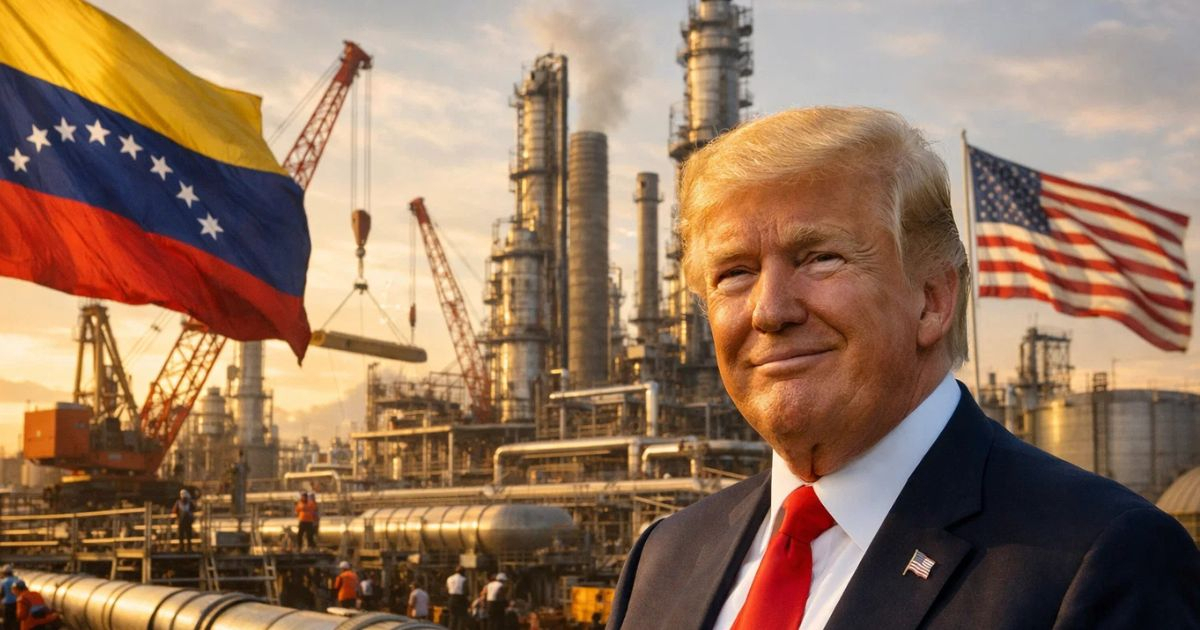
On one hand, President Donald Trump has promoted a pragmatic shift towards Venezuela following the capture of Nicolás Maduro on January 3, including the lifting of sanctions on the state-owned Petróleos de Venezuela (PDVSA) under strict conditions, the reopening of the commercial airspace, and the approval of an increased flow of oil exports to the United States.
On the other hand, key figures of the hardline Republican faction remind us that market confidence relies on political and institutional guarantees that still do not exist.
In recent days, Rodríguez claimed to have held direct conversations with Trump and with the Secretary of State, Marco Rubio, and stated that both governments have made "significant progress" in air travel reopening and in attracting national and foreign investments.
The official defended the recent reform of the Hydrocarbons Law, approved by the National Assembly with a chavista majority, as a step towards providing greater legal security for private capital.
However, Pompeo's message introduces a clear brake on that narrative. By stating that investors fear theft and legal insecurity under any version of Chavism, the former head of U.S. diplomacy highlights a structural problem such as the credibility of the Venezuelan State.
His warning suggests that neither the reopening of airspace, nor the easing of sanctions, nor the increase in oil exports will be enough to attract sustained investment without a clear break from the previous power model.
The contrast is particularly significant at a time when companies like Chevron plan to triple their exports of Venezuelan crude oil to around 300,000 barrels per day and airlines like American Airlines and Laser Airlines are exploring the return of direct flights between the United States and Venezuela.
While the interim government presents these moves as signs of normalization, Pompeo's stance reminds us that, for a significant portion of the American political and financial establishment, democracy is not an add-on to business, but its fundamental condition.
In this regard, the message from the former Secretary of State serves as a strategic warning: without deep and verifiable political changes, economic openness may be limited to controlled and temporary agreements, failing to translate into a true reconstruction of the country or a massive influx of international private investment.
Filed under: