
Related videos:
The Cuban regime once again blamed the United States government for the massive exodus affecting the island, claiming that it has "attracted and sheltered" Cuban migrants for political purposes since 1959.
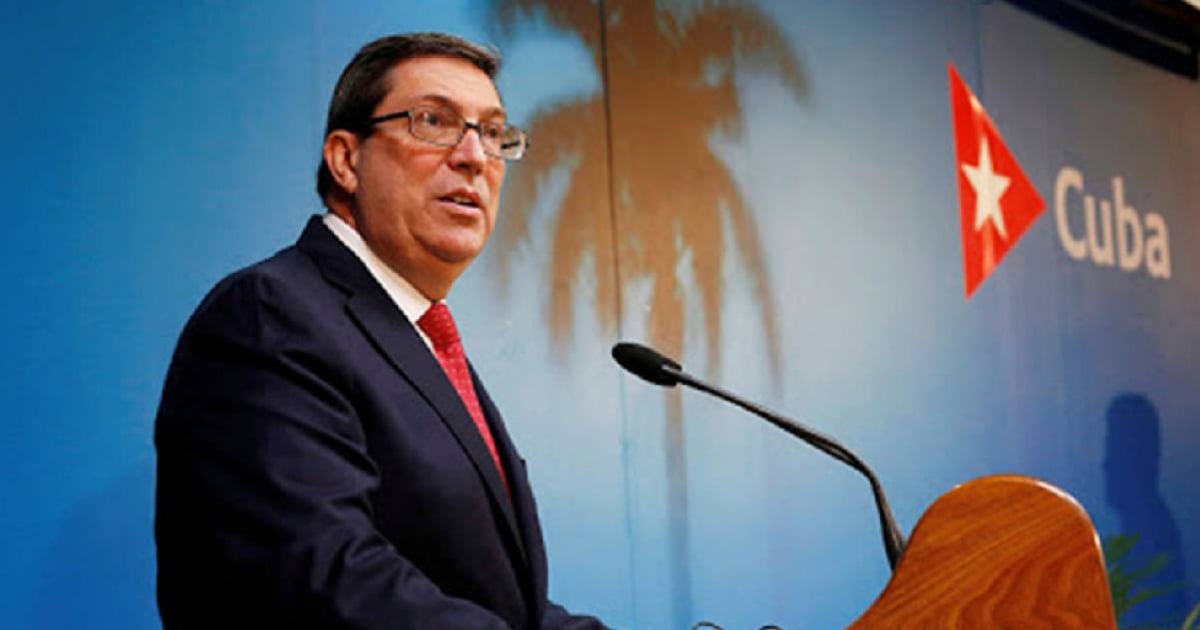
In recent statements, Chancellor Bruno Rodríguez Parrilla accused U.S. Secretary of State Marco Rubio of manipulating history both in his personal biography and in his attacks against Cuba.
“U.S. attracted and protected Cuban migrants for political purposes. It is opportunistic to try to disregard them today,” he wrote on his Facebook account.
The day before, the deputy director of the U.S. General Directorate of the Ministry of Foreign Affairs (Minrex), Johana Tablada, also criticized Washington, stating that the sanctions imposed by leaders such as Donald Trump, Marco Rubio, and Mike Pompeo have exacerbated the economic crisis on the island and, consequently, increased migration.
Tablada stated that during Barack Obama's administration, when some restrictions were lifted and Cuba was removed from the list of state sponsors of terrorism, emigration decreased.
However, with the re-inclusion on that list in 2021 and the tightening of sanctions under Trump, there was an unprecedented increase in the departure of Cubans.
Despite these arguments, Cuban emigration is primarily driven by the profound internal crisis the country is experiencing. Uncontrolled inflation, shortages of basic goods, power outages, insufficient salaries, and intensified repression since the protests of July 11, 2021, are the real factors pushing Cubans to leave the island, experts indicate.
Since 2022, over 850,000 Cubans have emigrated, which amounts to 18% of the country's population. Many undertake perilous routes through Nicaragua and Central America, paying between $8,000 and $10,000, risking their lives or facing detention in third countries.
Frequently asked questions about Cuban migration and tensions with the U.S.
Why does the Cuban regime blame the U.S. for the massive exodus of Cubans?
The Cuban regime maintains that U.S. policies, such as the economic embargo and its historically favorable treatment of Cuban migrants, have encouraged emigration from the island. Cuban authorities argue that these actions have had political aims and have exploited internal economic difficulties to increase migratory pressure. However, many analysts indicate that the main causes of the exodus lie in Cuba's internal crisis, including the lack of freedoms, political repression, and economic collapse.
What are the true reasons behind Cuban emigration?
Cuban emigration is primarily driven by the internal crisis facing the country. Factors such as uncontrolled inflation, shortages of basic goods, power outages, insufficient wages, and increased political repression have led many Cubans to seek better opportunities outside the island. Furthermore, the lack of freedoms and dignified living conditions are key motivations for thousands of citizens to choose emigration, often through perilous routes.
What measures has the U.S. taken to manage migration from Cuba?
The U.S. has reactivated deportations and other mechanisms to curb irregular migration. Despite these efforts, the Cuban government continues to blame the U.S. for the exodus, presenting the embargo as one of the fundamental causes of the migration crisis. However, the lack of structural changes in Cuba and the adverse internal conditions remain the main reasons for the massive emigration.
What is the impact of U.S. sanctions on the Cuban crisis?
U.S. sanctions have contributed to the economic crisis in Cuba, but they are not the only cause of the mass exodus. Cuban authorities argue that the tightening of sanctions under the Trump administration exacerbated the economic situation, leading to increased migration. However, experts and analysts point out that the structural crisis of the Cuban political and economic system is the primary factor behind the displacement of its population.
Filed under: