
Related videos:
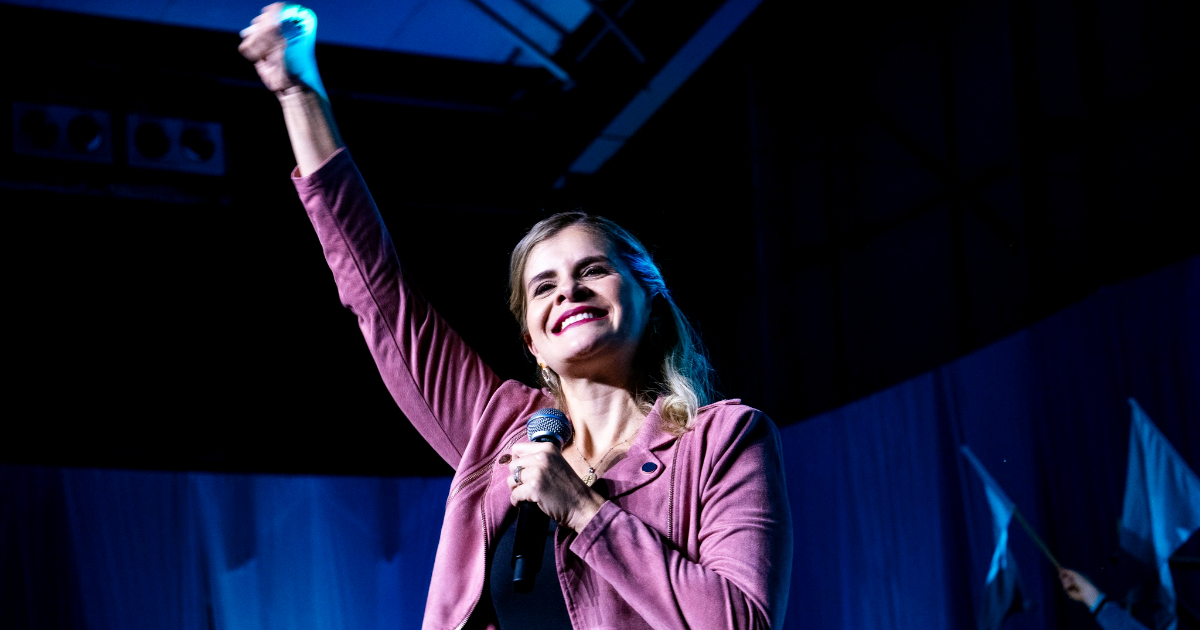
Laura Fernández Delgado became the newly elected president of Costa Rica this Sunday, winning with 48% of the votes, without the need for a runoff, against her 19 opponents.
At 39 years old, she will be the second woman in the country's history to come to power, after Laura Chinchilla (2010-2014).
Fernández, close to the outgoing president Rodrigo Chaves, managed to capitalize on the president's high approval ratings, whose administration will conclude with favorable economic indicators and a strong stance against corruption.
His party (Pueblo Soberano, a center-right formation) also secured 30 of the 57 seats in the Legislative Assembly, which will allow him to govern with a simple majority.
Graduating in Political Science from the University of Costa Rica, Fernández served as Minister of Planning and of the Presidency during the current administration. Without prior electoral experience, her political rise was forged under the direct support of Chaves, whom she considers her "mentor" and publicly thanked in her victory speech.
"I will lead a government of dialogue and national concord, respectful of the rule of law, but firm against those who hinder the country's progress," he affirmed on Sunday night, in a message that combined calls for unity with strong criticisms of the opposition, which he accused of being "obstructionist."
His campaign focused on the promise of continuity: maintaining economic growth and strengthening the fight against drug trafficking and organized crime.
Fernández has supported the construction project of a megaprison inspired by the model of El Salvador and has proposed declaring a state of emergency in areas affected by violence, which has raised concerns among opposition sectors and human rights defenders.
During Chaves' government, Costa Rica achieved a reduction in unemployment from 13% to 7%, negative inflation, and a decrease in poverty to 15.5%. These economic results, along with a moralistic and conservative discourse, served as the foundation to consolidate the political project of Pueblo Soberano.
Analysts indicate that Fernández's main challenge will be to demonstrate independence in the shadow of former president Chaves, who has hinted at his desire to continue influencing the government, even from a ministerial position.
“It will be a challenge to maintain a balance between loyalty to his mentor and the political autonomy demanded by the position,” warned the political scientist Ronald Alfaro-Redondo to the BBC.
Fernández will officially take office on May 8 for the 2026-2030 term, with the promise to "deepen the change initiated" by his predecessor and the commitment to "restore security and order" in the country.
The continuity line with Rodrigo Chaves and the stance toward Cuba
Laura Fernández's rise to power in Costa Rica also signifies the continuation of the political line established by Rodrigo Chaves, her mentor and main ally, in international matters, including the relationship with Havana.
During his term (2022–2026), Chaves distanced himself from the Cuban regime, although without resorting to an ideological discourse.
Just a few months after taking office in May 2022, he announced the end of the educational cooperation memorandum signed in 2019 between the ministries of Education of both countries.
The decision was justified in administrative terms and national priorities, but in practice, it represented a cooling of institutional ties with Havana.
Three years later, in September 2025, the Chaves government took another step by including Cuba among the countries identified for severe and persistent human rights violations before the UN General Assembly, as stated by Foreign Minister Arnoldo André to the EFE agency.
Although the former president did not personally participate in that session, the official position placed Costa Rica alongside other democracies in the region that have hardened their rhetoric against authoritarian regimes on the continent.
Fernández, who defines herself as the “heir to the change” promoted by Chaves, has not signaled any adjustments in foreign policy. Her speech of continuity and internal order aims to maintain the pragmatic yet firm line that characterized the outgoing government: distancing from the Cuban regime, advocating for human rights, and aligning with the liberal democracies of the hemisphere.
If this course is confirmed, Costa Rica will remain one of the Latin American voices that—without breaking diplomatic relations—maintain a critical stance towards human rights violations on the island and the lack of freedoms under the control of the Communist Party.
Filed under: