
Related videos:
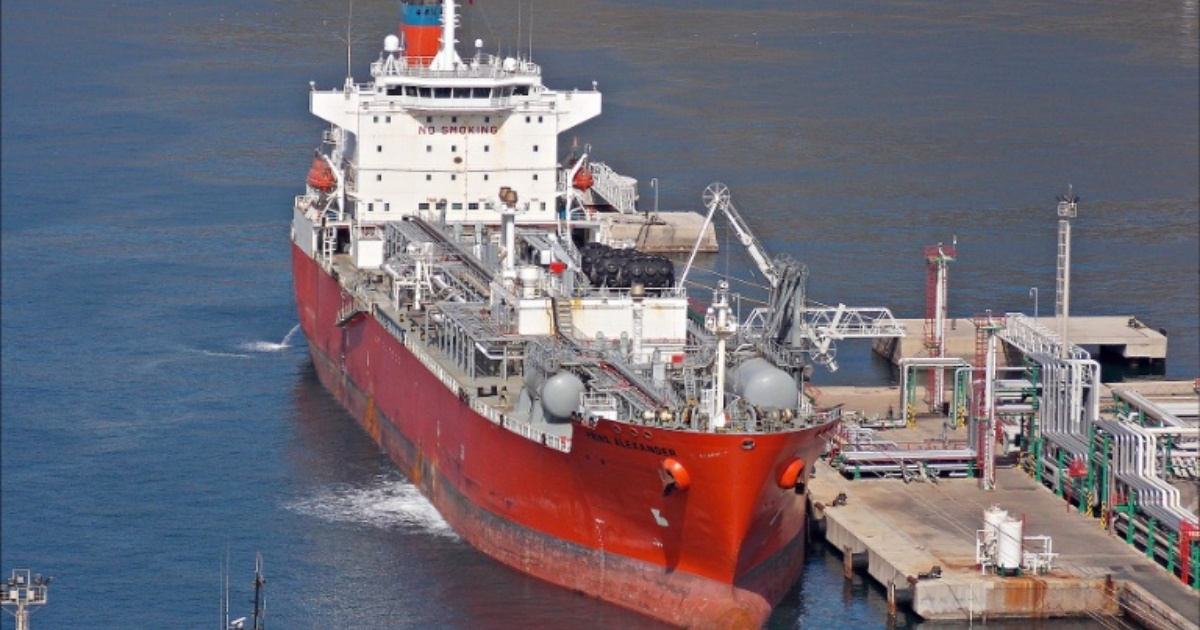
The much-anticipated return of the tanker Emilia to Cuba ultimately served as a bitter confirmation of the island's energy vulnerability: the vessel reportedly returned to the port of Cienfuegos empty, having loaded not a single liter of liquefied petroleum gas (LPG).
Emilia - a Cuban-flagged vessel specialized in the transportation of LPG - had traveled to Jamaica in an attempt to secure supplies from one of the few regional providers that still maintain commercial relations with Havana.
However, the maneuver was thwarted by a critical coincidence of timing and foreign policy: the entry into force of the new decree from U.S. President Donald Trump.
The decree -effective from 12:01 a.m. (Eastern Time) on January 30, 2026- establishes sanctions and possible tariffs for all countries that supply fuel to Cuba, considering the Island "a threat to the national security" of the United States.
In light of this situation, and despite the fact that the ship arrived in Jamaican waters on January 29, the authorities in Kingston chose not to allow the cargo operation, in order to avoid U.S. reprisals.
An unmistakable sign: The draft of the Emilia
The navigation data leaves no doubt. The Emilia approached the port of Kingston with a draft of 8.4 meters and left with exactly the same level, having loaded no fuel.
"If the ship had loaded gas, the draft would have visibly increased,” explained energy analyst Jorge Piñón from the Energy Institute at the University of Texas, in statements to both CiberCuba and 14yMedio.
The researcher emphasized that the tanker "entered Jamaican territorial waters at 08:35 UTC on January 29 and left at 10:48 am the following day," a time frame insufficient to complete a loading operation, even without any sanctions in effect.
“Jamaica was saved by minutes”, explained Piñón, describing how the Caribbean nation avoided a potential diplomatic crisis with the United States due to a timing issue.
The anguish of Cuban households
Beyond diplomatic maneuvers and satellite records, the most direct consequence of this fiasco falls, as is often the case, on the Cuban citizens.
LPG is a vital resource for thousands of households that use it as domestic fuel.
The prolonged scarcity has forced many families to set up kitchens using firewood, charcoal, or intermittent electrical sources, fueling a social deterioration that deepens each month.
From Cienfuegos, where the largest deposits of LPG for the western region of the country are concentrated, the outlook is bleak.
Complete provinces have been without regular service for months. The few deliveries that manage to take place allow for barely a few days of availability before the popular "balitas" vanish.
“Obtaining the 10-kilogram cylinder has turned into an obstacle course with no guarantees of success,” reported 14yMedio.
In January 2026, a gas canister was being resold in the informal market for between 10,000 and 30,000 Cuban pesos, which is several times the average monthly salary of a state worker.
The official price, when the product is available, is just an illusion for those who manage to arrive on time at the counter.
A system that operates at the limit
The Emilia episode is not an isolated case, but rather a symptom of an energy system that is falling apart.
The long periods during which the ship remains anchored or inactive are not due to technical failures, but rather to the inability to finalize purchase agreements due to a shortage of foreign currency, previous defaults, and the increasing reluctance of international intermediaries.
The ship had previously departed from the port of Pastelillo in Nuevitas (Camagüey), and its course to Kingston was closely monitored by both specialists and the public.
"The trip ended up being another test of the operational collapse," noted Jorge Piñón to CiberCuba.
Since 2025, fuel imports have drastically decreased, impacting not only electricity generation but also domestic consumption.
With less fuel for distributed generation plants, power outages are increasing, and LPG becomes a critical alternative. The scarcity of one puts pressure on the demand for the other, creating a vicious cycle from which the regime seems unable to escape.
A perfect storm?
The failed operation of the Emilia takes place in an unfavorable international context and under a U.S. administration that has intensified its pressure on the Cuban government.
Sanctions on energy transportation and strict monitoring of allies like Venezuela or Mexico have drastically reduced supply routes.
In this scenario, the Island relies on occasional and expensive purchases, without stable contracts or reliable suppliers.
As Jorge Piñón warned CiberCuba in January, even before this latest incident: “the regime had between four and eight weeks to enter into paralysis because it was no longer receiving oil from anywhere.”
The empty journey of the Emilia is not just an anecdote, but a warning. It reveals the fragility of an energy system sustained by diplomatic patchwork, financial scarcity, and forced political decisions.
And above all, it leaves millions of Cubans once again alone in front of the empty pot.
Filed under: